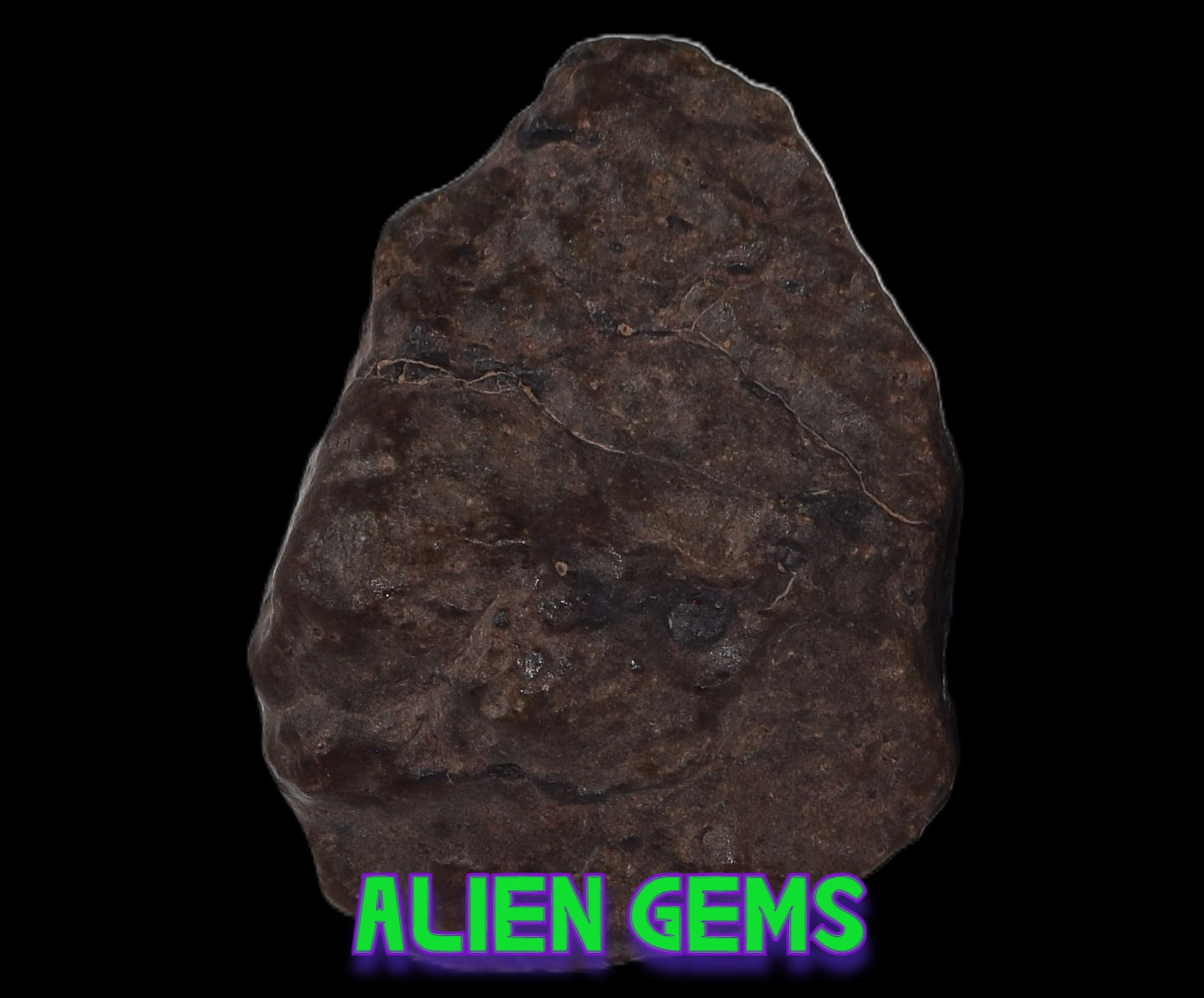
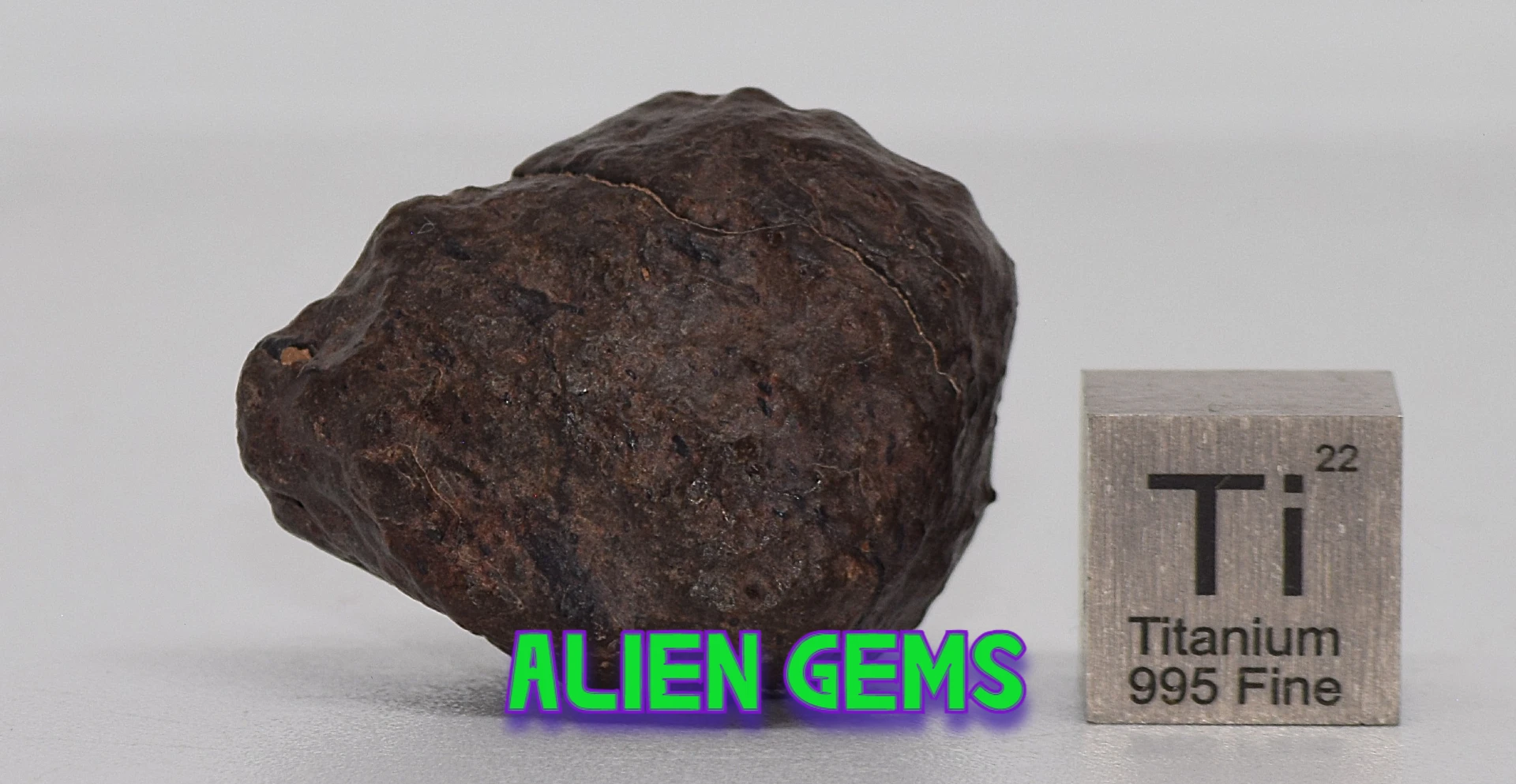
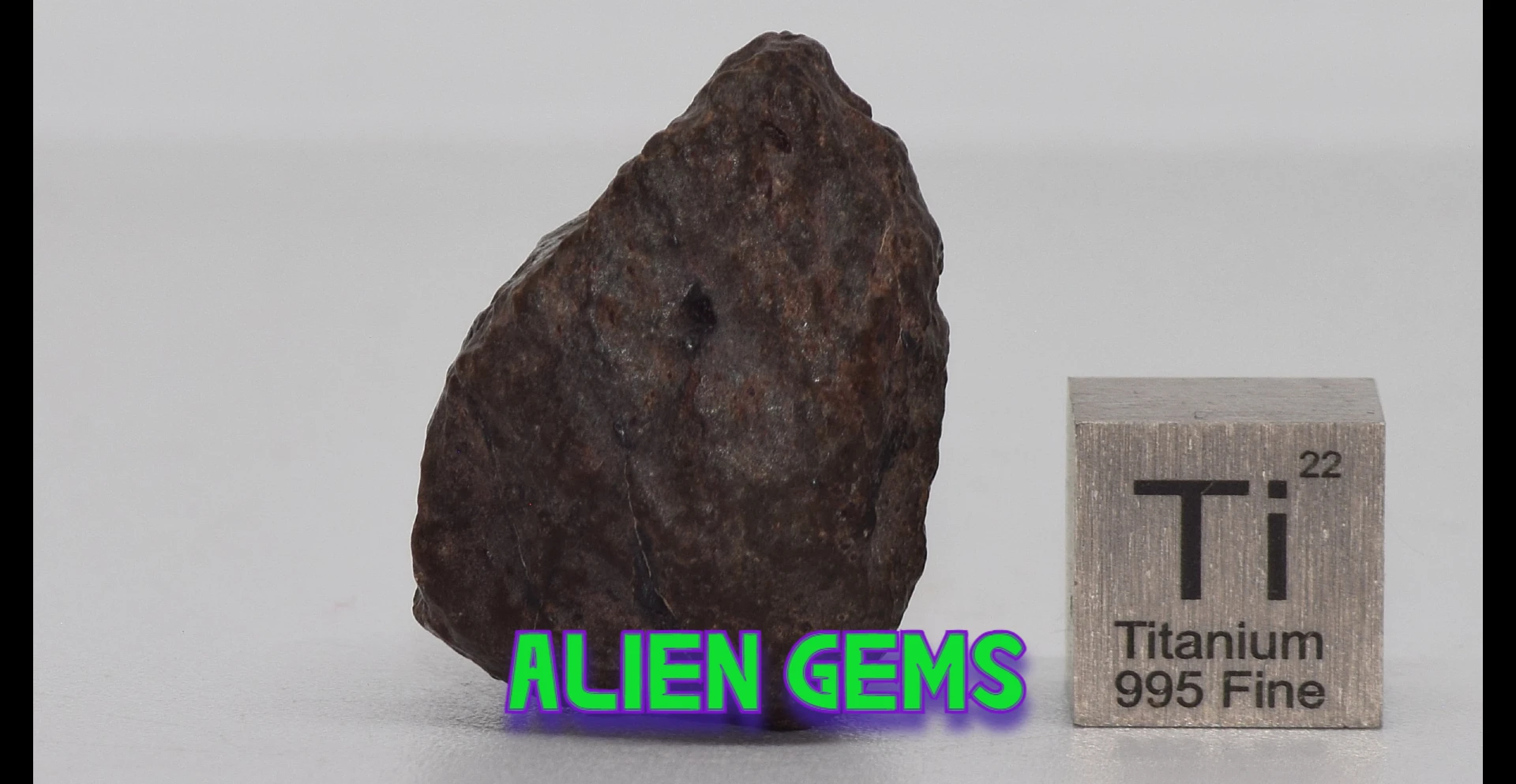
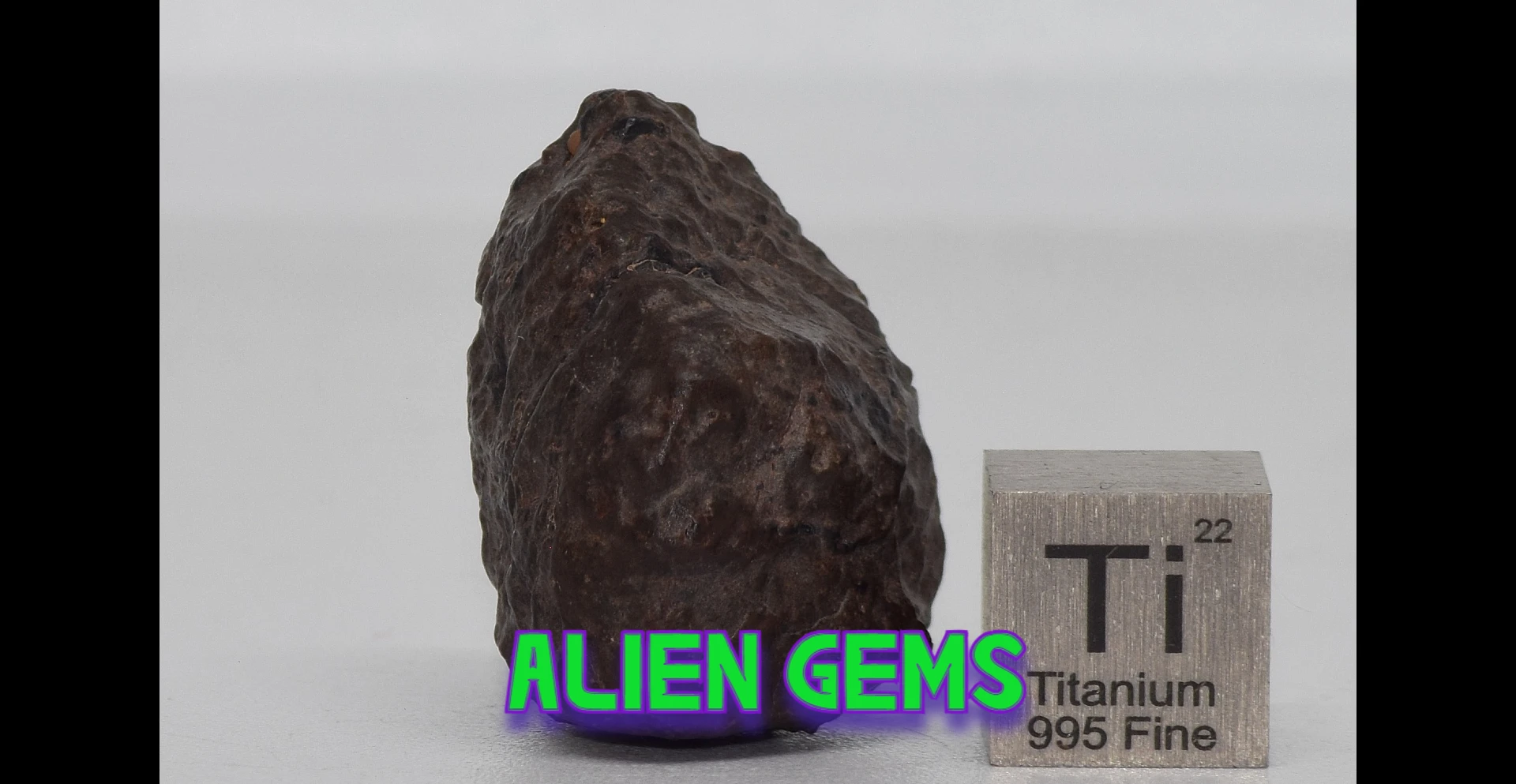
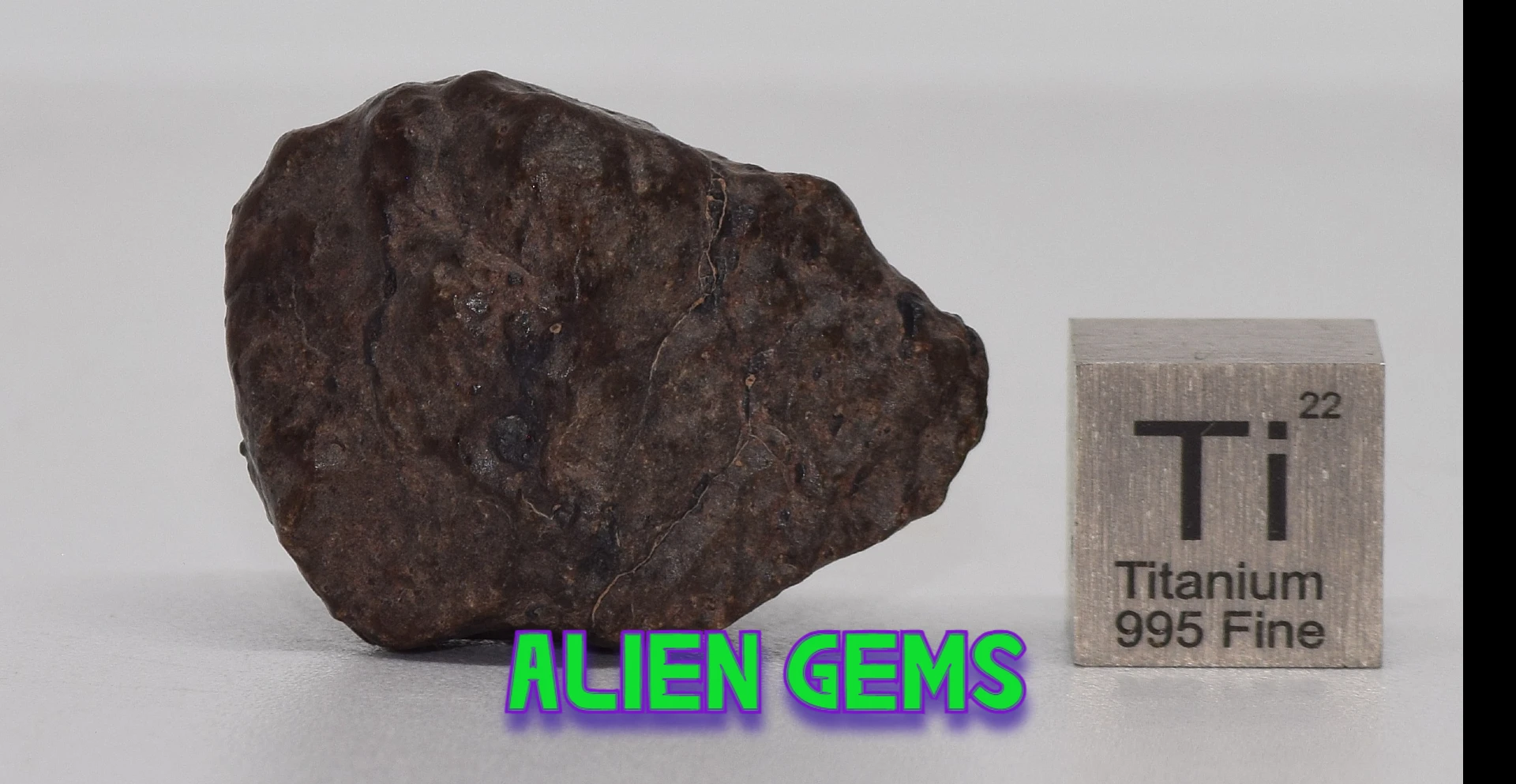
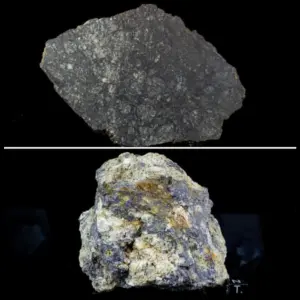
This 12 g natural meteorite specimen comes from the officially recognized meteorite NWA 18599, purchased in Algeria in 2025. Every purchase includes a Certificate of Authenticity, and as a member of the Meteoritical Society, I personally guarantee the authenticity and provenance of this specimen.
Features
- Name: NWA 18599
- Classification: Ordinary chondrite – L-melt rock
- Origin: Asteroid (parent body not confirmed)
- Found: Algeria
- Discovery Date: 2025
- Total known weight: 2.37 kg
- Weight: 12.1 g
- Dimensions: approx. 23 × 21 × 17 mm
- Condition: Natural, uncut specimen
Scientific and Physical Characteristics
NWA 18599 is an officially recognized meteorite listed in the Meteoritical Bulletin. It was purchased from a meteorite dealer in Algeria in 2025. The total known mass is 2.37 kg, consisting of several pieces.
Petrographic examination classifies NWA 18599 as an L-melt rock, a type of ordinary chondrite that has undergone extensive melting and recrystallization. The material is described as a clast-poor melt rock consisting of crystallized melt with a small number of surviving chondritic remnants.
The crystallized melt consists of tiny olivine and low-calcium pyroxene grains with interstitial glass. Accessory minerals include iron-nickel metal and troilite, both of which show substantial terrestrial alteration.
Mineral chemistry of the surviving chondritic remnants supports the L-chondrite classification. The mean fayalite content of olivine is Fa25.4 ± 0.7 mol%, while low-calcium pyroxene has a mean ferrosilite content of Fs21.4 ± 0.4 mol%.
Unlike ordinary chondrites that preserve abundant recognizable chondrules and their original textures, NWA 18599 has experienced extensive melting. Its recrystallized melt matrix and sparse surviving chondritic remnants provide evidence of significant thermal processing of the original meteoritic material.
NWA 18599 is a documented example of a melted ordinary chondrite, preserving evidence of the intense heating and recrystallization processes that affected its parent material. This natural specimen offers an opportunity to examine material that records thermal processes in the early history of the solar system.
Reviews
There are no reviews yet.