Rumuruti (R) chondrites are a rare group of chondritic meteorites characterized by a relatively high degree of oxidation compared to other chondrite groups. In contrast to enstatite chondrites, they formed under more oxygen-rich conditions, resulting in iron being predominantly present in oxidized form within silicates and oxides, with only very small amounts of metallic iron. Their mineralogy is mainly dominated by olivine and pyroxene, accompanied by iron-rich oxide phases and minor amounts of metallic iron-nickel.
A characteristic feature of Rumuruti chondrites is the frequently strong degree of thermal and shock-related metamorphism, indicating that their parent bodies were repeatedly altered and fragmented by collisions over their history. In contrast to many carbonaceous chondrites, they show little evidence of aqueous alteration, suggesting relatively dry but oxidizing formation conditions. Their textures and mineral chemistry reflect both thermal reworking and later impact events.
Rumuruti chondrites are classified as a distinct main group (R chondrites), within which they exhibit different petrologic types (3 to 6). These describe the increasing degree of thermal metamorphism and recrystallization and record the internal heating as well as the collisional evolution of their parent bodies.
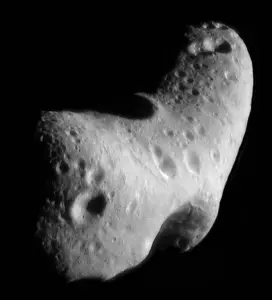
Rumuruti chondrites are associated with oxidized asteroids in the inner to middle region of the asteroid belt. Possible source regions include populations of S-like and related asteroids that formed under relatively high oxygen availability. Although no single parent asteroid has been definitively identified, they are considered fragments of a distinct population of early-formed asteroids that underwent strong thermal and collisional evolution in the inner Solar System.
