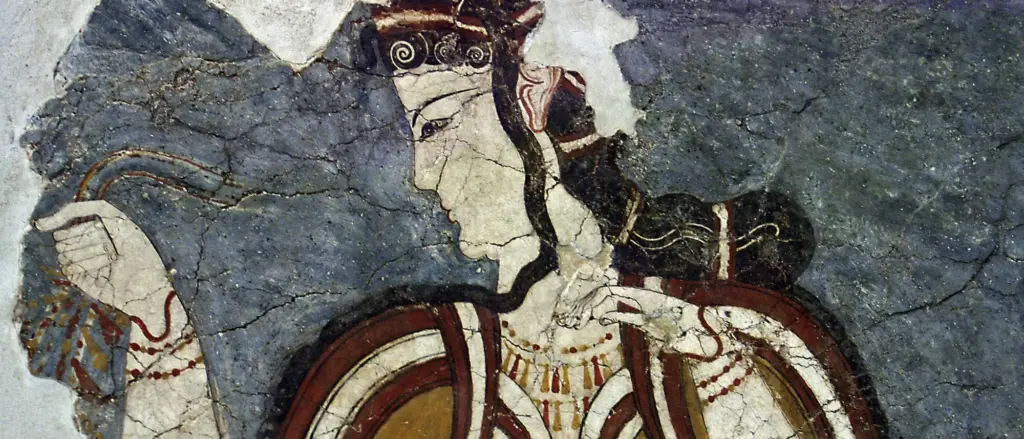
Fresco of the “Lady of Mycenae,” a Mycenaean wall painting from the 13th century BCE (Late Bronze Age)
The Bronze Age refers to a period in human history characterized by the widespread use of bronze, an alloy of copper and tin, as the primary material for tools, weapons, and ornaments. It follows the Stone Age and precedes the Iron Age. In Central Europe, it spans approximately from around 2200 to 800 BCE.
The Bronze Age marks a profound technological and societal transformation. The development of metallurgy enabled the deliberate production of metals through smelting and alloying. This led to significantly more durable and functionally specialized objects compared to earlier stone technologies.
Since copper and tin often occur in geographically separate deposits, bronze production required extensive long-distance supply and trade networks. These exchange systems connected large parts of Europe, the Near East, and Asia, while also facilitating the transfer of knowledge, technologies, and cultural practices.
Metalworking became increasingly sophisticated over time. Techniques such as lost-wax casting and multi-part moulds allowed for greater precision and standardization in production. At the same time, regional styles developed in the manufacture of weapons, tools, and ornaments, indicating growing cultural differentiation.
Archaeological evidence also points to increasing social stratification. Control over metal resources and trade routes contributed to the emergence of social elites and more hierarchical societal structures. Elite burials and hoards reflect the growing importance of prestige and wealth.
In later phases of the Bronze Age, settlement organization intensified, and agriculture expanded. These developments formed the basis for more complex social structures in many regions and paved the way for the transition into the Iron Age.
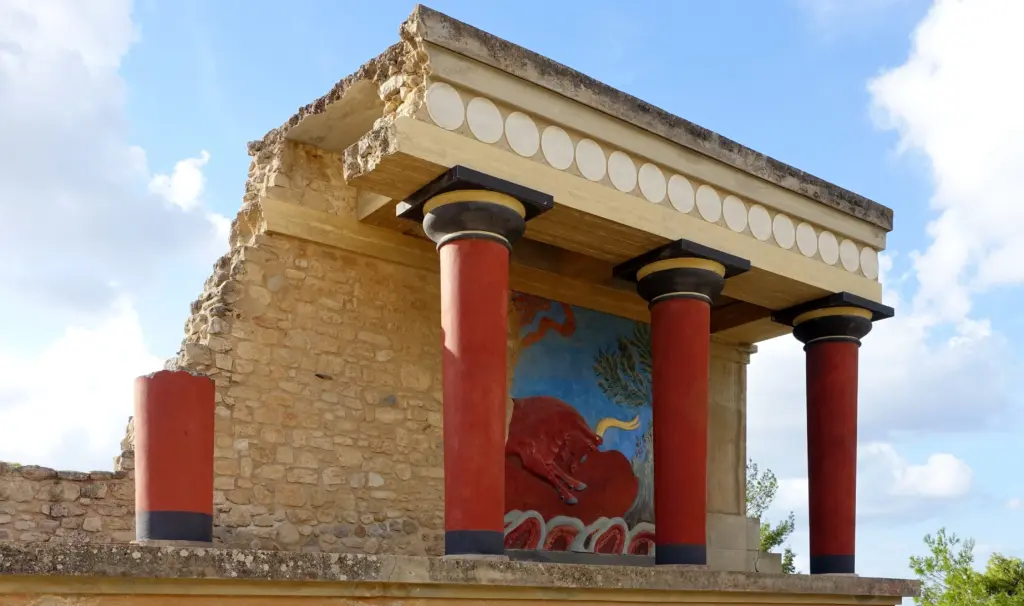
Palace of Knossos, the palace complex of the Minoan civilization on Crete, built and used between approximately 2000 and 1450 BCE.