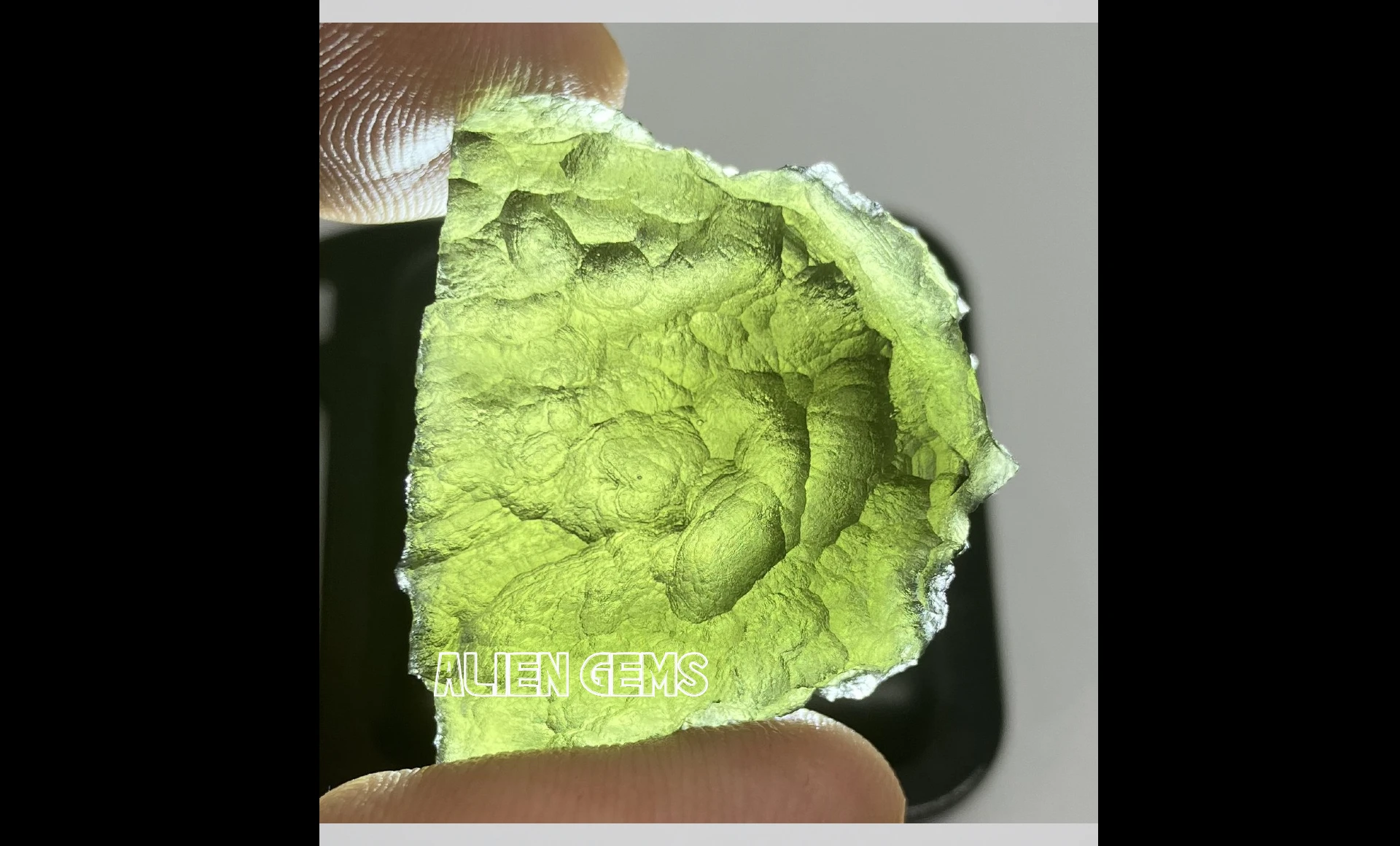
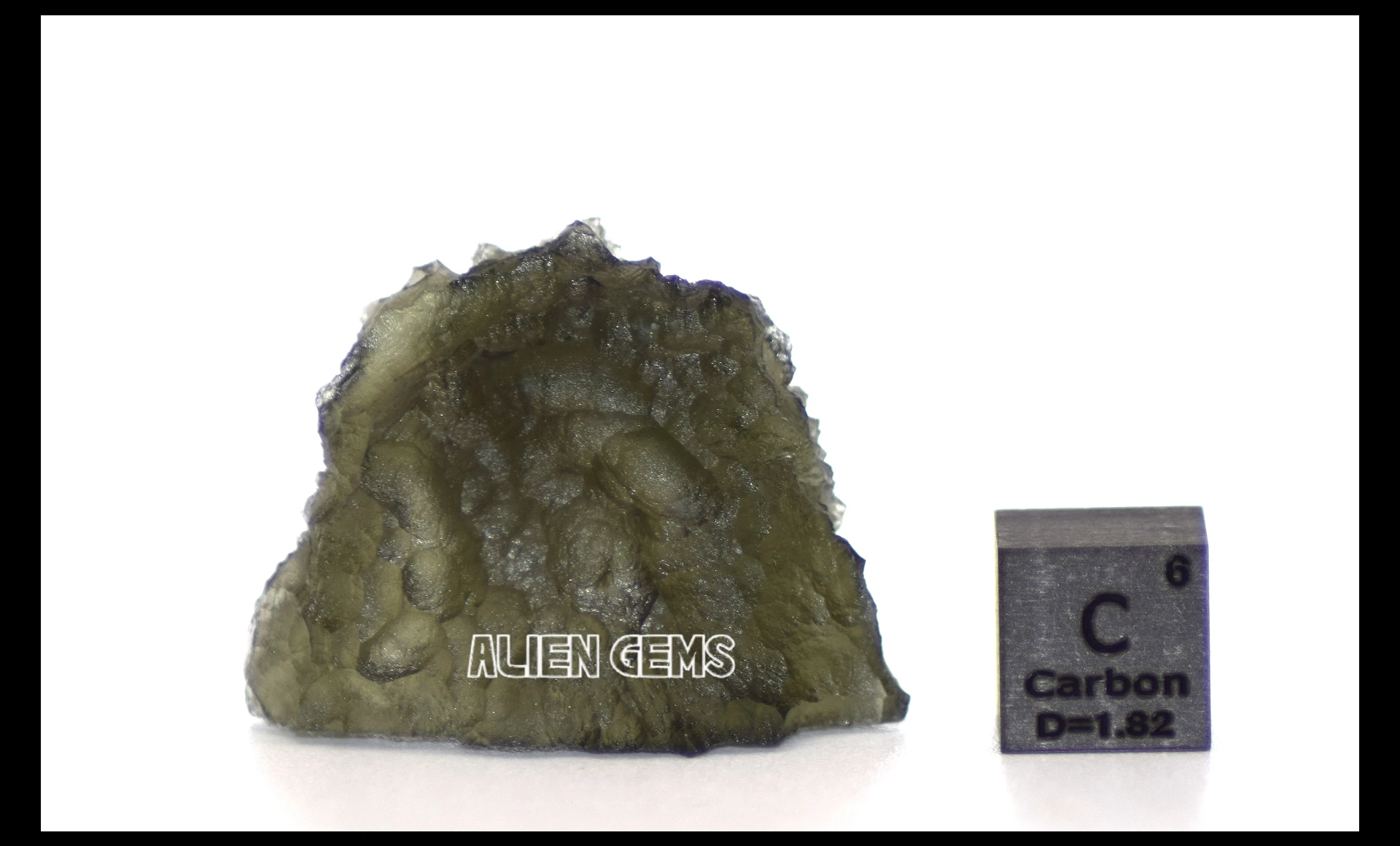
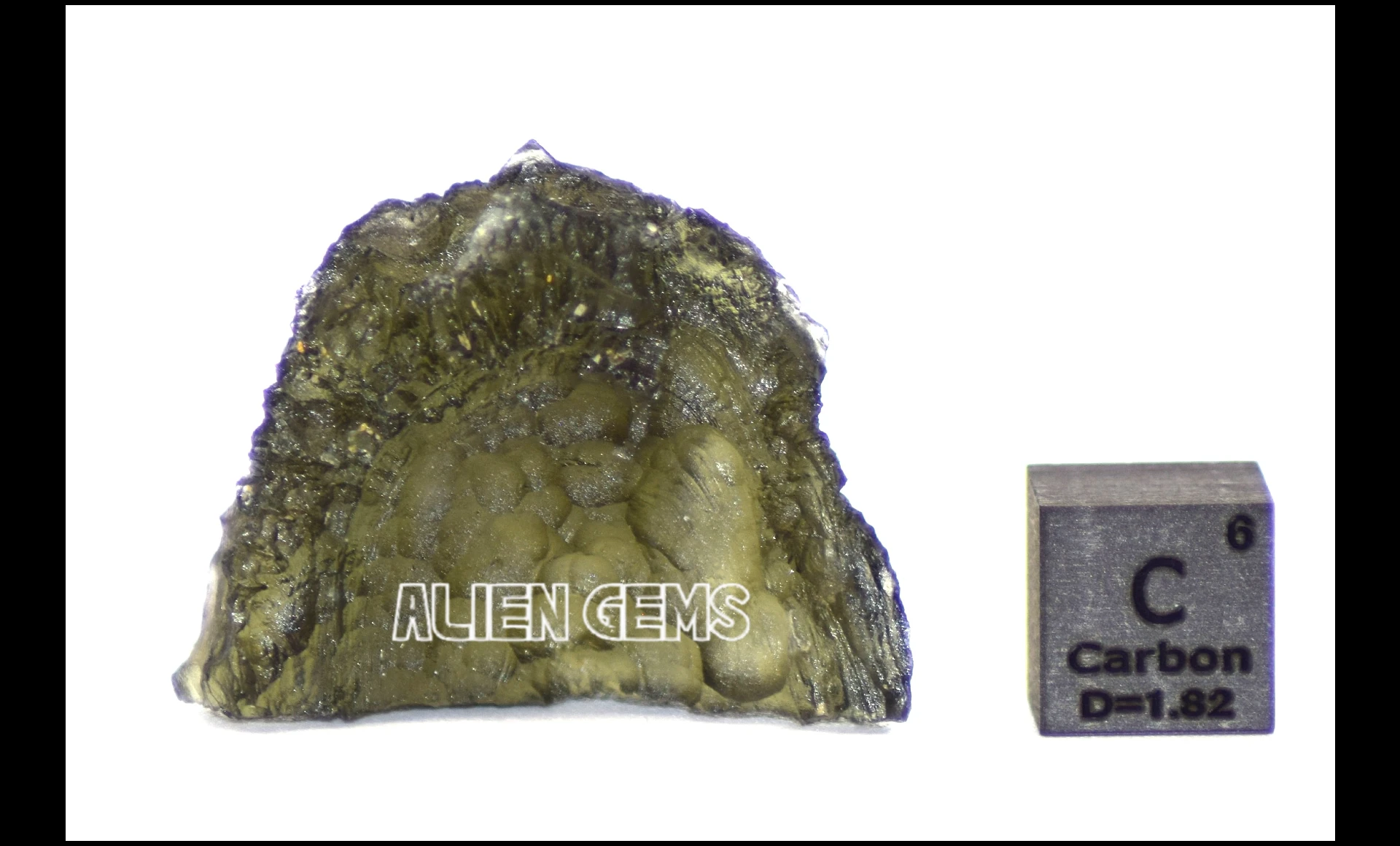
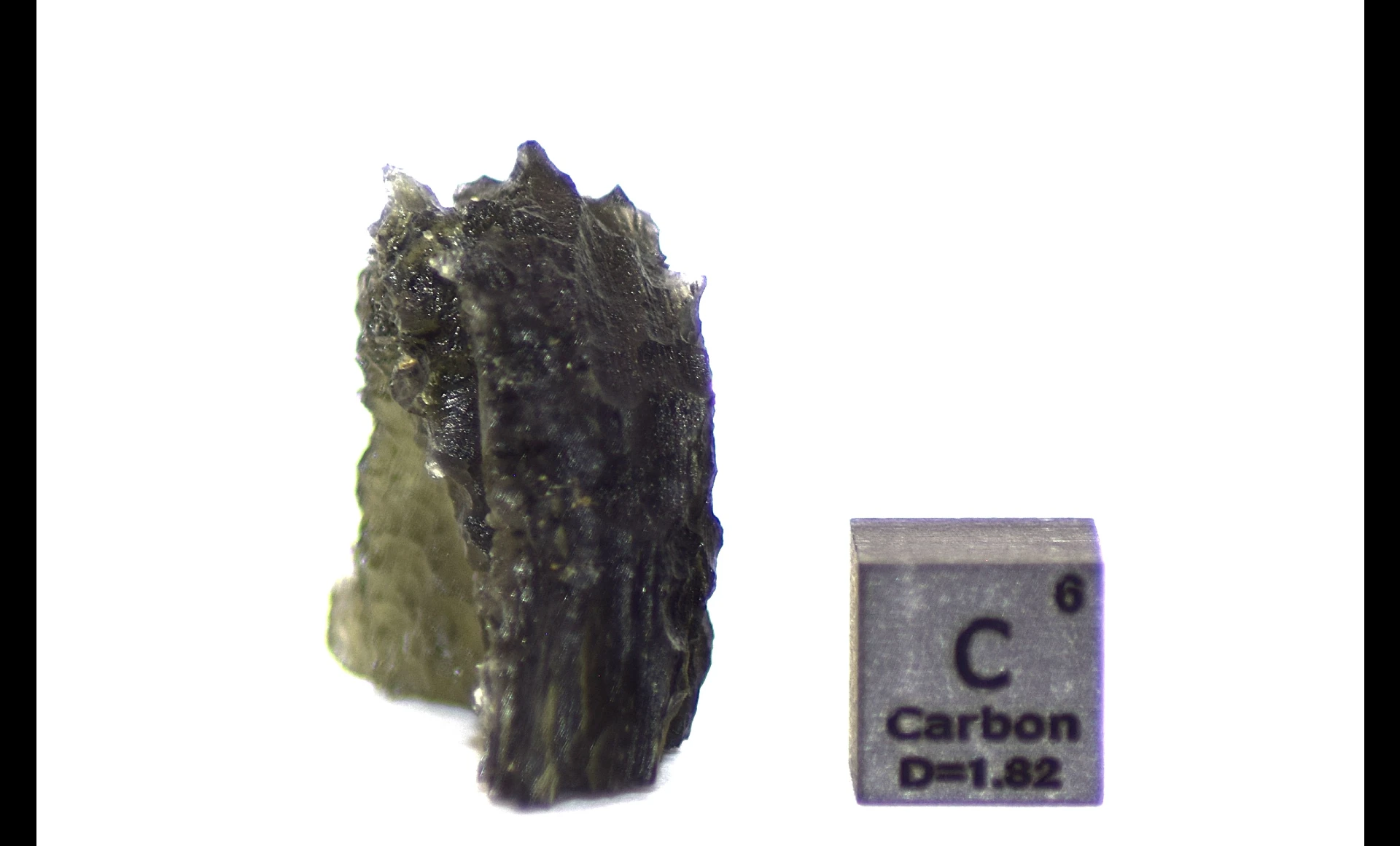

A natural Moldavite tektite from the Czech Republic with a weight of 10.2 g and dimensions of 32 × 25 × 13 mm. This individual specimen displays the characteristic green glassy appearance and natural surface textures typical of Moldavites. It is an authentic impact glass formed during the Ries meteorite impact event and represents a unique geological product of one of Europe’s most significant impact structures. Every purchase includes a Certificate of Authenticity, and as a member of the Meteoritical Society, I personally guarantee the provenance of this specimen.
Moldavite – Scientific Database Entry
Features
• Material: Moldavite
• Classification: Tektite
• Dimensions: 32 × 25 × 13 mm
• Weight: 10.2 g
• Found: Chrášťany, South Bohemia, Czechia
• Condition: Natural, unaltered surface
• Age: Approximately 14.8 Ma (Middle Miocene, Ries impact event)
Scientific and Physical Characteristics
Moldavites are natural impact glasses formed approximately 14.8 million years ago during the Ries meteorite impact event in present-day southern Germany. The impact generated extreme pressures and temperatures that partially melted terrestrial target rocks, including sedimentary and crystalline materials at the impact site. This molten silicate material was accelerated outward at high velocity and ejected beyond the crater region.
During its ballistic flight through the atmosphere, the molten droplets rapidly cooled and solidified into natural glass before falling across parts of Central Europe, forming the Moldavite strewn field. The distribution of Moldavites extends mainly across the Czech Republic, with additional occurrences reported in surrounding regions.
Moldavites are classified as tektites and consist predominantly of silica-rich natural glass with low water content and distinctive chemical characteristics resulting from their impact origin. Their typical green coloration is related to trace elements, particularly iron, and their oxidation states within the glass structure. The characteristic sculpted surfaces, grooves, and textures of Moldavites were influenced by their aerodynamic shaping during atmospheric flight as well as by subsequent chemical weathering processes after deposition.
The chemical composition and isotopic characteristics of Moldavites closely correspond to the terrestrial target rocks affected by the Ries impact, confirming their origin from this impact event. These unique natural glasses provide direct evidence of high-energy impact processes and preserve a geological record of one of Europe’s best-preserved large meteorite impact structures.

Reviews
There are no reviews yet.