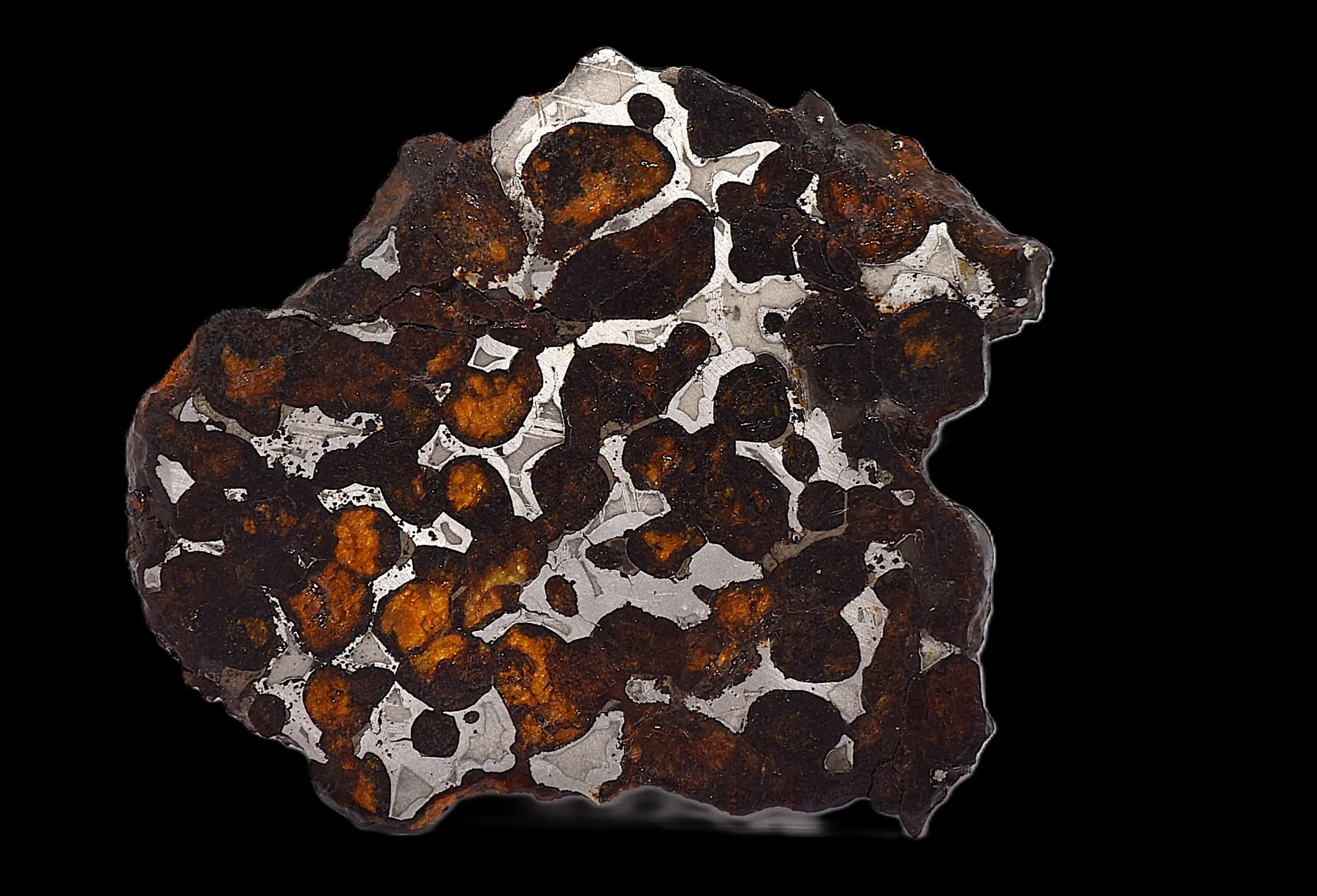
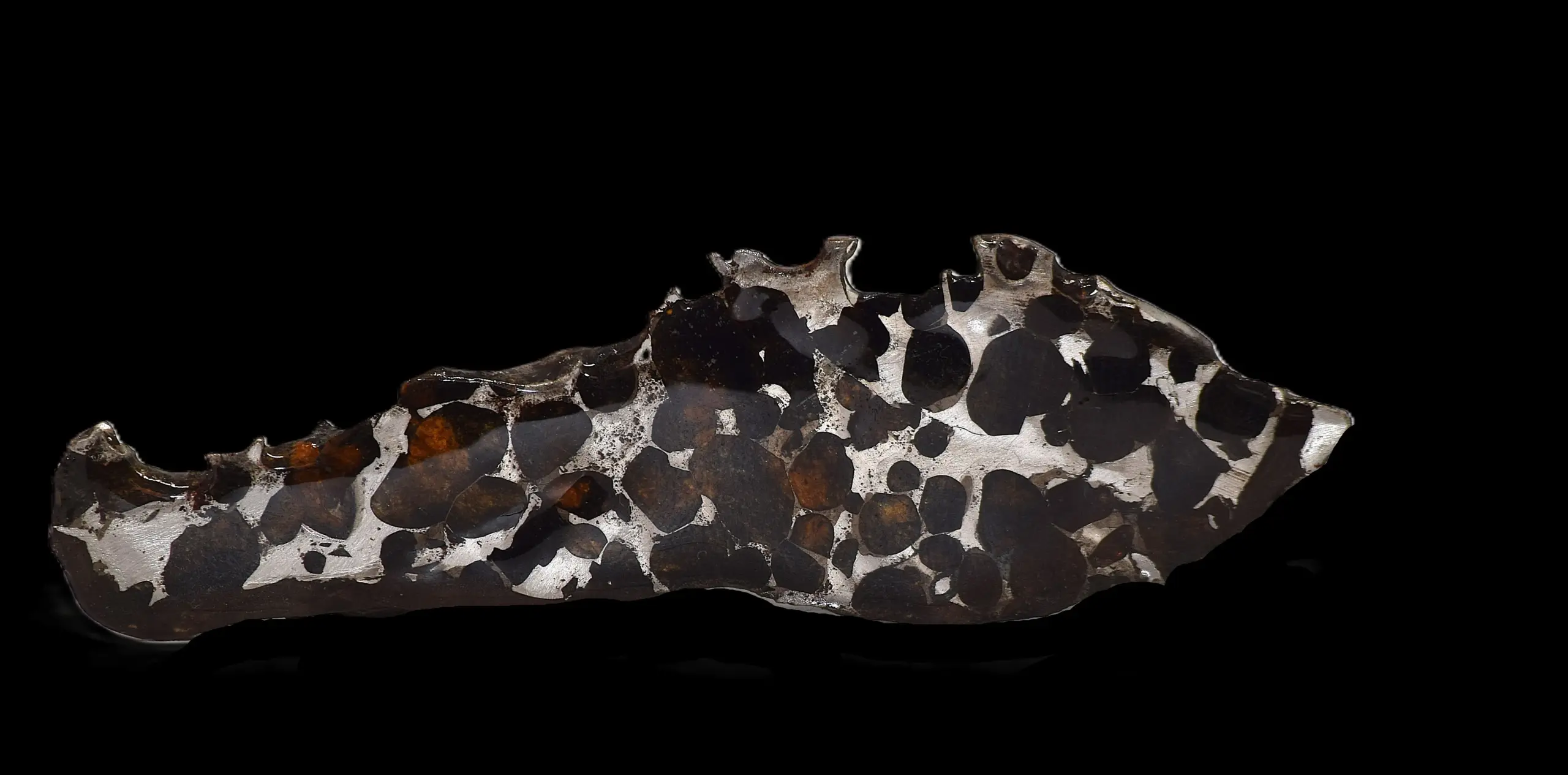
Polished 34 g slice of the Sericho pallasite, showing olivine crystals in an iron-nickel matrix.
• Name: Sericho
• Classification: Pallasite, Main-Group (PMG)
• Origin: Differentiated asteroid (core-mantle boundary)
• Total Known Weight: ~2.8 t
• Found: Near Habaswein/Sericho, Kenya
• Discovery Date: 2016
Sericho (PMG)
The Sericho pallasite is classified as a Main-Group Pallasite (PMG). This designation assigns it to the most populous category of stony-iron meteorites, characterized by a bimodal texture of metallic iron-nickel and silicate olivine—defined by the distinct spatial separation of these two contrasting material phases. Inclusion in this main group is based on a narrow, consistent range of siderophile element concentrations and oxygen isotopic ratios, which confirm the origin of all PMGs from a common, differentiated parent body.
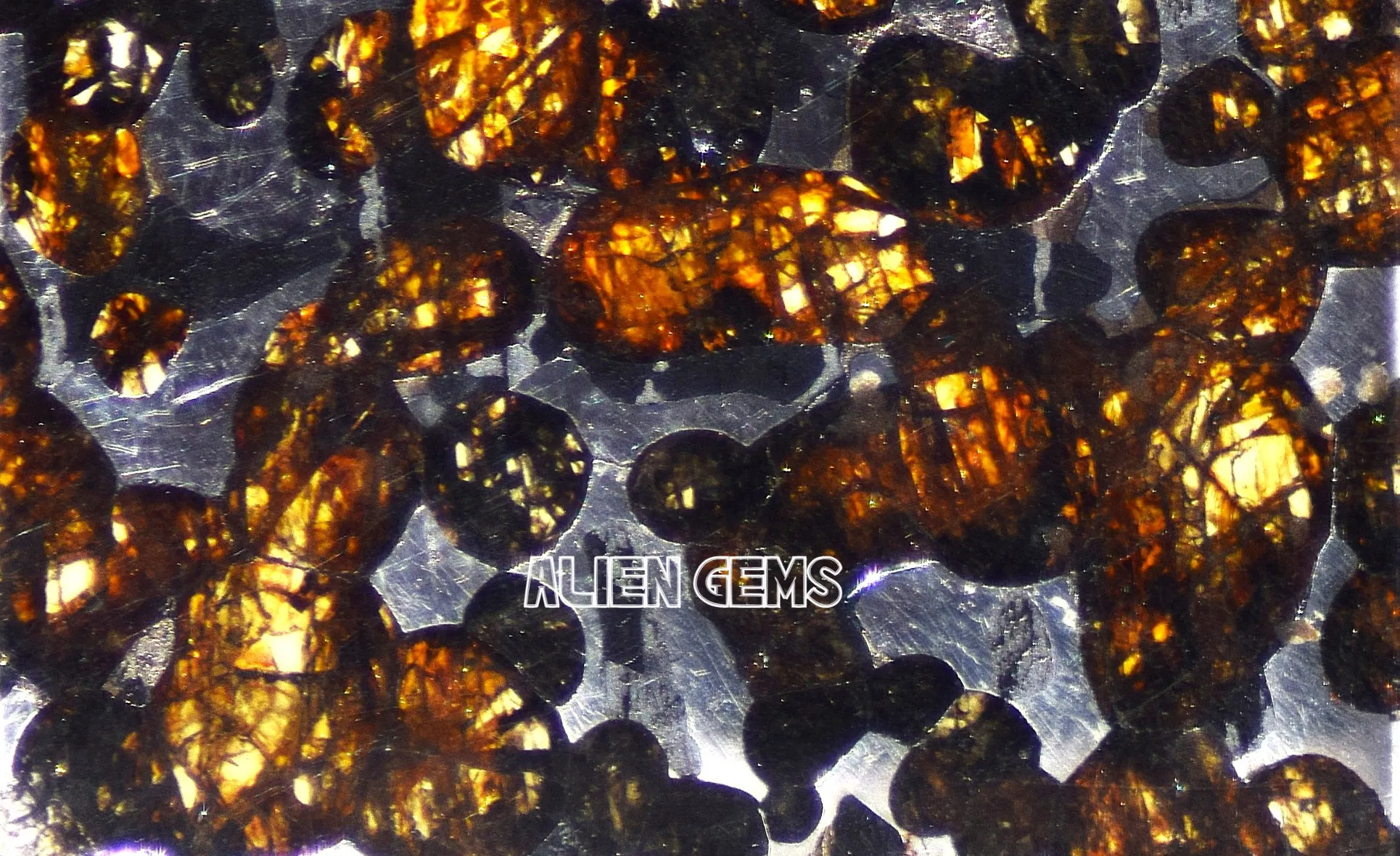
Transmitted-light optical micrographs of a Sericho pallasite thin section.
Geochemical Composition and Chemical Phases
The constitution of Sericho is based on the physicochemical coupling of two chemically disparate phases that formed under distinct redox conditions:
Metallic Phase (Fe-Ni Alloy): Primarily composed of kamacite and taenite. The distribution of trace elements such as iridium, germanium, and gallium is the critical diagnostic parameter. These siderophile elements exhibit concentrations correlating with the core compositions of differentiated asteroids. The alloy is the product of fractional crystallization occurring within the metallic core as temperatures decreased.
Silicate Phase (Olivine): The composition of $Fa_{12-13}$ (fayalite content, representing 12 to 13 mol% of the iron-rich endmember in the olivine solid-solution series) is the direct result of partial melting processes within the mantle of the parent body. In mineralogy, olivine is defined as a solid-solution series between the magnesium-rich endmember forsterite ($Mg_{2}SiO_{4}$) and the iron-rich endmember fayalite ($Fe_{2}SiO_{4}$); thus, a value of $Fa_{12-13}$ indicates that 12 to 13 percent of the octahedral sites available for divalent cations are occupied by iron rather than magnesium. This specific ratio acts as a geochemical fingerprint, reflecting the degree of partial melting and the chemical environment of the parent body’s mantle at the time of its differentiation, as these elements partition differentially between the molten phase and the remaining solid crystalline residue. Because the fayalite content in PMGs is notably constant, it indicates a magma reservoir that was chemically homogenized by convection or gravitational separation prior to the infiltration of the metal.
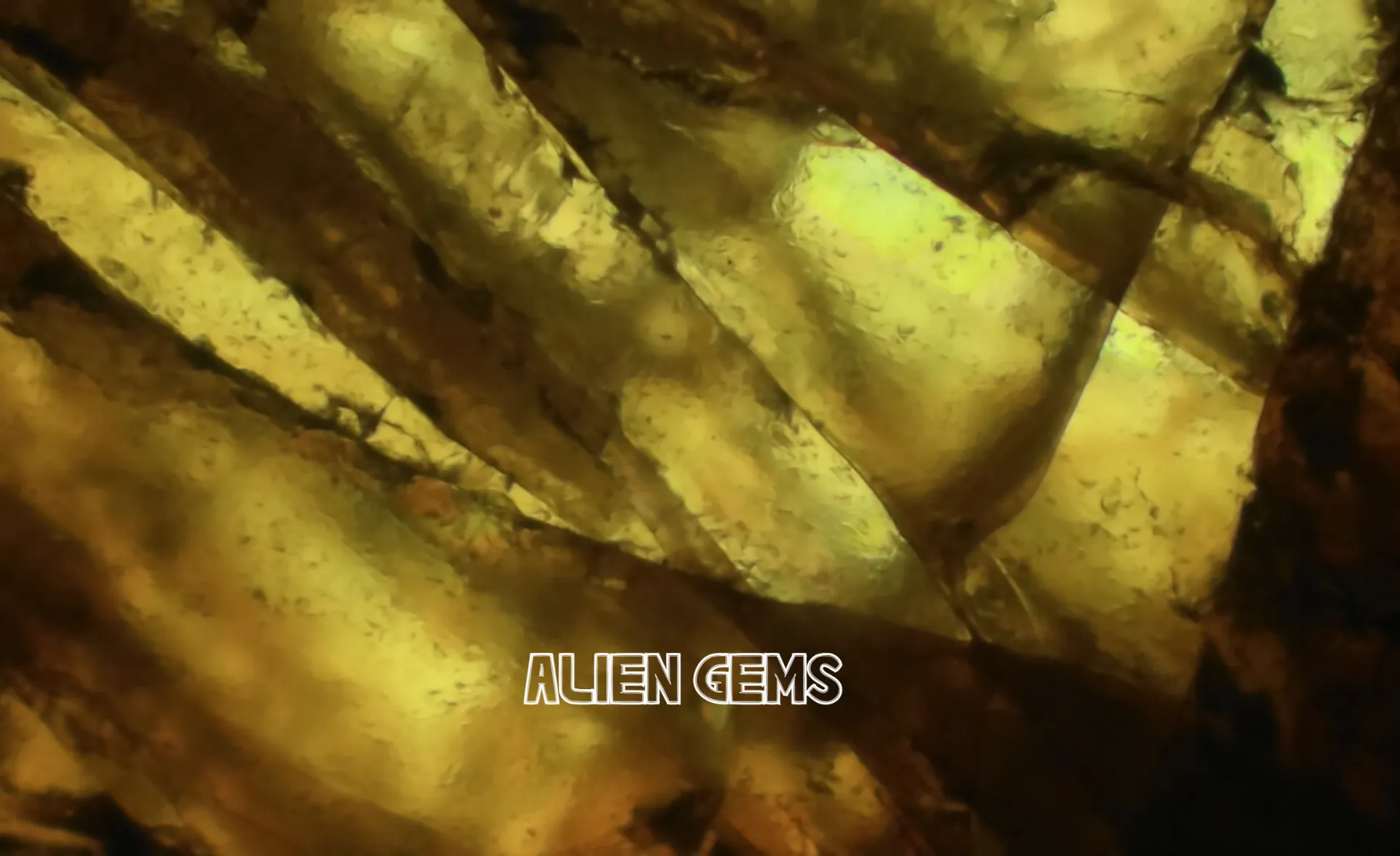
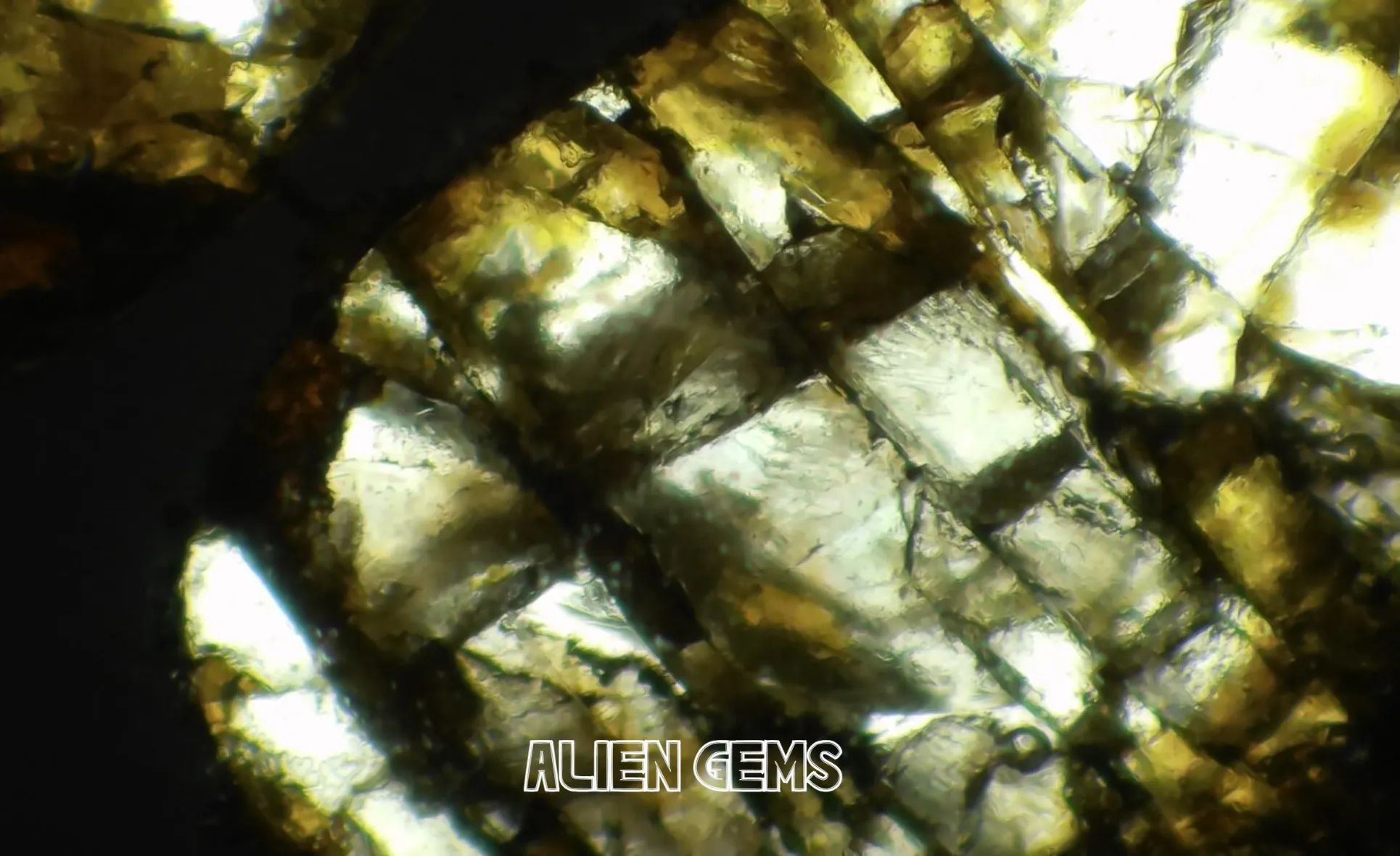
Sericho pallasite thin section
Genesis and Formation History
The association of metal and silicate must not be interpreted as a static layering, but rather as the result of process-oriented dynamics:
Thermal Infiltration: The formation of the characteristic pallasitic structure requires a specific temperature window. The surrounding metal must be in a liquid state to penetrate the brittle, fractured matrix of the silicate mantle.
Impact Model (Kinetic Injection): The currently favored hypothesis for the formation of PMGs is collision-induced injection. A high-energy impact event caused global deformation of the parent body. This kinetic energy led to the destabilization of the core-mantle boundary. Liquid core metal was injected under high pressure into the fractured olivine fabric of the mantle. The observed plastic deformations and the occurrence of planar defects in olivine crystals are direct evidence of these shock events.
Reconstruction of the Parent Body
From the petrographic characteristics, precise inferences regarding the parent body can be drawn:
Scaling: The chemical uniformity of siderophiles over large volumes indicates a parent body with a diameter of several hundred kilometers. Only in such massive bodies could the necessary heat and pressure be sustained to ensure efficient differentiation between the mantle and the core.
Thermodynamic History: The texture of schreibersite and troilite within the metallic matrix serves as a geological thermometer. Cooling rates (calculated via Ni diffusion profiles in metal phases) confirm extremely slow cooling over millions of years, supporting burial deep within the planetary crust.
Terrestrial Alteration
Weathering (W3–W4, representing moderate to heavy terrestrial alteration on the standard six-stage classification scale) is an exogenous process that degrades the originally extraterrestrial system. The oxidation of the Fe-Ni matrix to goethite and lepidocrocite leads to volumetric instability of the fabric, as these iron-oxide products occupy a significantly larger volume than the original metallic phase, thereby inducing internal stress and structural disintegration.
For scientific validity, this is critical: terrestrial alteration shifts the ratio of metallic components through the selective leaching of elements. Reliable chemical analysis of the meteorite is therefore only possible by examining closed, unweathered relics within olivine crystals, which act as “chemical time capsules” preserving the original state of the parent body.
References
Meteoritical Bulletin Database. Entry for Sericho. The Meteoritical Society.
Yang, J., Goldstein, J. I., & Scott, E. R. D. (2010). Main-group pallasites: Thermal history, relationship to IIIAB irons, and origin. Geochimica et Cosmochimica Acta, 74(15), 4471–4492.
Bermingham, K. R., et al. (2022). Isotopic evidence for pallasite formation by impact mixing of olivine and metal during the first 10 million years of the Solar System. Proceedings of the National Academy of Sciences (PNAS).
35 gram specimen, encased in epoxy resin for protection and stabilization.