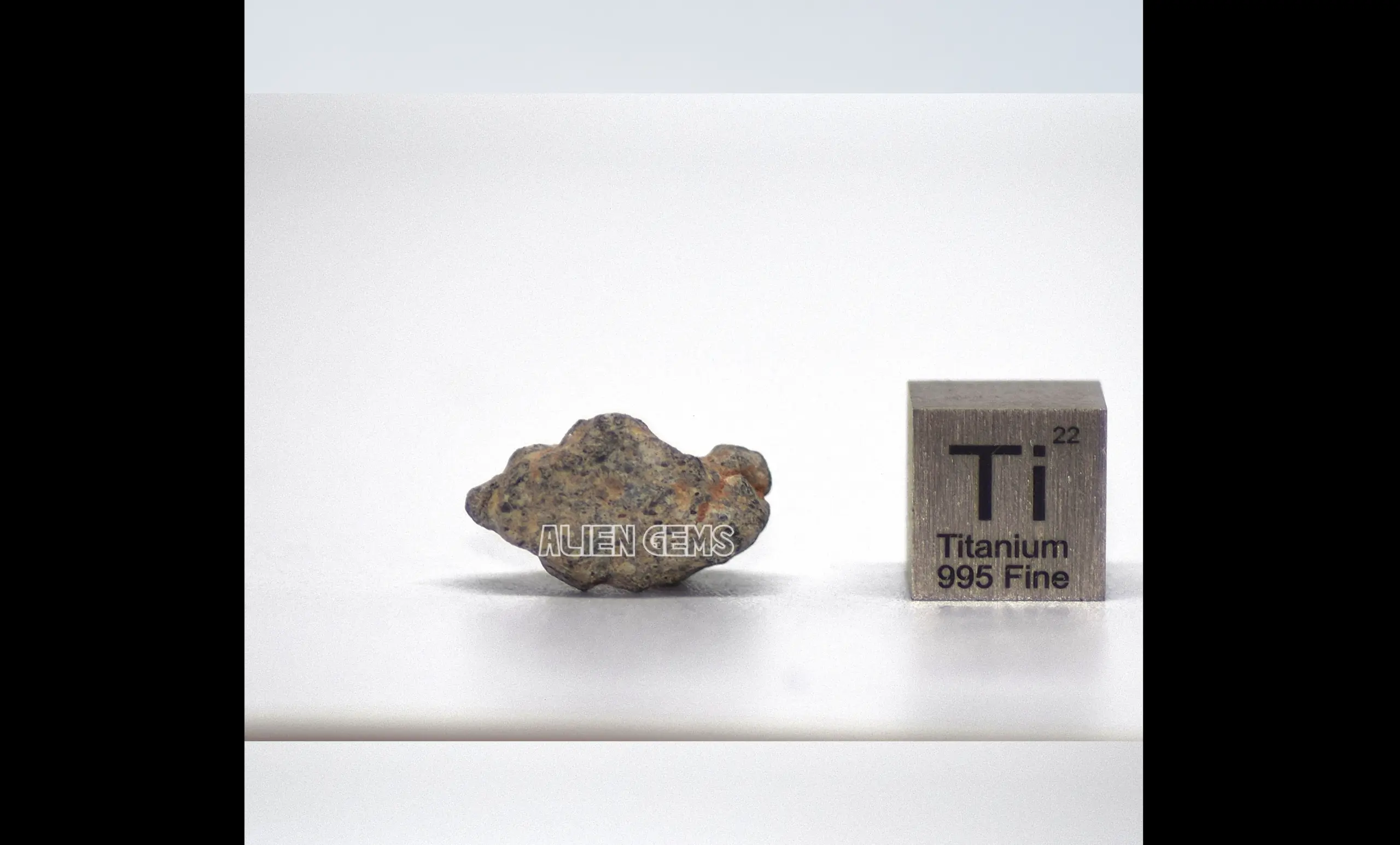
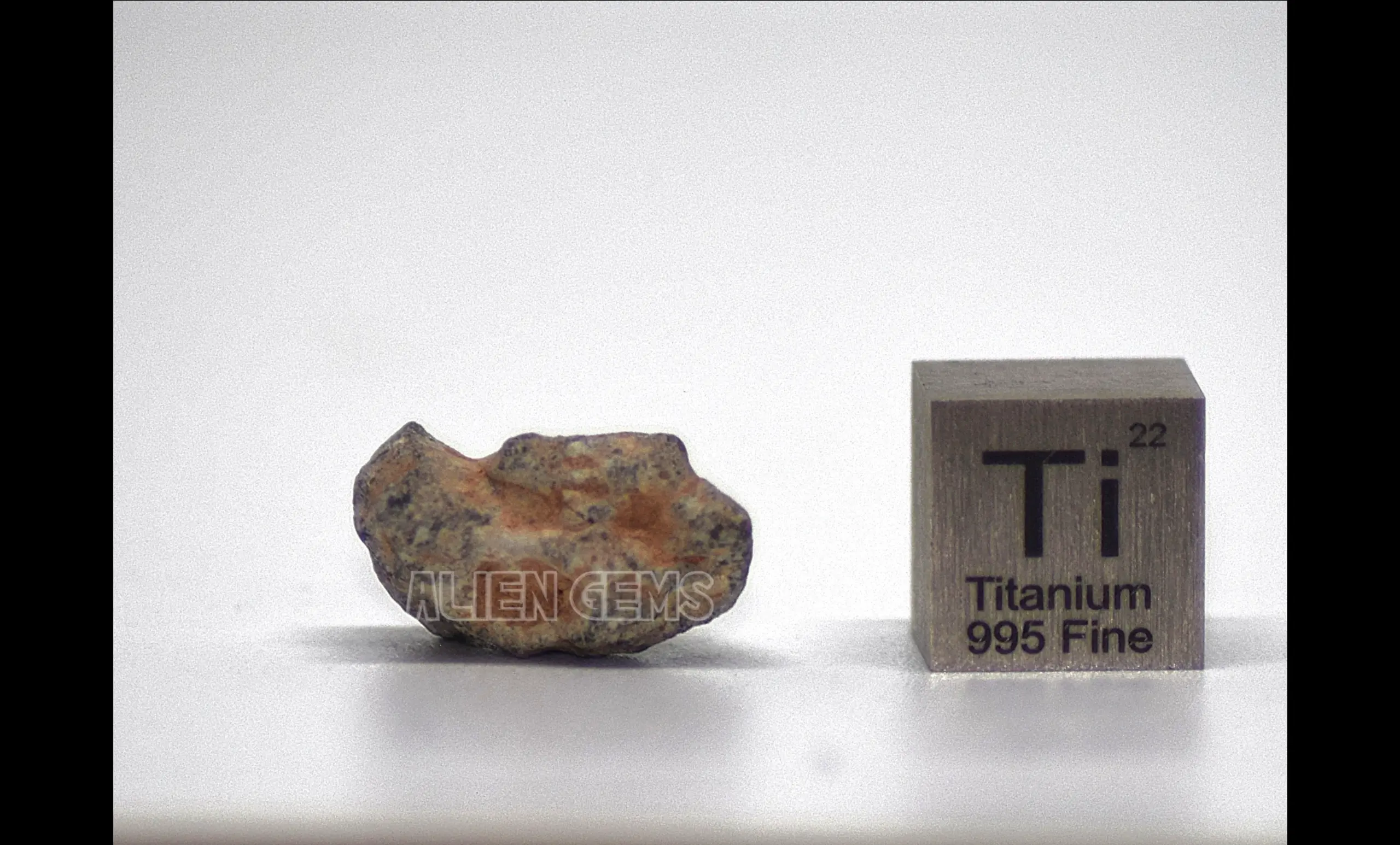
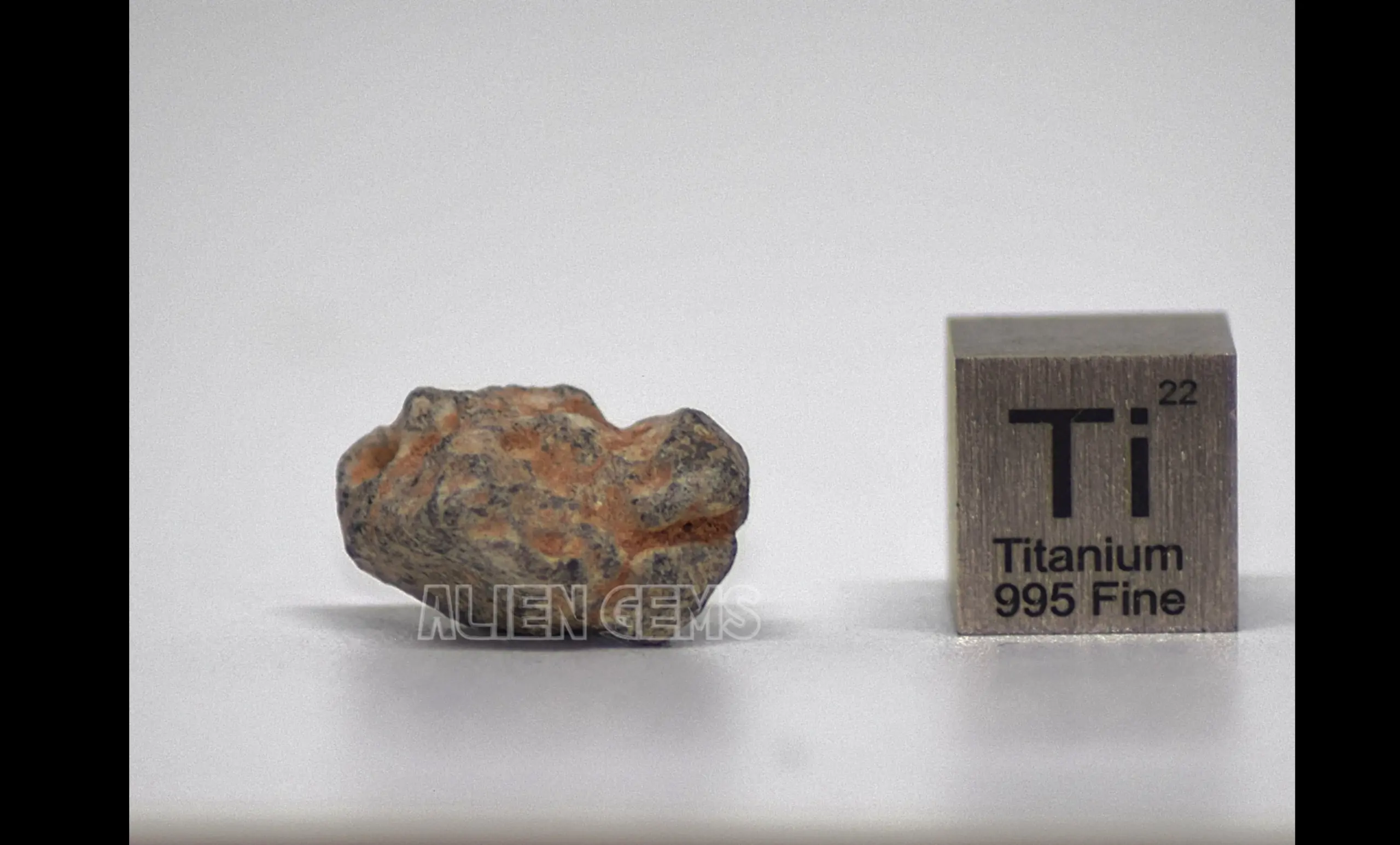
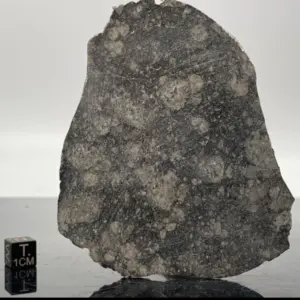
This specimen is a fragment of the Bechar 006 lunar meteorite, recovered from the Béchar region of Algeria in 2022. The stone remains entirely natural and has not been cut, polished, or altered in any way. The specimen represents genuine lunar material ejected from the Moon’s surface by impact events and later delivered to Earth.
Bechar 006 is classified as a lunar feldspathic breccia, a rock type formed when lunar surface material was fragmented and reassembled by repeated meteorite impacts. Surface characteristics vary depending on burial depth, ranging from a light brown weathered exterior to a white surface with orange caliche deposits. A typical fusion crust is absent, indicating limited melting during atmospheric entry. Every purchase includes a Certificate of Authenticity, and as a member of the Meteoritical Society, I personally guarantee the provenance of this specimen.
Features
• Name: Bechar 006 Moon Meteorite
• Type: Feldspathic breccia
• Classification: Achondrite (lunar)
• Dimensions: approx. 16 × 10 × 8 mm
• Weight: 1.6 g
• Origin: Moon
• Found: Béchar region, Algeria
• Condition: Individual (uncut, natural)
• Discovery Date: 2022
Petrography & Chemical Composition
Bechar 006 is a fine-grained polymict breccia composed mainly of plagioclase, low- and high-calcium pyroxene, and olivine, with minor anorthositic lithic clasts embedded in a compacted matrix. Portions of the matrix contain crystallized impact melt as well as subrounded clast-rich impact-melt inclusions, reflecting the complex collisional history of the lunar surface.
Representative mineral compositions include:
• Olivine: Fa 28.3 ± 6.4 (range Fa 17.5–40.1); atomic Fe/Mn ≈ 112
• Low-Ca pyroxene: Fs 26.4 ± 4.0; Wo 4.1 ± 2.1; Fe/Mn ≈ 67
• High-Ca pyroxene: Fs 17.9 ± 0.8; Wo 39.4 ± 1.4; Fe/Mn ≈ 48
• Plagioclase: An 96.2 ± 0.8; Or 0.1 ± 0.1
Bechar 006 represents authentic lunar highland material and preserves both textural and compositional features typical of Moon-derived feldspathic breccias. Its confirmed provenance, documented mineral chemistry, and unmodified condition make it suitable for scientific reference, advanced private collections, and institutional display.
Reviews
There are no reviews yet.