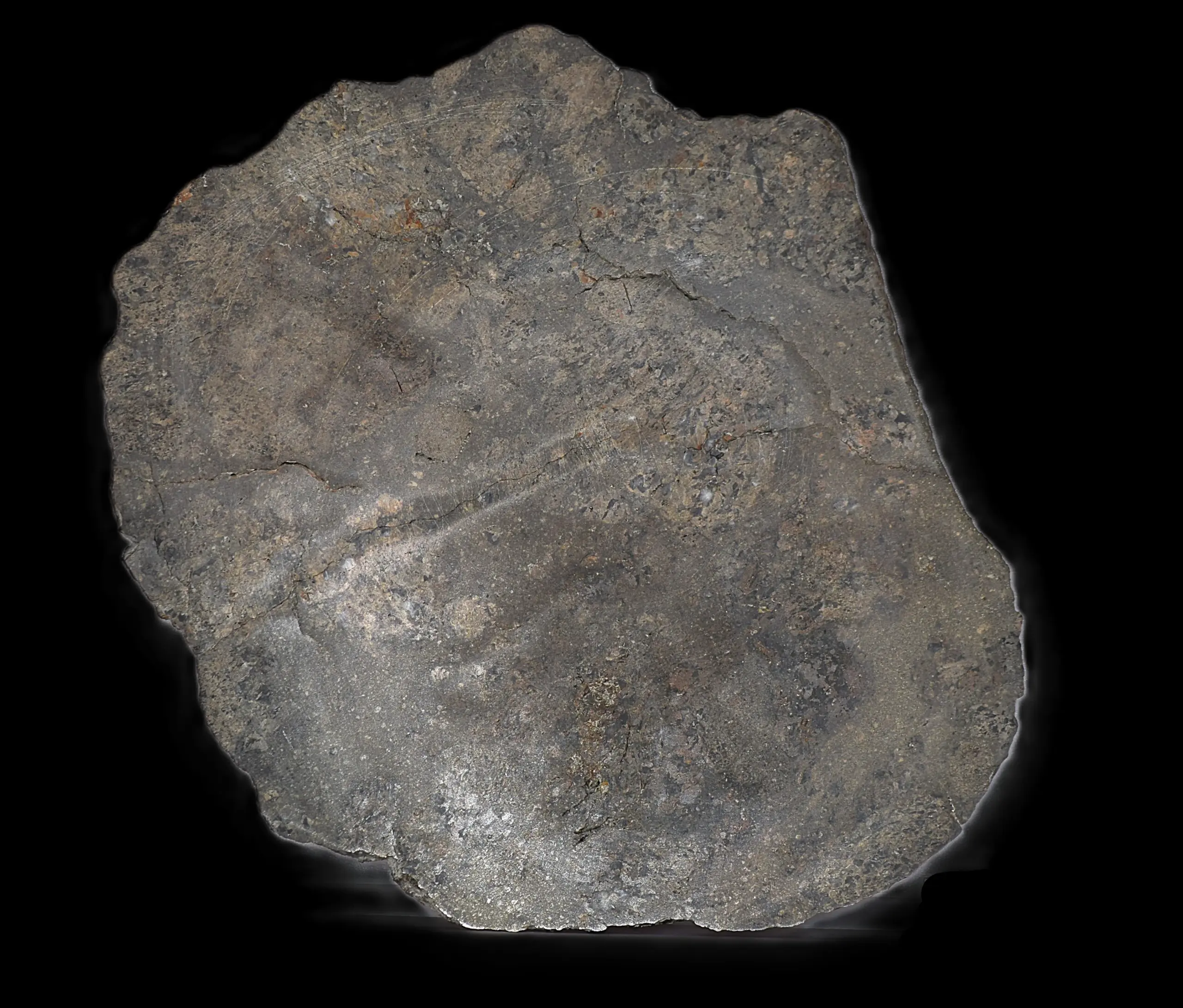
A 150 g slice of Jikharra 001, displaying the brecciated structure of this eucritic melt rock.
• Name: Jikharra 001
• Classification: HED achondrite — Eucrite melt breccia
• Origin: Differentiated HED parent body, likely asteroid 4 Vesta
• Total Known Weight: ~2.5 t
• Found: Libya
• Discovery Date: 2022
With a recovered mass of approximately 2.5 tons, Jikharra 001 represents one of the largest known examples of a eucrite melt breccia. The meteorite was discovered in Libya in 2022 and was officially classified by the Meteoritical Society as an HED achondrite of the eucrite melt breccia type.
Jikharra 001 consists of originally basaltic eucritic material that was later strongly modified by a major impact event. During this event, portions of the original rock were melted, mixed with fragmented solid material, and subsequently recrystallized. This produced an impact melt breccia containing both preserved eucritic fragments and newly formed melt regions.
The HED meteorites (Howardites, Eucrites, and Diogenites) originate from a differentiated parent body that, based on mineralogical, spectral, and isotopic similarities, is generally associated with asteroid 4 Vesta. Jikharra 001 is therefore interpreted as material derived from the basaltic crust of a Vesta-related differentiated asteroid.
The term eucrite melt breccia describes a rock that was originally eucritic material but was later partially melted and structurally modified by an impact event. The classification therefore reflects the secondary impact processing of the rock rather than its original formation as an igneous material.
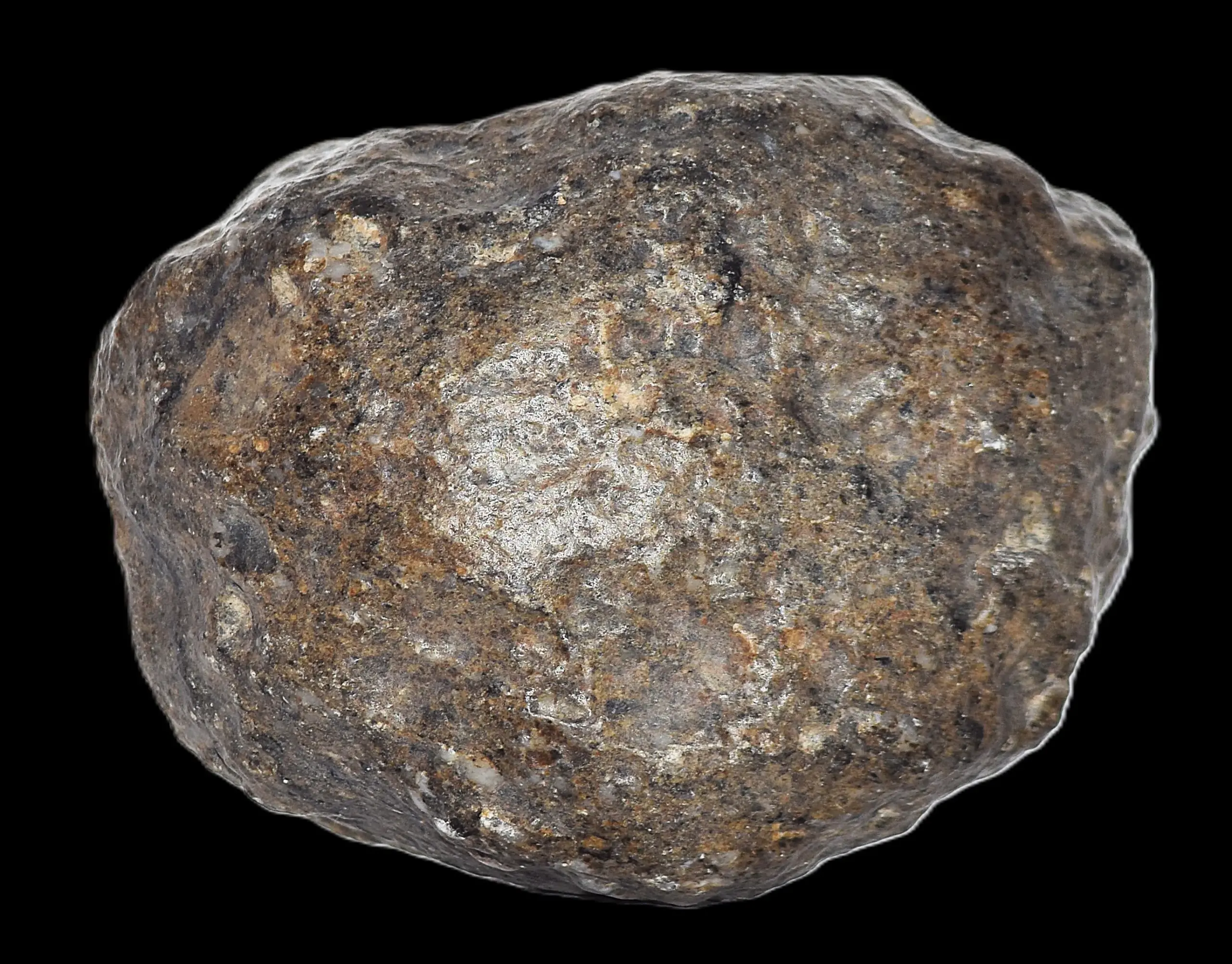
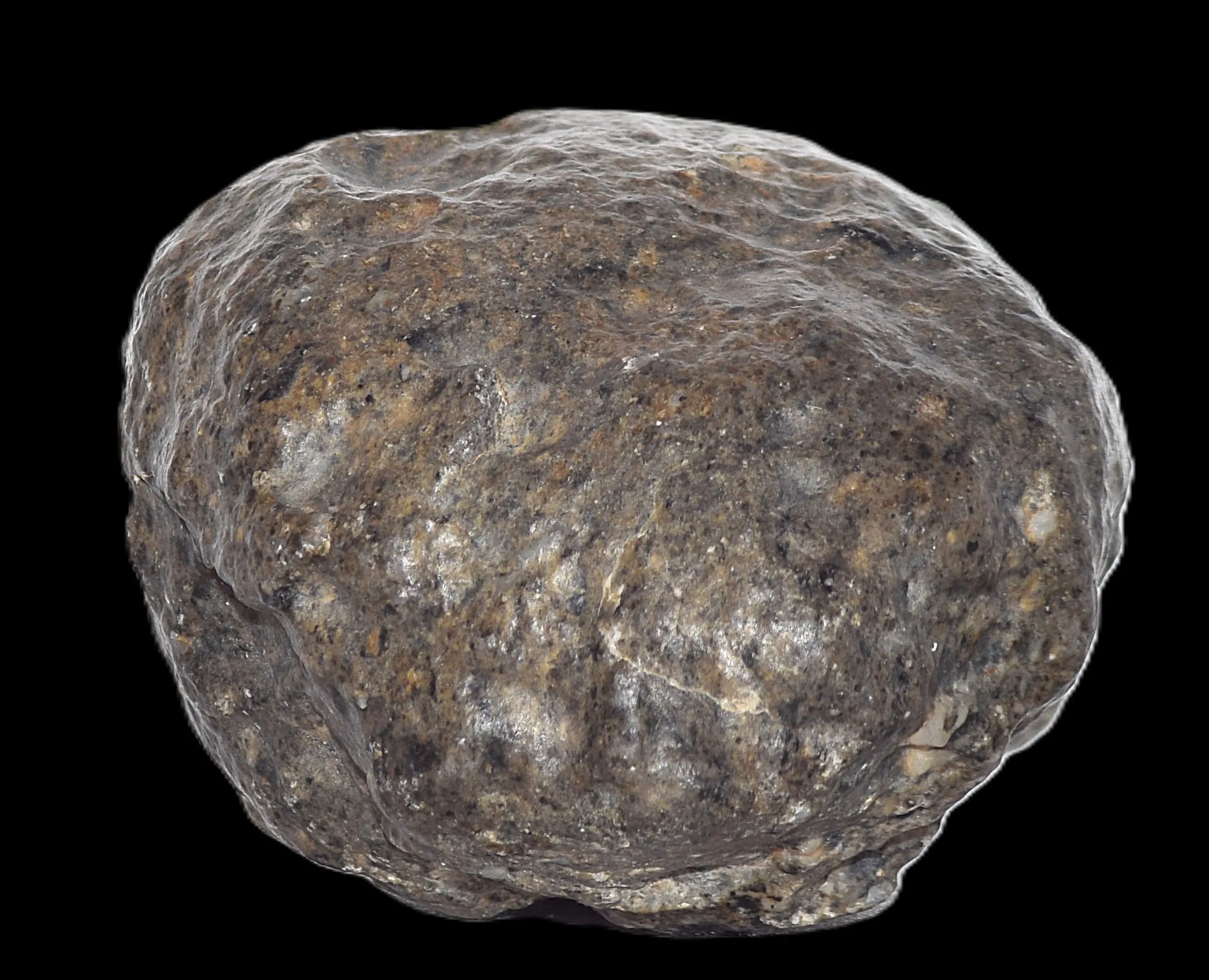
A 118 g complete individual specimen of Jikharra 001, displaying a coarse, brecciated surface texture characteristic of this impact melt rock.
Mineralogy
The mineralogy of Jikharra 001 is consistent with typical eucritic material and is dominated by calcium-rich plagioclase and the pyroxene pigeonite. The meteorite contains lithic fragments composed of calcic plagioclase and pigeonite aggregates embedded within a fine-grained recrystallized impact melt matrix. The chemical composition of the major minerals corresponds to ordinary eucrites and indicates a basaltic origin from the crust of a differentiated asteroid parent body.
The pyroxene compositions are characteristic of eucritic material with approximately Fs₅₀.₁±₁.₅Wo₁₁.₆±₁.₇ and an observed range of Fs₄₈.₁–₅₃.₄Wo₆.₉–₁₃.₃. The plagioclase composition is approximately An₉₀.₂±₀.₇. Additional mineral phases include Ti-bearing chromite, ilmenite, and iron sulfide (FeS). Metallic iron has not been reported as a significant component. The mineral assemblage is characteristic of basaltic crustal material from a differentiated asteroid and clearly distinguishes Jikharra 001 from primitive meteorite materials.
Petrography
Petrographically, Jikharra 001 displays a complex texture typical of an eucrite melt breccia. The meteorite consists of older eucritic fragments embedded within a younger impact-generated melt matrix. The preserved fragments represent portions of the original eucritic material, while the surrounding melt matrix records extensive thermal and mechanical modification caused by an impact event.
During this process, the original eucritic rock was fragmented, portions of the material were melted by shock heating, molten and solid components became mixed, and the melt subsequently cooled and recrystallized. The preserved eucritic fragments demonstrate that the precursor material was originally a basaltic crustal rock. However, the extensive modification of the texture through melting and recrystallization prevents classification as an ordinary unbrecciated eucrite.
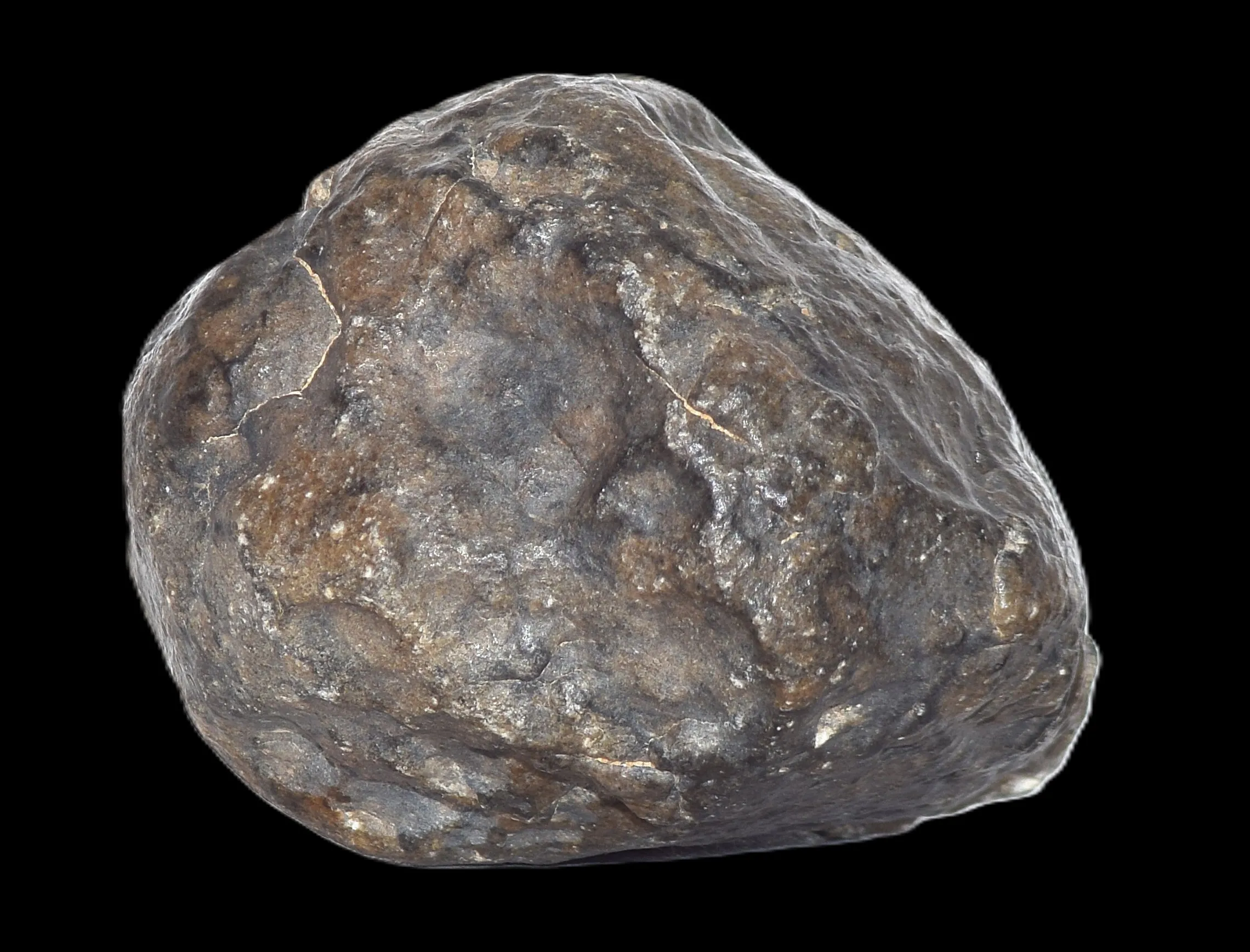
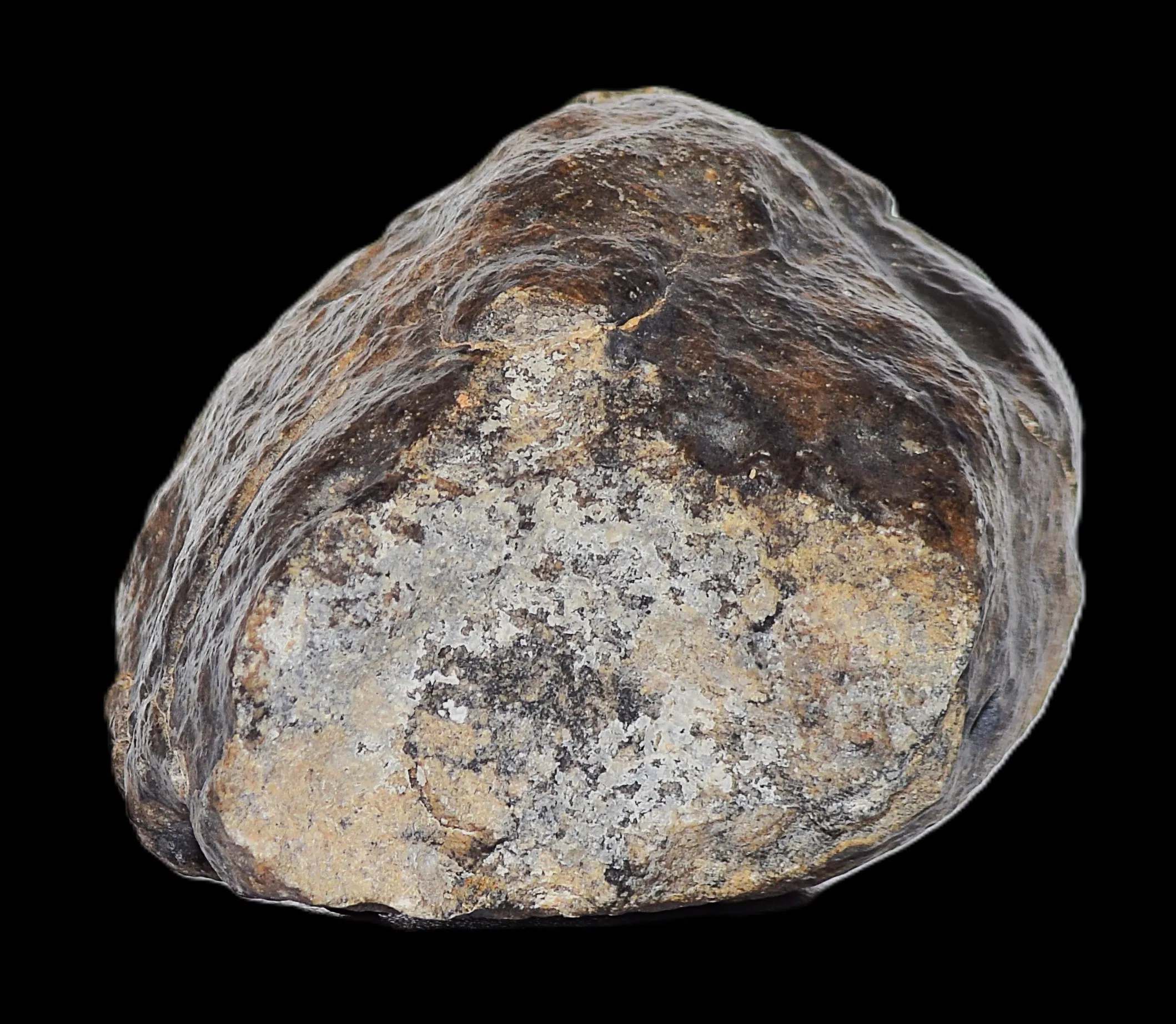
An 83 g uncut fragment of Jikharra 001, featuring a break that reveals the internal structure of this eucritic melt breccia.
Shock Metamorphism and Formation
The present structure of Jikharra 001 is the result of a multi-stage geological history. The precursor material formed as basaltic crust on a differentiated HED parent body. This body experienced early internal heating in Solar System history, resulting in melting and differentiation into crustal, mantle, and core regions.
The eucritic material crystallized from basaltic melts and was later modified by a major impact event. The resulting high pressures and temperatures caused fragmentation of the original rock, partial melting, mixing of different rock components, and formation of a recrystallized impact melt matrix. The combination of preserved eucritic components, melt structures, and recrystallized regions confirms an impact melt breccia origin.
Parent Body and Solar System Origin
Jikharra 001 belongs to the HED meteorite group, one of the best-studied groups of differentiated achondrites. HED meteorites are generally associated with asteroid 4 Vesta based on mineralogical similarities, spectral properties, oxygen isotope compositions, and geological interpretations from the NASA Dawn mission.
Jikharra 001 therefore represents ancient basaltic asteroid crustal material that was modified by impact processes before being delivered to Earth as a meteorite. Its history records the complex evolution of differentiated small planetary bodies, including crust formation, impact processing, and fragmentation.
Terrestrial Weathering and Age
Jikharra 001 was recovered from a dry desert environment in Libya, where exposure to terrestrial conditions caused some surface alteration. Weathering mainly affects exposed mineral surfaces and near-surface regions, while the primary eucritic mineralogy and characteristic impact melt textures remain preserved.
No published terrestrial age determination is currently available for Jikharra 001. Therefore, the exact duration of its residence on Earth remains unknown.
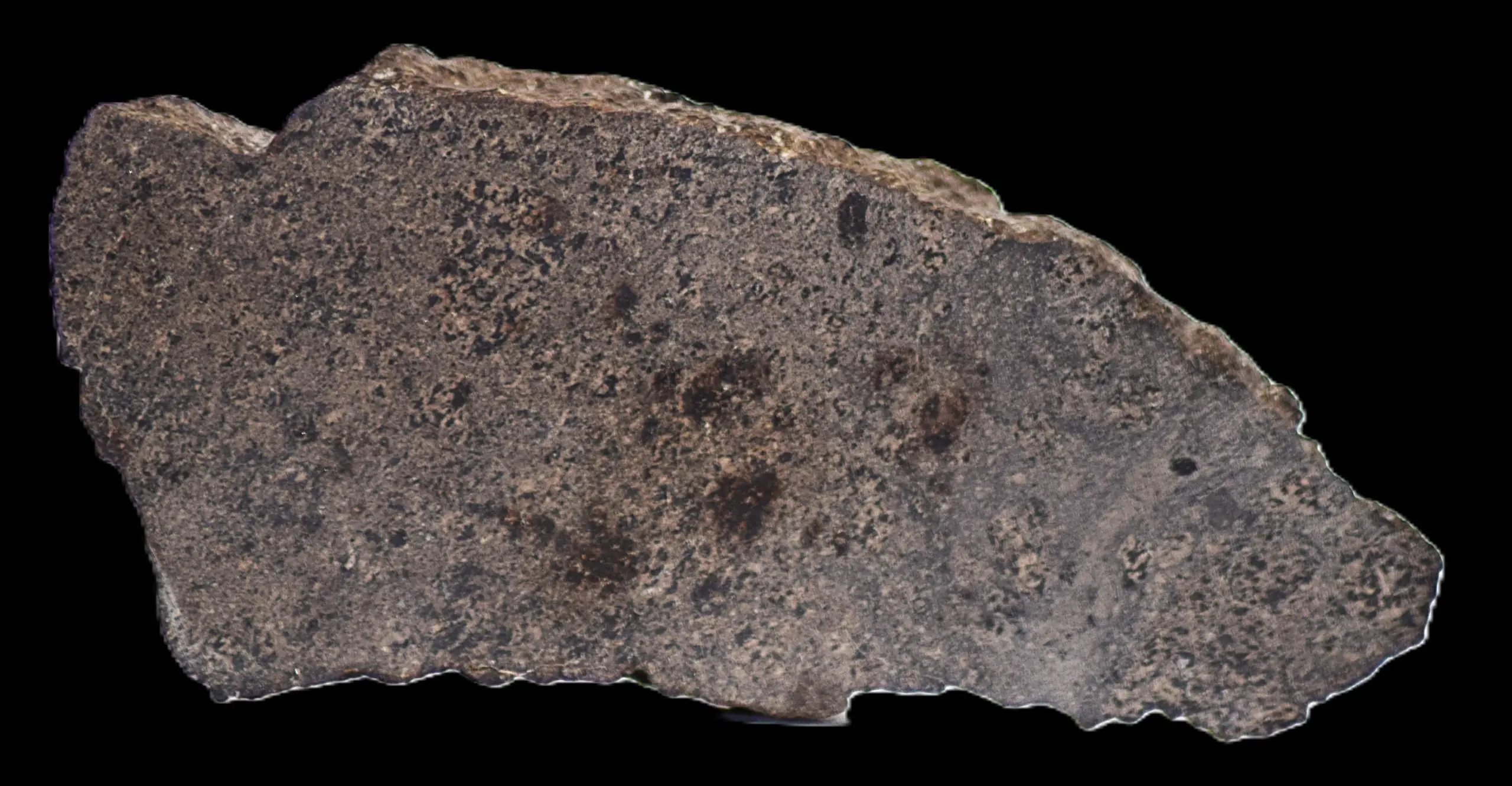
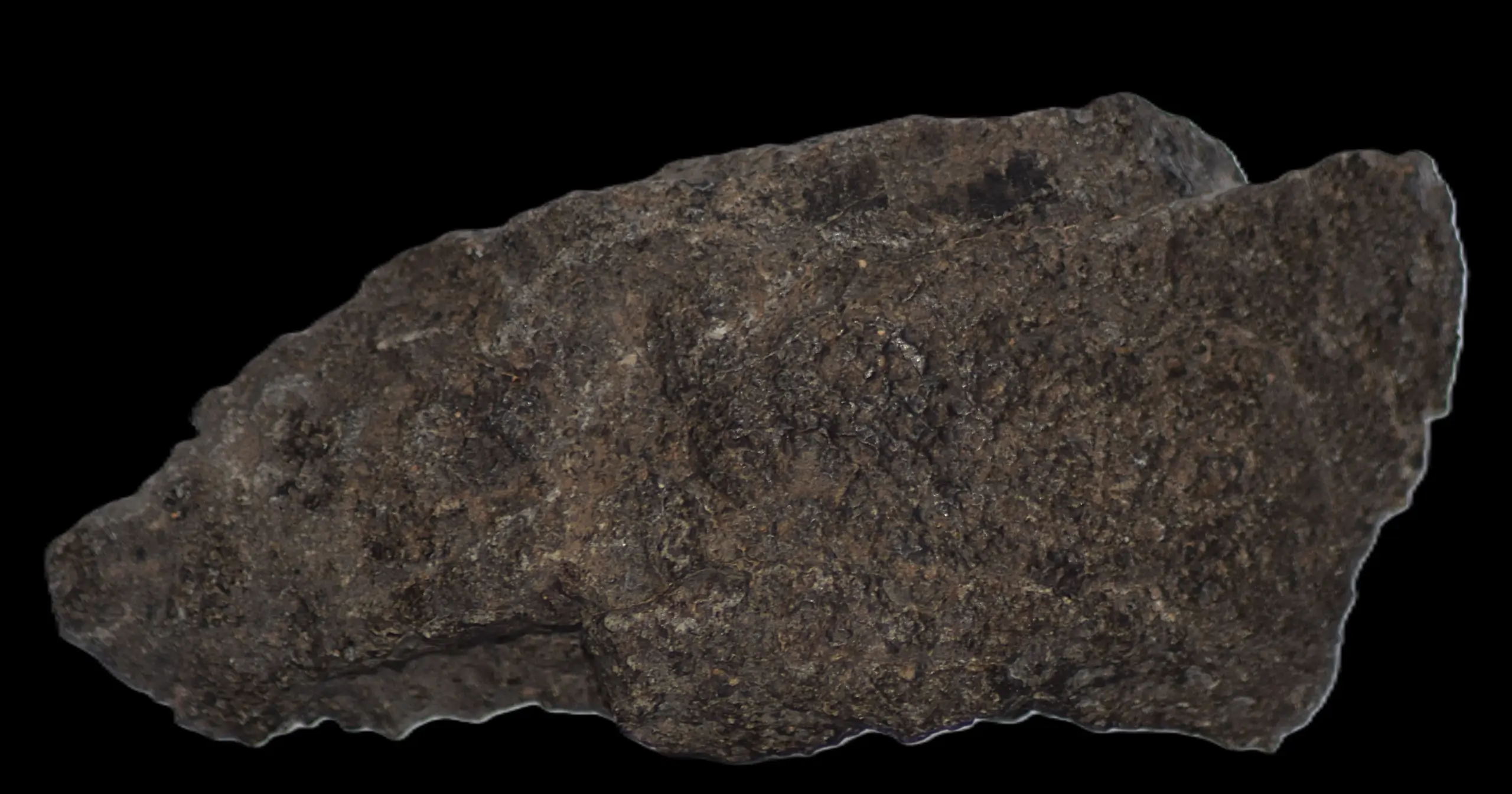
A 138 g specimen of Jikharra 001, featuring a single cut surface.
Scientific Significance
Jikharra 001 is scientifically important because it represents one of the largest known eucrite melt breccias and provides valuable information about impact processes on differentiated asteroids. Its exceptional recovered mass, well-preserved eucritic mineralogy, and complex shock-related textures allow investigations into impact processes on differentiated asteroids, the formation of basaltic planetary crusts, the evolution of HED parent bodies, and the effects of large collisions during early Solar System history.
Jikharra 001 represents an important research specimen within the HED meteorite group and provides valuable material for studying the geological evolution of differentiated small planetary bodies.
References
• Meteoritical Bulletin Database. Official classification entry for Jikharra 001.
• Gattacceca, J. et al. (2023). The Meteoritical Bulletin, No. 111. Meteoritics & Planetary Science.
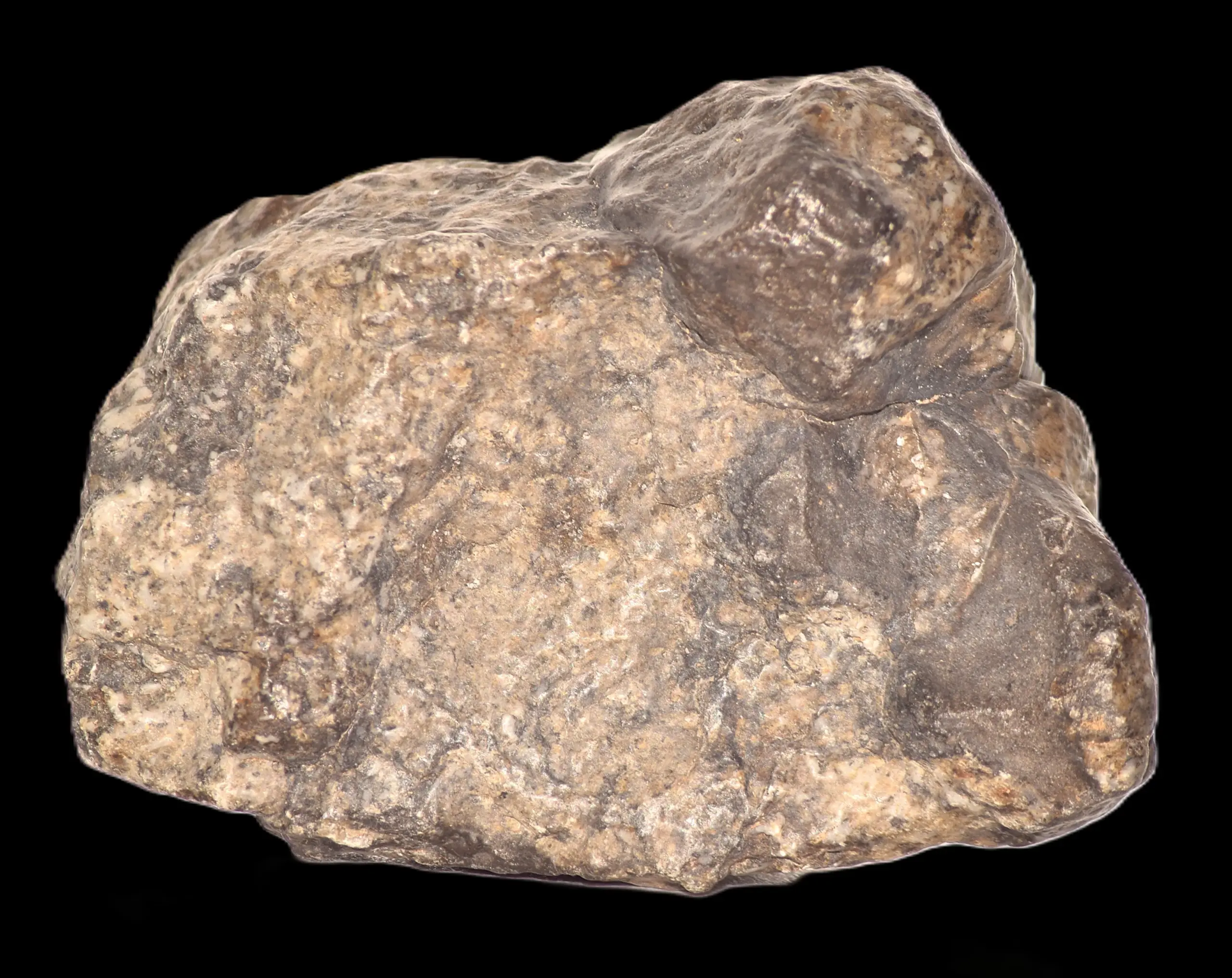
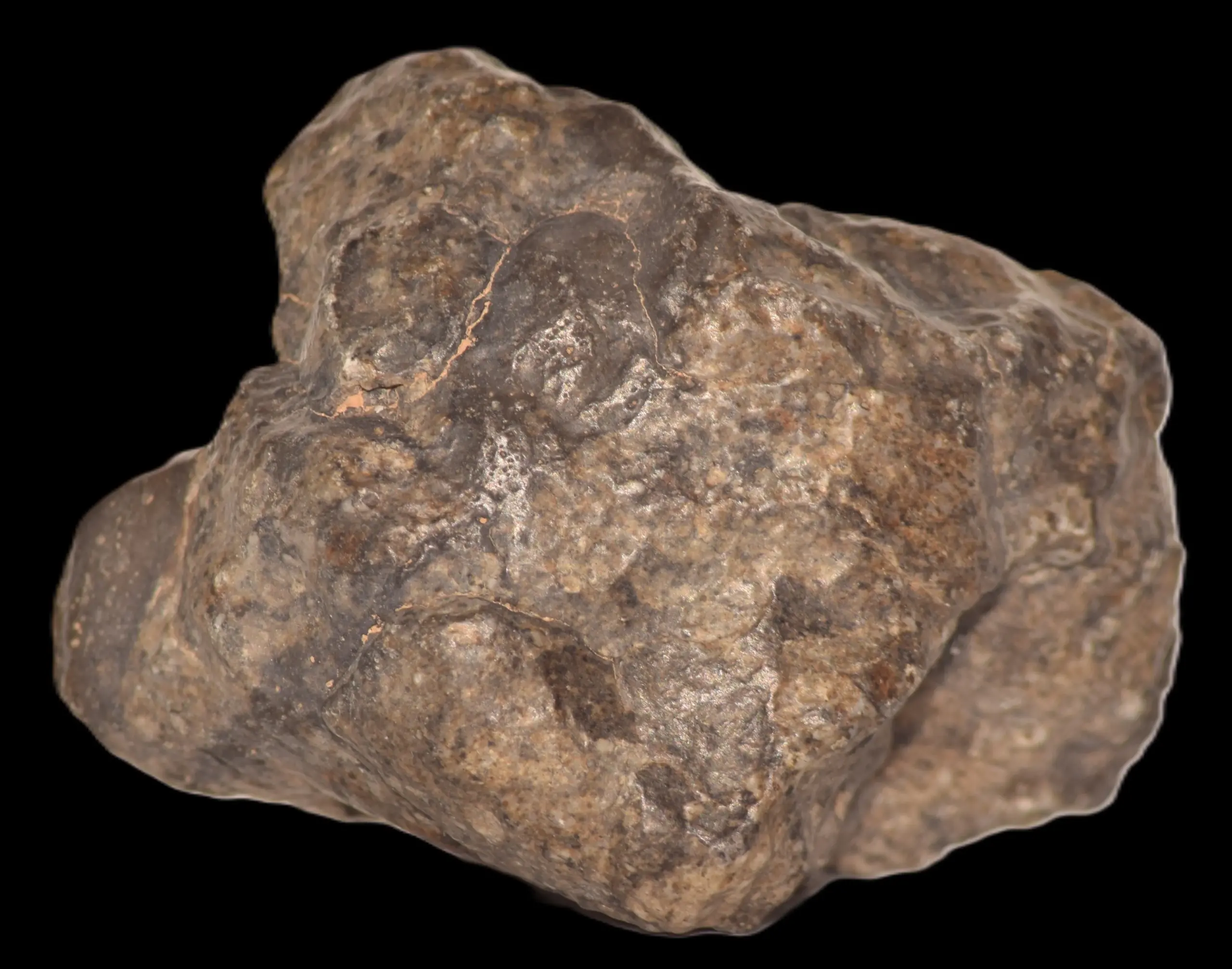
A 103 g complete individual specimen of Jikharra 001, showing a weathered, light-colored fusion crust and a darker broken surface.