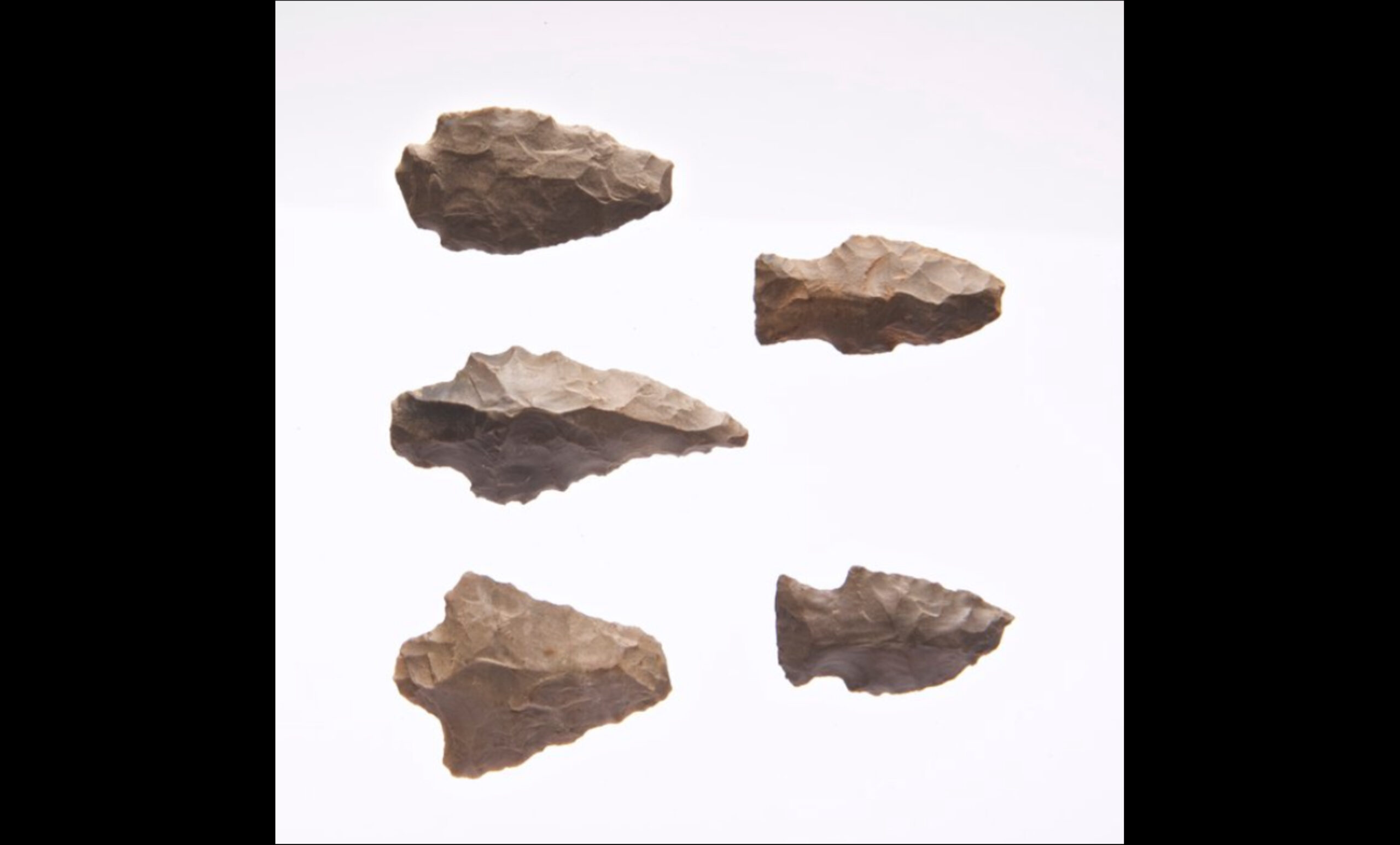
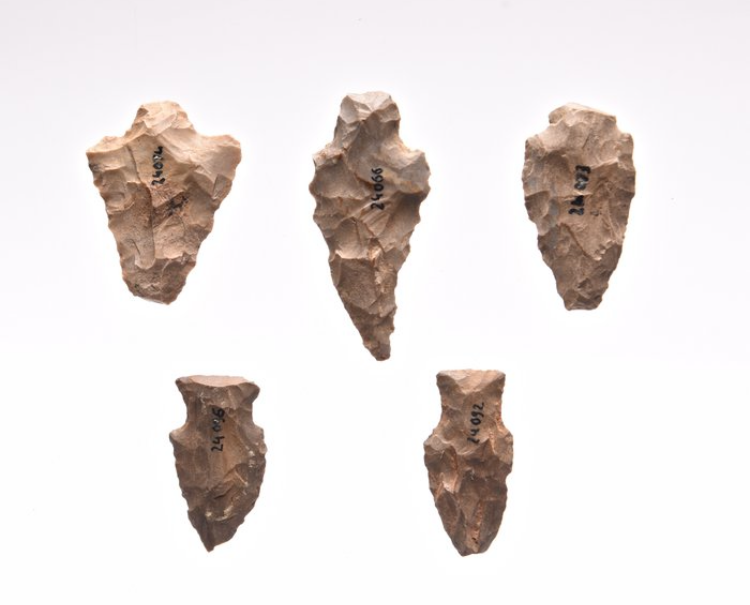
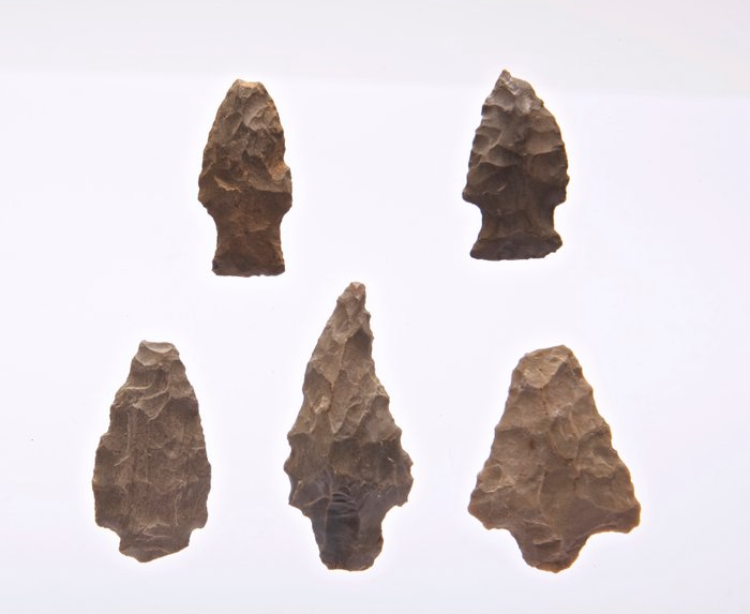
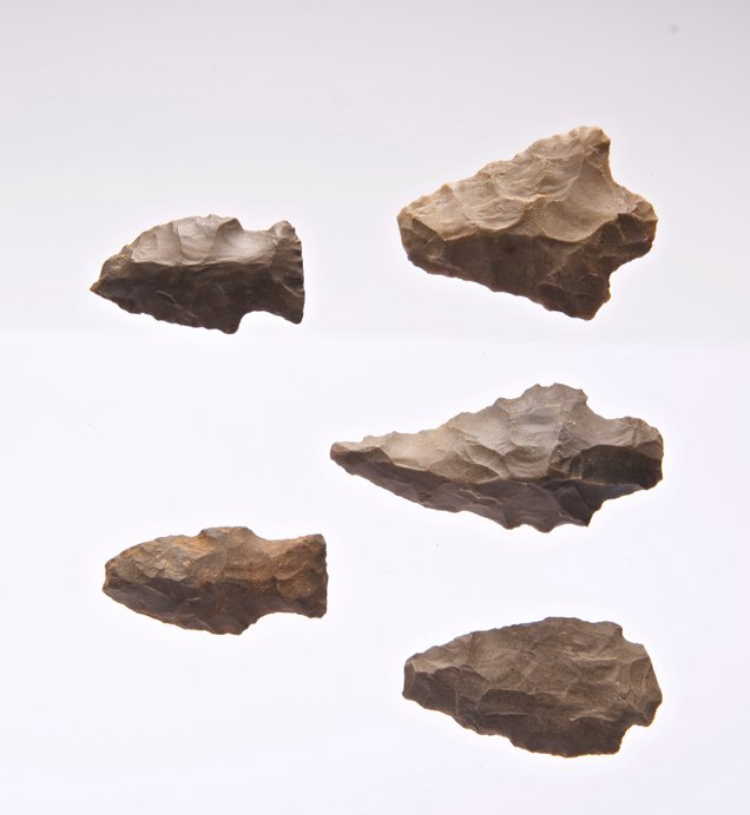
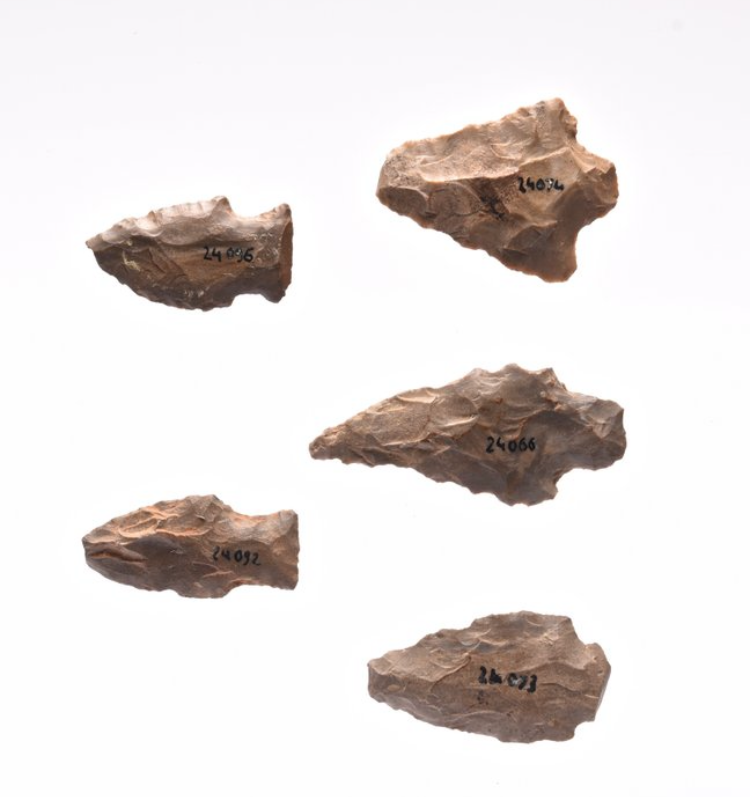
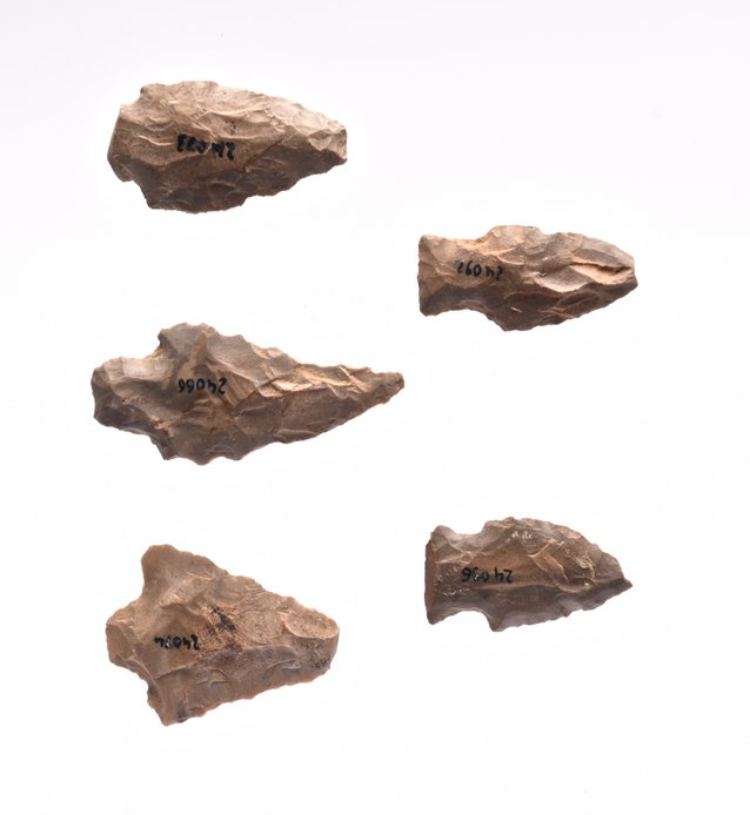
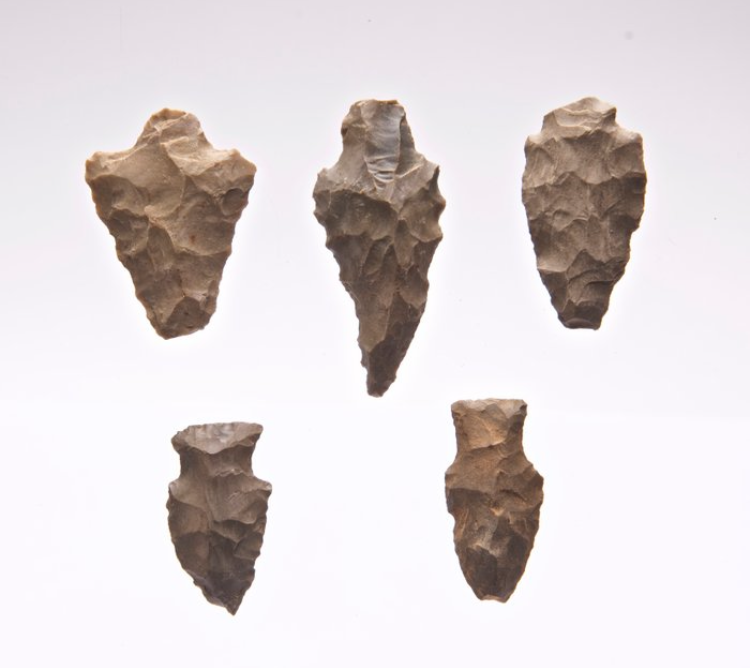
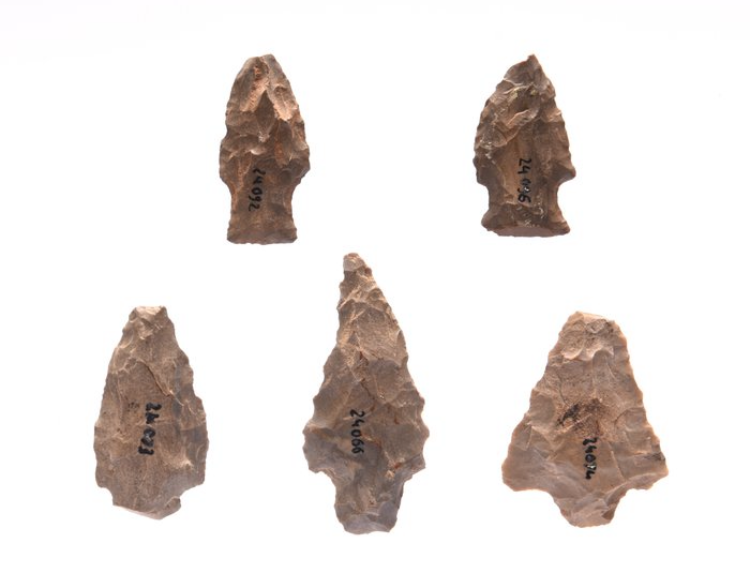
This lot of five Neolithic flint arrowheads, weighing approximately 50 g in total, was recovered in Arkansas and Tennessee, USA. Dating from approximately 4000–1300 BP, these arrowheads are in good condition with no restorations and measure 40–60 mm in height. Previously exhibited at the New Indian Ridge Museum, they were later part of a larger French collection.
Features
• Culture: Neolithic
• Period: Late Archaic–Woodland (4000–1300 BP)
• Material: Flint
• Type: Arrowheads (set of 5)
• Height: 40 – 60 mm
• Weight: ~50 g
• Condition: Good, no restorations
• Provenance: Previously exhibited at New Indian Ridge Museum; part of a French collection; acquired from Belgian dealer in 2025
• Certificate: Certificate of authenticity included
Cultural and Functional Context
These Neolithic flint arrowheads reflect the skill and ingenuity of the early inhabitants of the Arkansas and Tennessee regions. They provide valuable insight into the hunting practices, tool-making techniques, and daily life of prehistoric North American communities during the Late Archaic to Woodland periods. Each piece retains its original form and demonstrates the careful craftsmanship necessary for functional and durable hunting implements.
During the Late Archaic to Woodland period (approximately 4000–1300 years before present), people living in what is now Arkansas and Tennessee formed small, mostly mobile communities. They primarily relied on hunting and gathering, consuming local plants, nuts, and wild animals. Over time, there is evidence that some groups began cultivating crops such as maize, beans, and squash, providing a more stable food supply.
Social organization likely centered around family or clan groups. Some indications of emerging social hierarchy are inferred from burial mounds and grave goods, although the exact nature of these hierarchies remains uncertain.
Archaeological findings show the use of ceramics, stone tools, and ornaments made from shells, bones, and stone. Some artifacts suggest symbolic or decorative purposes, but their meanings are interpretive.
The construction of small burial mounds in this region is documented and likely served both ritual and social functions. Communities often settled near rivers, such as the Mississippi River and its tributaries, which provided water, food resources, and transportation routes.
This period represents a transition from predominantly mobile lifestyles toward more settled habitation, laying the groundwork for later Woodland cultures in eastern North America.



Reviews
There are no reviews yet.