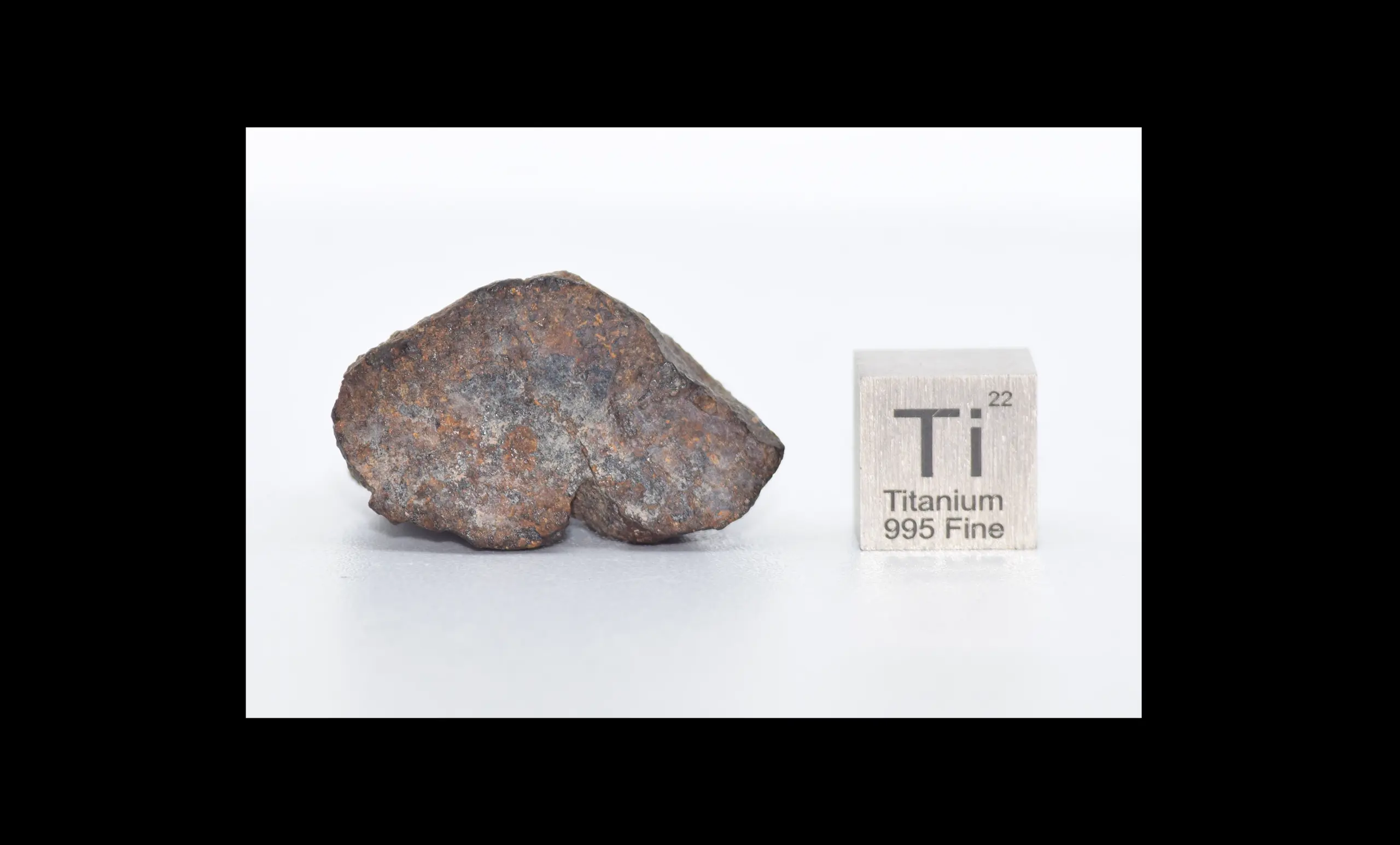
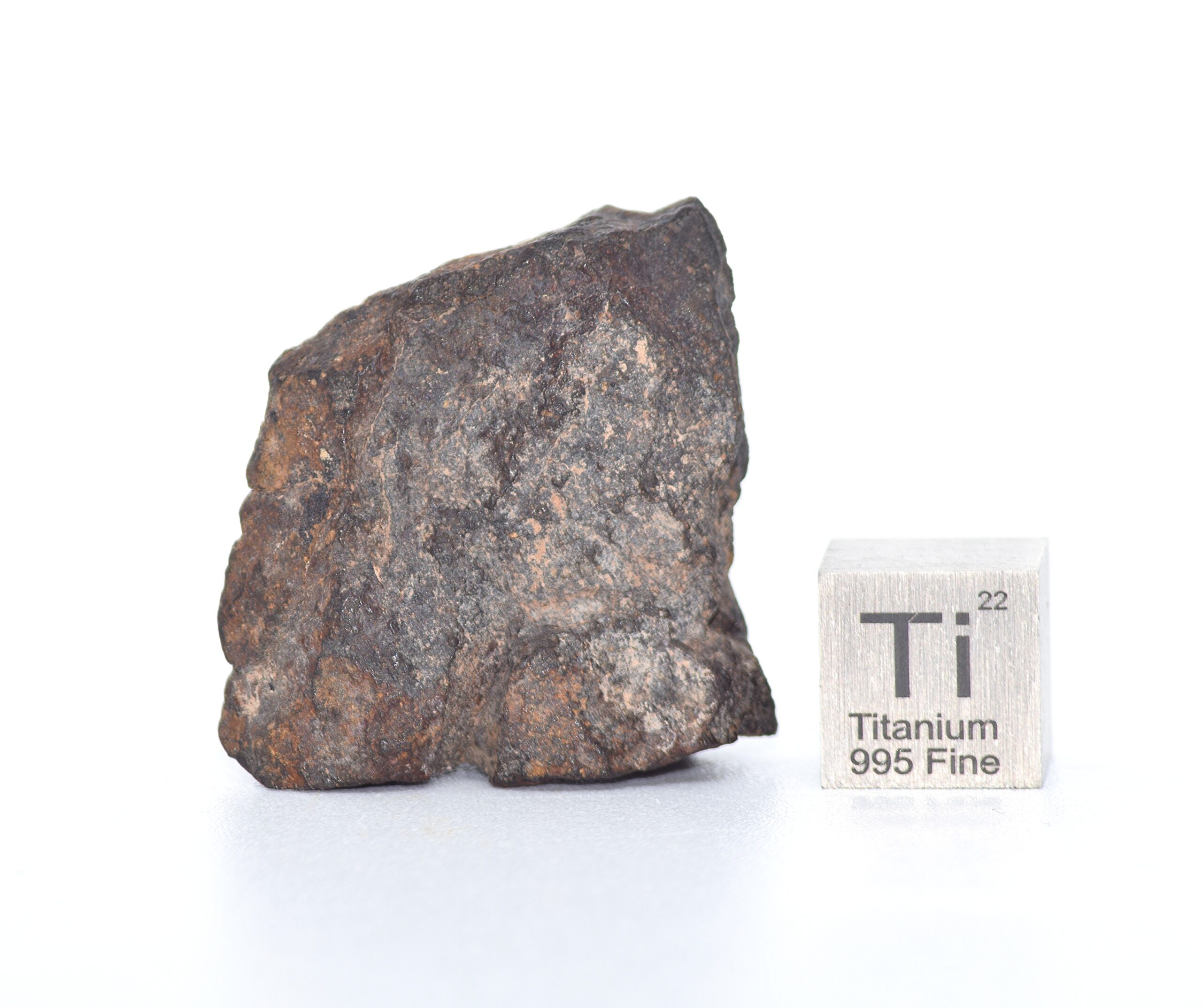
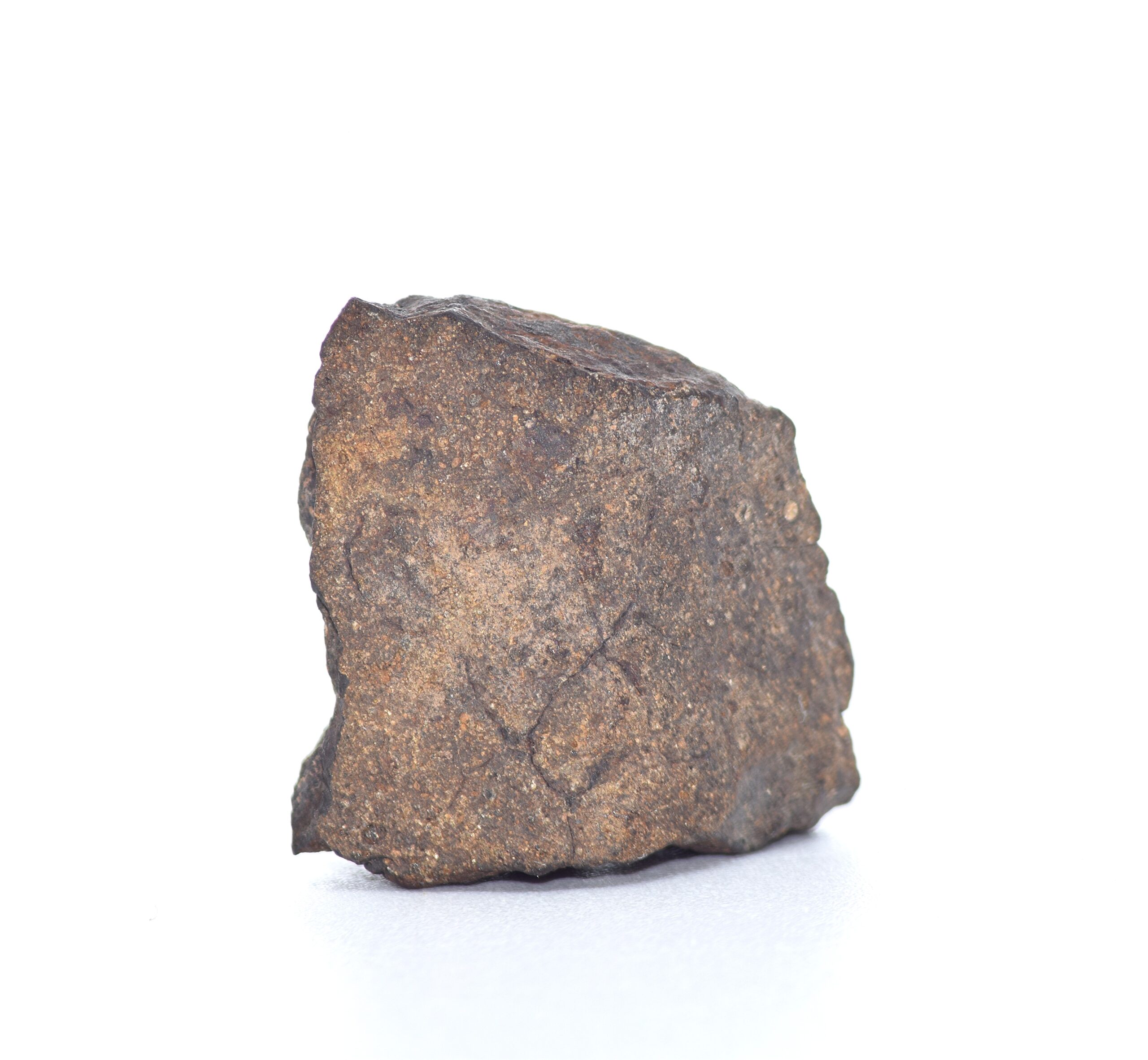
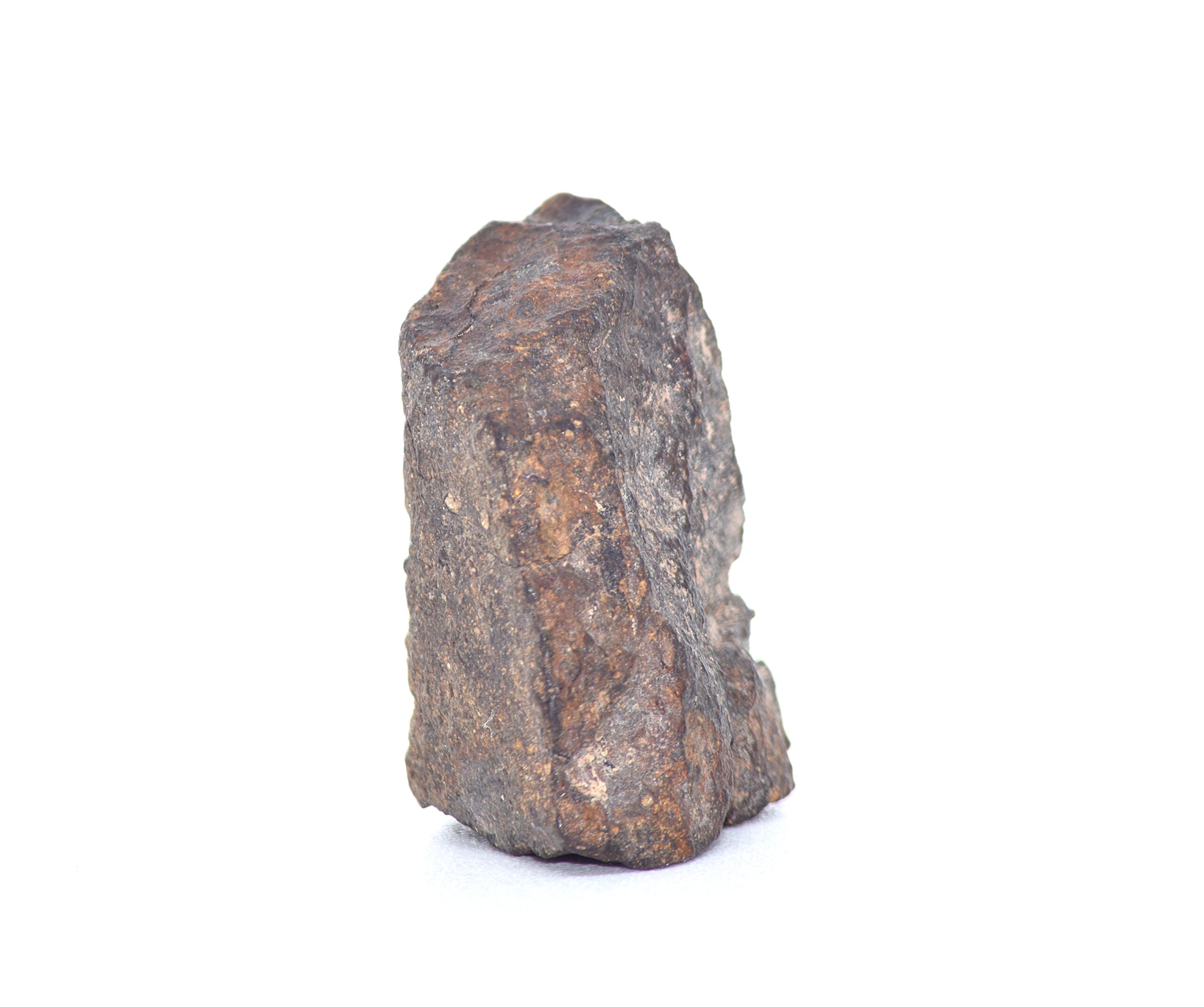
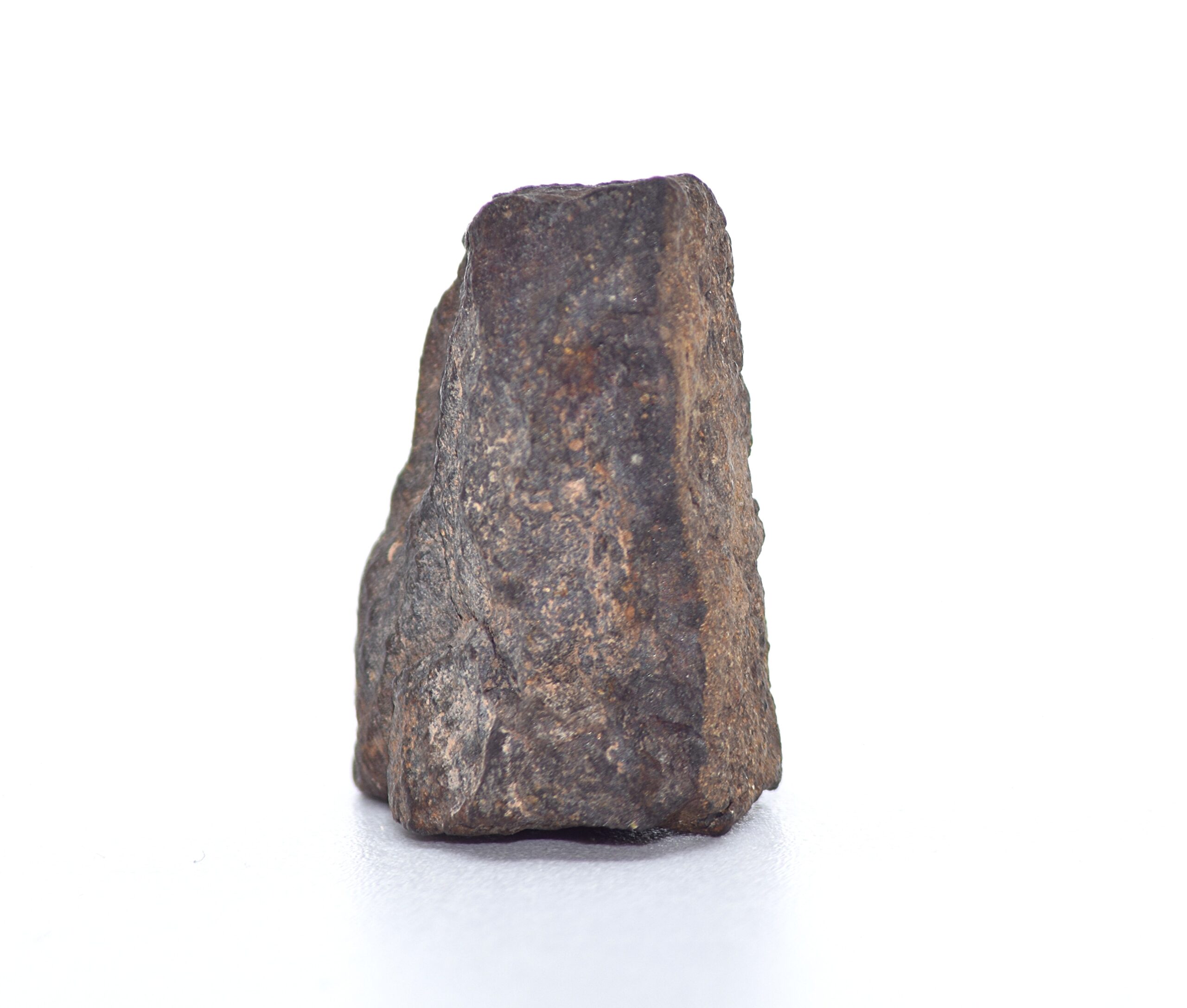
This specimen is a 15.7 g fragment of the meteorite NWA 16415. NWA 16415 is classified as a carbonaceous CO3 chondrite, a rare group of primitive meteorites that formed during the earliest stages of the solar system. These meteorites are valued for their primitive fine-grained matrix and characteristic mineralogy, which provide insights into the processes that occurred in the protoplanetary disk over 4.5 billion years ago.
Features
• Name: NWA 16415
• Type: Carbonaceous Chondrite
• Classification: CO3
• Dimensions: approx. 26 × 25 × 16 mm
• Weight: 15.7 g
• Origin: Undifferentiated asteroid (parent body unknown)
• Found: Northwest Africa
• Condition: Individual (uncut, natural)
• Discovery Date: 2023
• Certification: Included, issued by an IMCA member
Scientific and Physical Characteristics
Mineral compositions include olivine with Fa7.3 ± 5.2 (Fa0.4–22.5; n=16) and low-calcium pyroxene with Fs2.4 ± 1.6 Wo1.8 ± 1.2 (Fs0.8–5.3 Wo0.6–4.5; n=18), consistent with the classification as a CO carbonaceous chondrite.
The meteorite is classified as a CO3 chondrite based on the presence of CAIs, small chondrule size, chondrule-matrix ratio, and mineral chemistry. The petrologic type 3 assignment is based on the chemical variation of olivine and pyroxene. The specimen exhibits shock stage C-S1.
Reviews
There are no reviews yet.