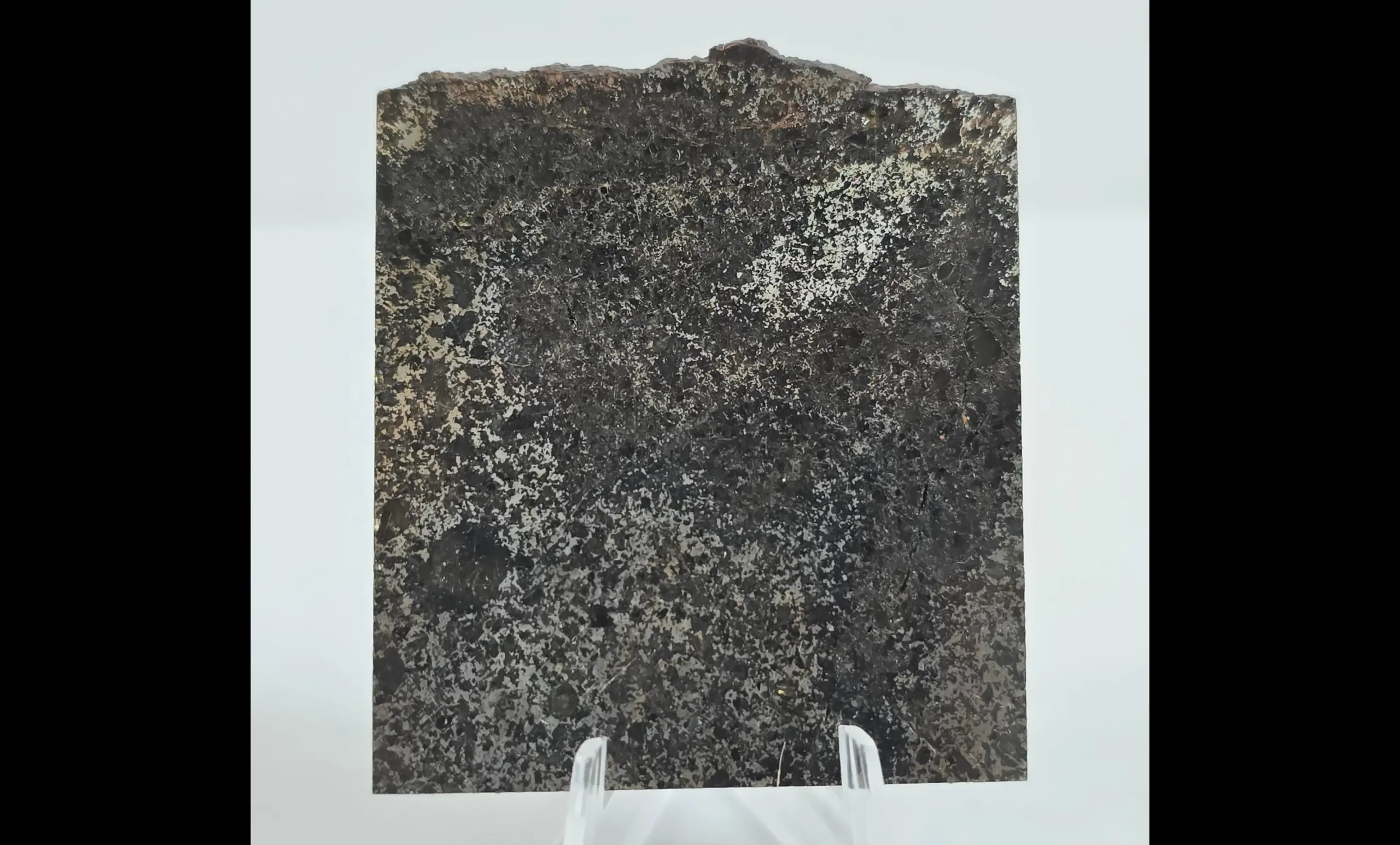
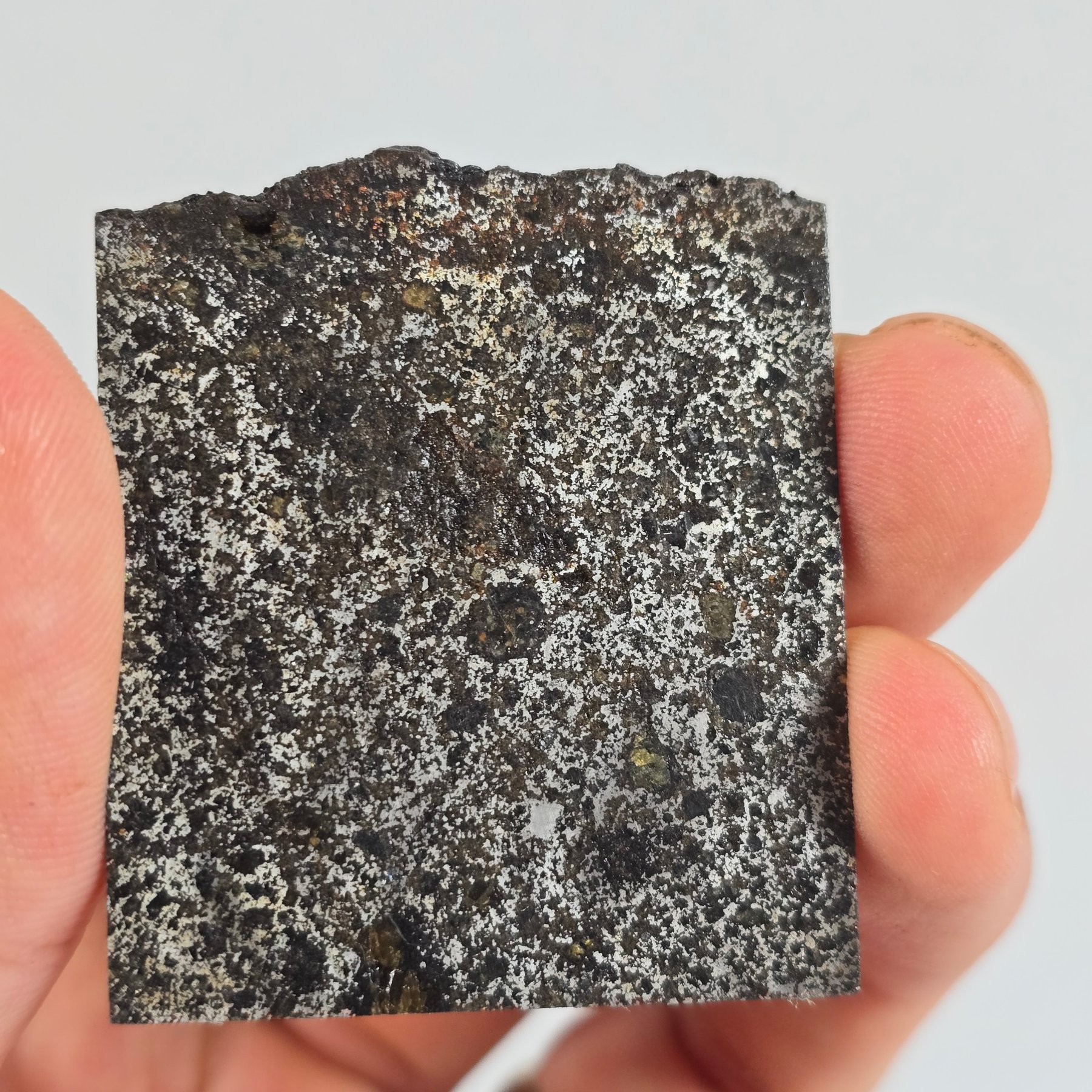
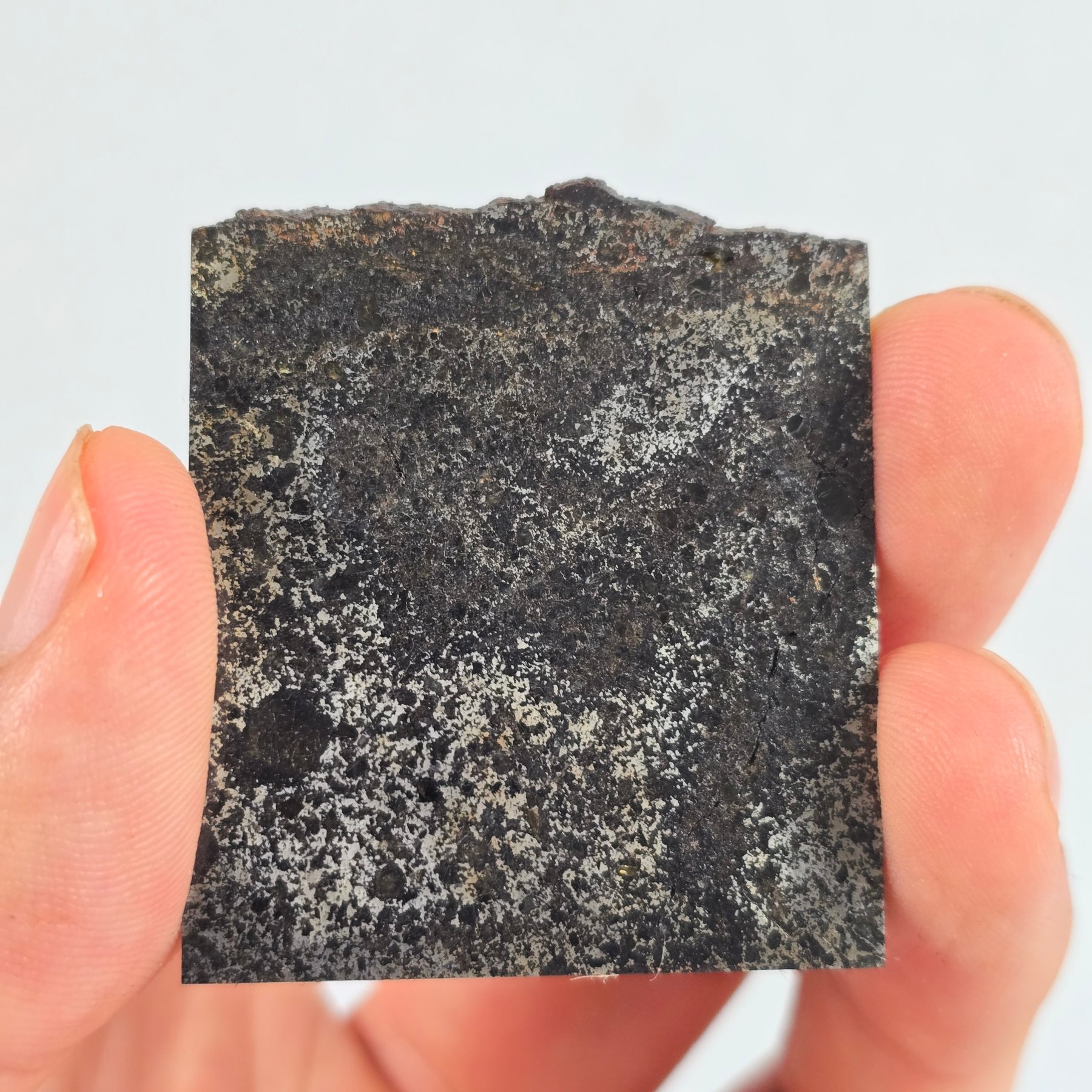
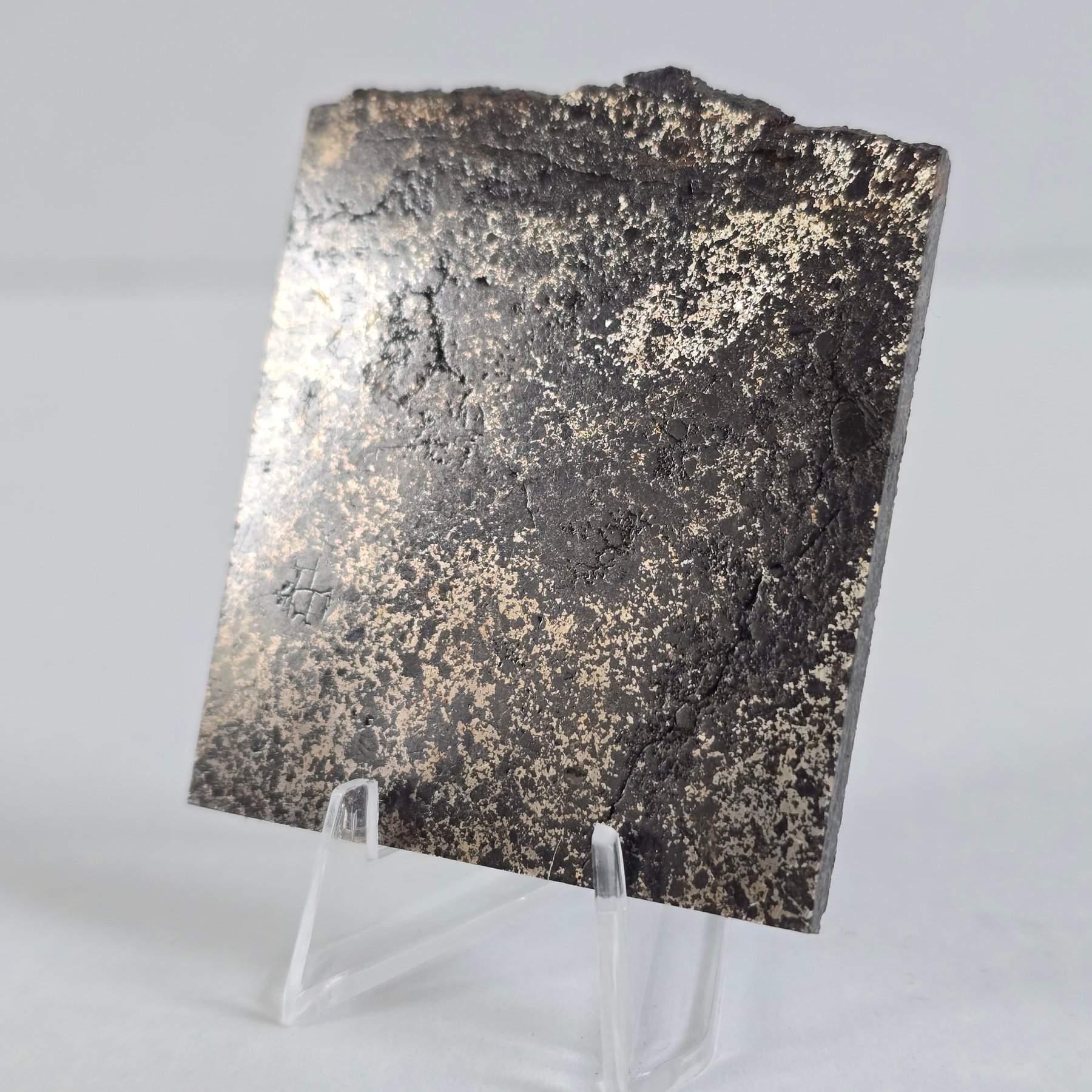
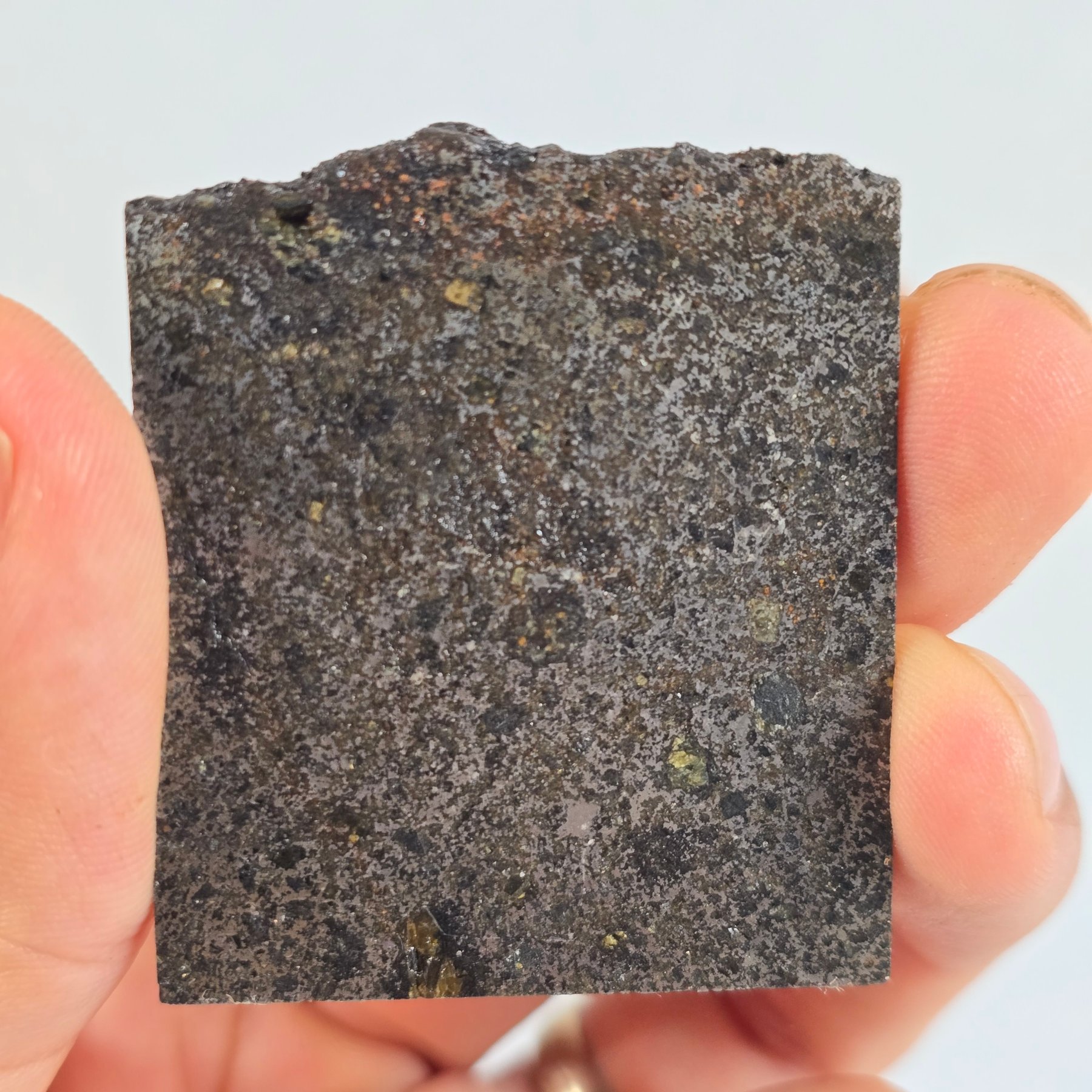
18.5 g Tanezrouft 091 mesosiderite meteorite slice featuring metallic structure. Certified collector’s piece. This rare mesosiderite was discovered in the Tanezrouft region near Adrar, Algeria, in 2020 as part of a larger 4.99 kg find that exhibits the characteristic brecciated mix of metal and silicate typical for its class.
Features
• Name: Tanezrouft 091
• Type: Mesosiderite
• Classification: Achondrite, stony-iron
• Dimensions: approx. 45 × 40 × 5 mm
• Weight: 18.5 g
• Origin: Parent body unknown
• Found: Tanezrouft
• Form: Slice
• Condition: Natural, preserved metallic matrix with translucent olivine
• Discovery Date: 2020
• Certification: Authenticated by an IMCA member
Scientific and Physical Characteristics
Tanezrouft 091 is a mesosiderite, a rare stony-iron meteorite composed of silicate rock fragments embedded in a nickel-iron matrix. This meteorite slice preserves translucent olivine crystals and evidence of brecciation, providing insights into early Solar System processes, planetary differentiation, and collisional events among asteroidal bodies.
NWA 869 is classified as an L4–6 chondritic breccia, containing a mixture of materials with varying degrees of thermal metamorphism. Primitive, unmetamorphosed type 3 chondrites are combined with strongly metamorphosed type 6 fragments. The matrix is predominantly L‑chondrite material with visible chondrules and inclusions. Approximately 75 vol.% of the meteorite consists of matrix, along with clasts partially affected by shock and impact‑melt inclusions distributed throughout the rock. The total recovered mass of NWA 869 is substantial, making it one of the most significant L‑chondrite strewn‑field finds.

Reviews
There are no reviews yet.