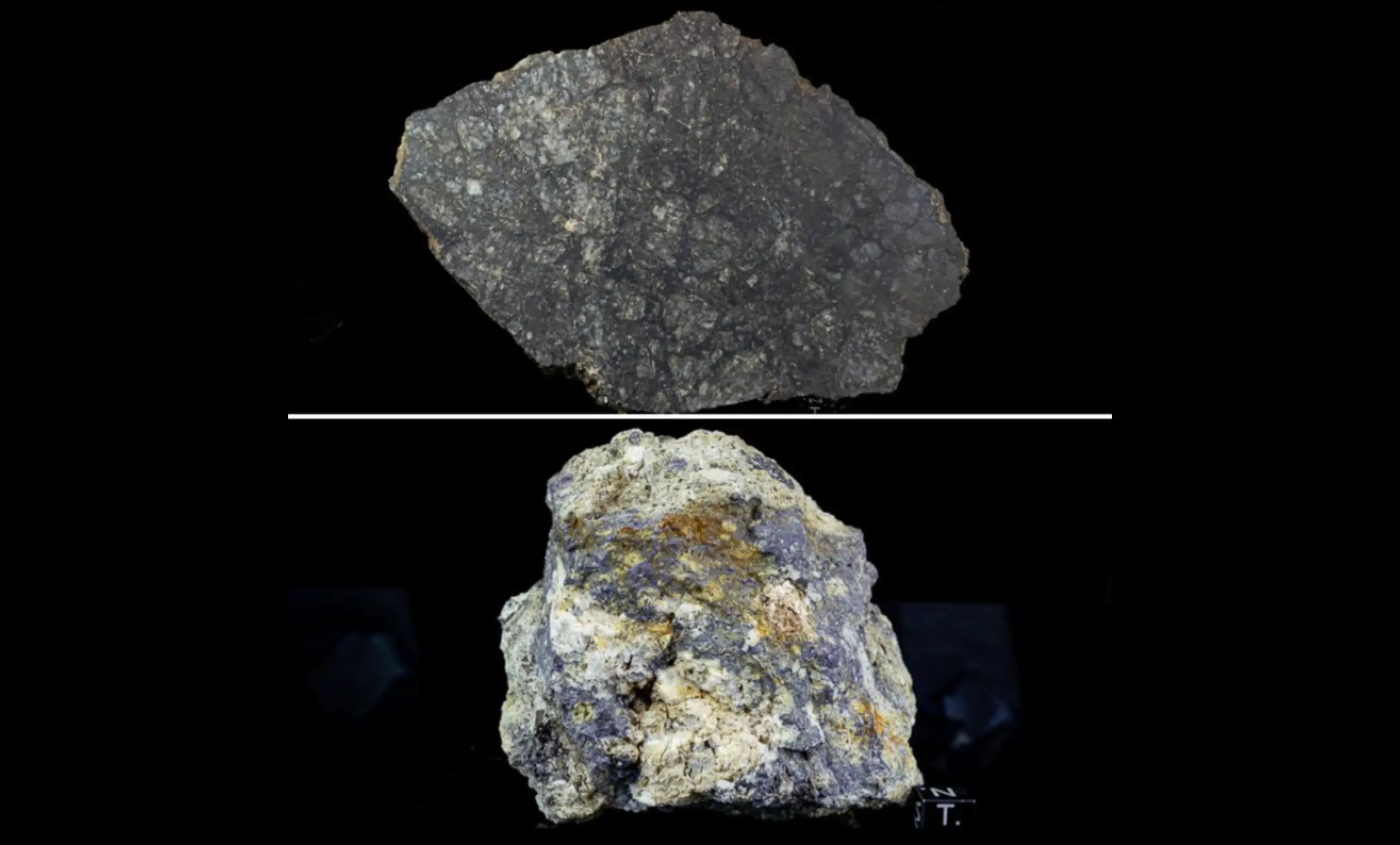
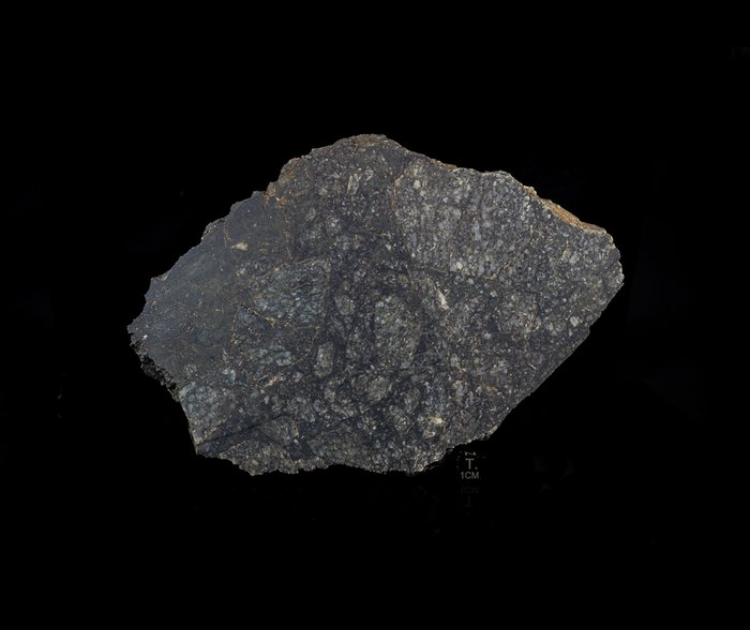
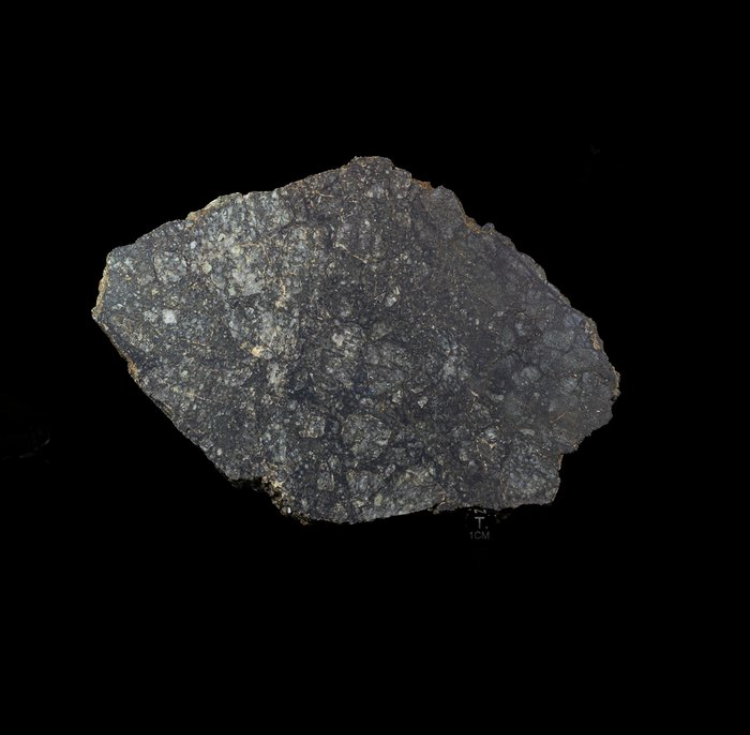
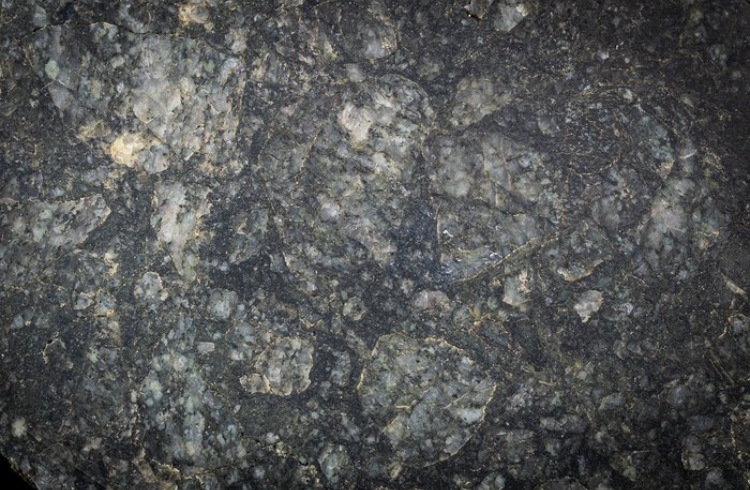
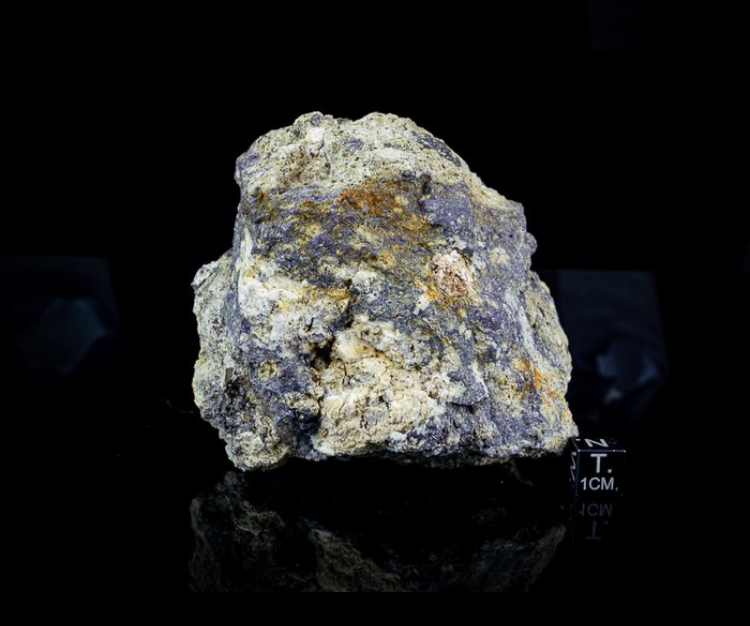
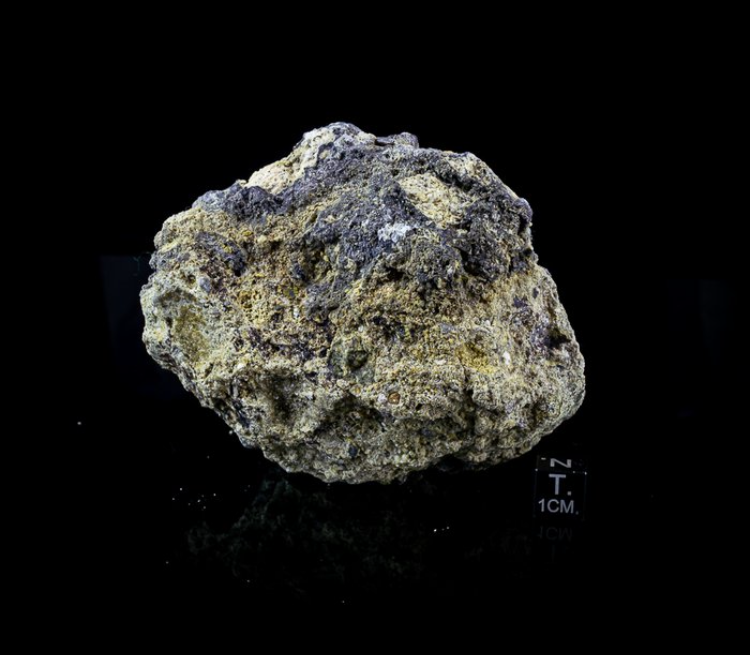
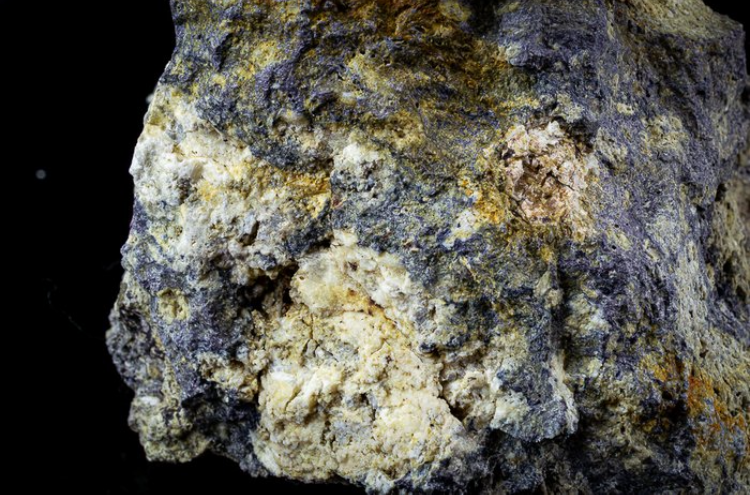
Lockne and Ries impact material, total weight 865 g. Two natural impact rocks from Europe, representing marine and continental meteorite impacts from the Ordovician and Miocene. Both specimens are natural impact material, including angular fragments, melt components, and tektites, providing insight into ancient impact processes. Tektites are natural glassy objects formed when terrestrial rocks are rapidly melted and ejected during high-energy meteorite impacts.
Features
• Material: Lockne impact breccia & Ries suevite
• Type: Impact rocks
• Classification: Impact resurge breccia (Lockne) / Suevite (polymict impact breccia, Ries)
• Dimensions: Lockne: 19 × 13 × 0.9 cm / Ries: Ø 9 cm
• Weight: Lockne: 419 g / Ries: 446 g (total 865 g)
• Found: Lockne impact structure, Jämtland, Sweden / Nördlinger Ries crater, Germany
• Condition: Natural impact rocks, unaltered
• Age: 455–458 Ma (Late Ordovician, Lockne) / 14.8 Ma (Middle Miocene, Ries)
• Certification: Certificate of authenticity issued by my shop
Scientific and Physical Characteristics
The Lockne impact resurge breccia formed in a shallow epicontinental sea in central Sweden during the Late Ordovician, approximately 455–458 million years ago. Seawater surged back into the crater immediately after impact, transporting angular rock fragments and forming a resurge breccia deposit above the primary breccia. Clasts are predominantly granule- and sand-sized, composed mainly of limestone and impact melt rock within a fine-grained matrix. Extraterrestrial chromite grains have been identified within the breccia, consistent with an L-chondrite origin, linking this impact to the Ordovician increase in meteorite flux following the disruption of the L-chondrite parent body in the asteroid belt.
The Ries crater suevite formed in southern Germany approximately 14.8 million years ago during the Miocene. Suevite is a polymict impact breccia containing shocked rock fragments, melt glasses, and sedimentary components embedded in a fine-grained matrix. The discovery of coesite in suevite from the Otting quarry confirmed that the crater was formed by a high-energy bolide impact. The suevite records excavation, melting, and mixing of Mesozoic sediments and provides an important reference for understanding continental impact processes.
Reviews
There are no reviews yet.