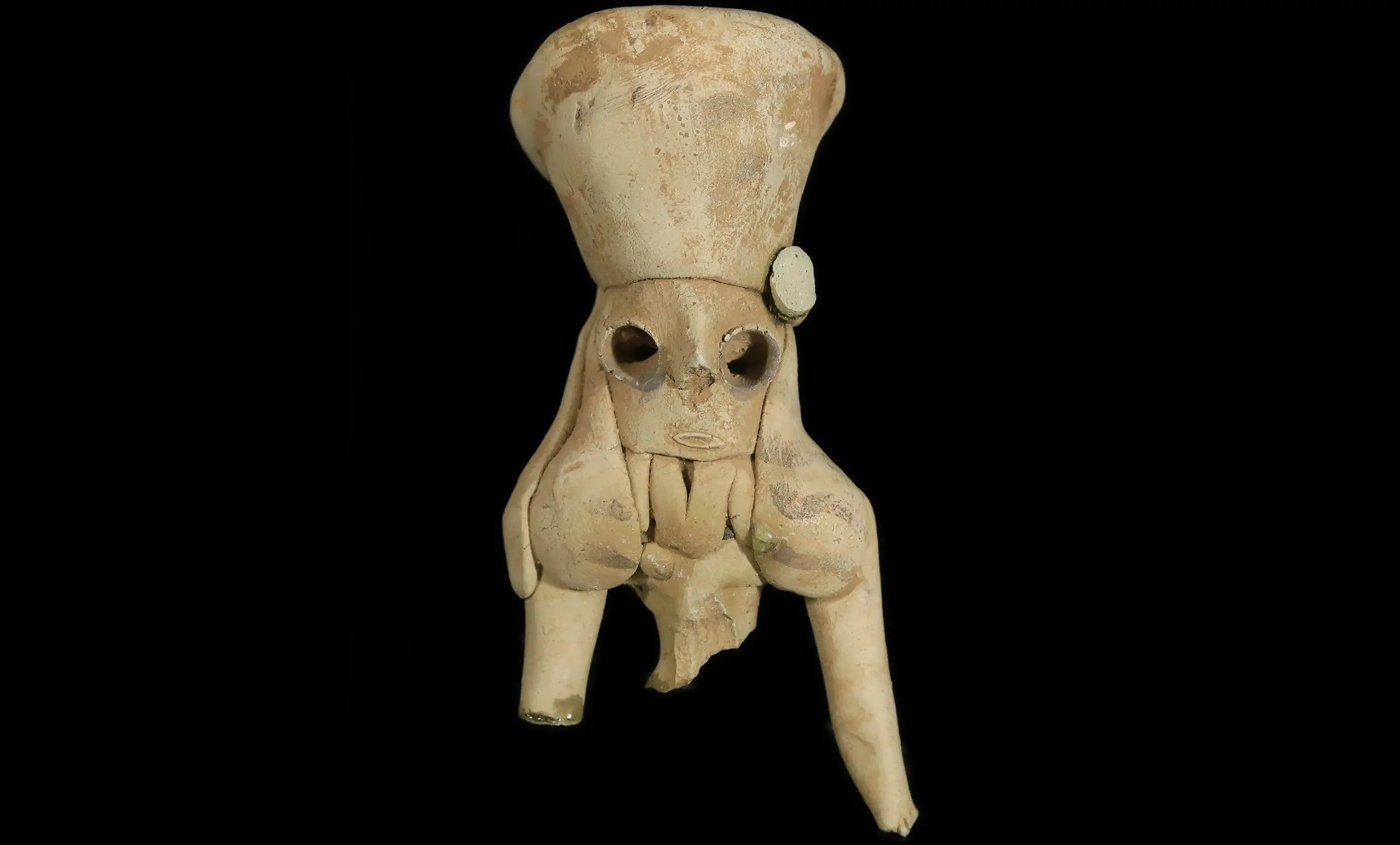
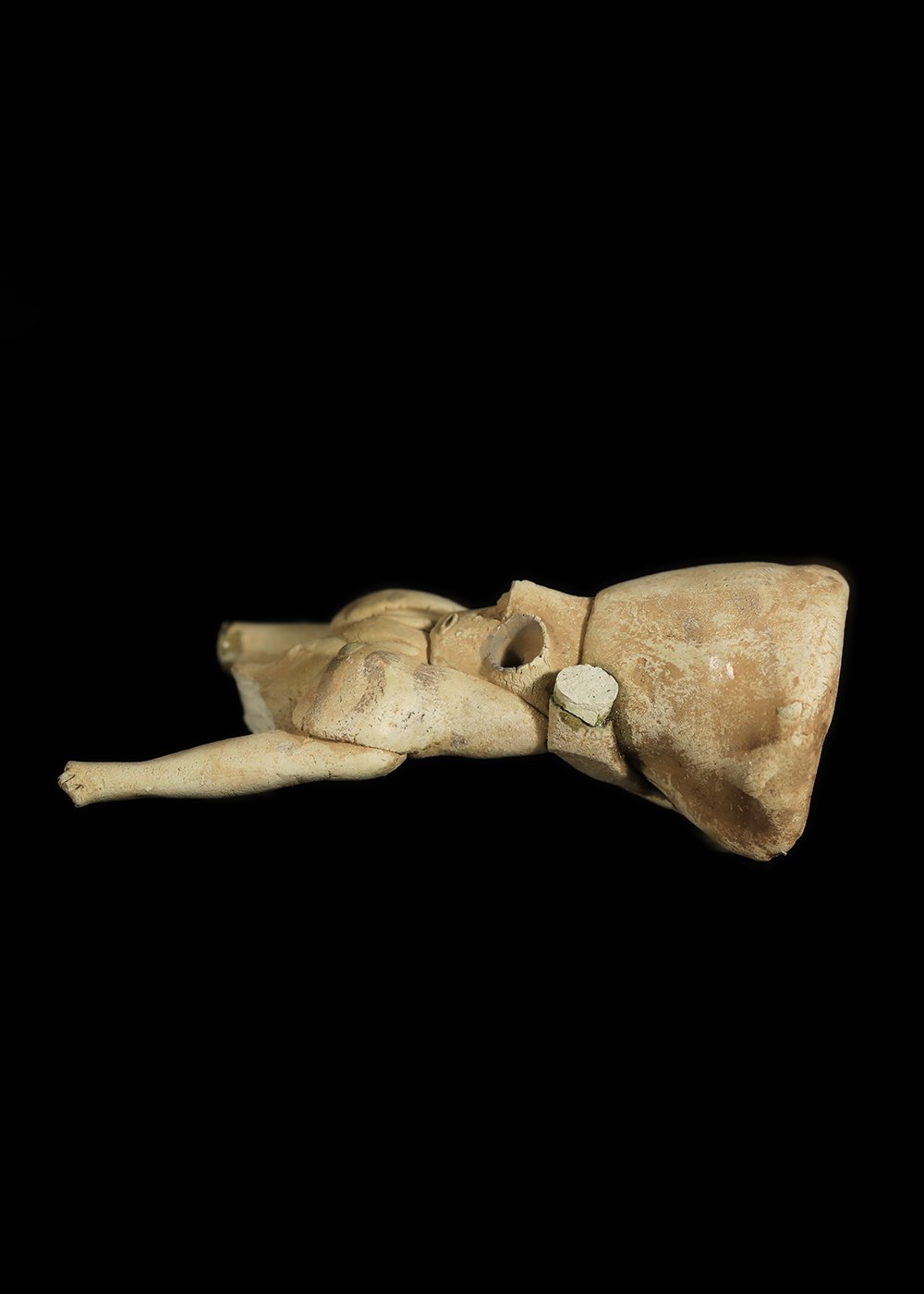
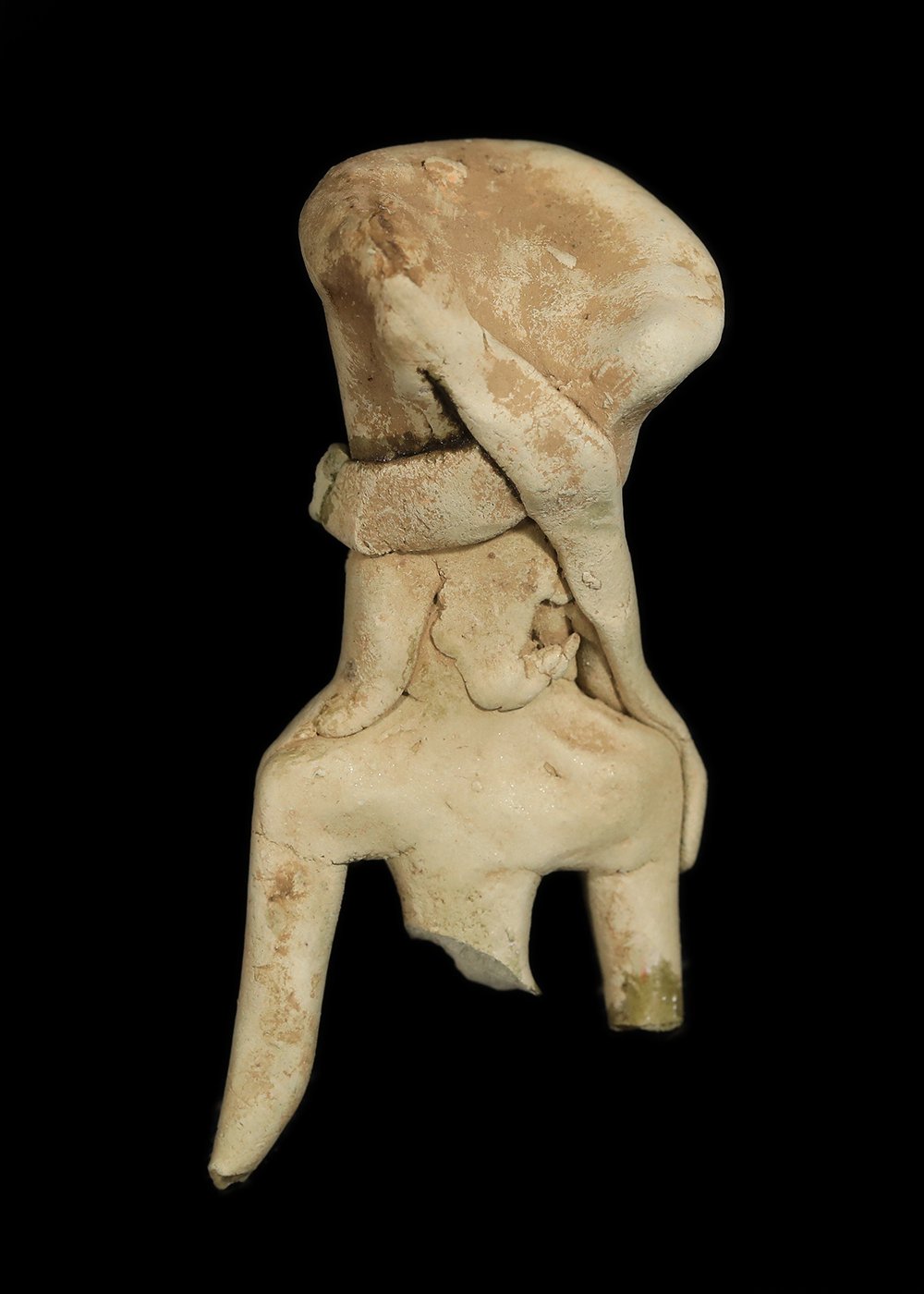
This Indus Valley Deity Cult Figure, measuring 7 cm in height, is a terracotta sculpture from the Mature Harappan phase of the Indus Valley Civilization, 2600–1900 BC, representing the artistic skill of one of the world’s earliest civilizations. The figurine features an elaborate flat-topped headdress and characteristic facial features of Indus Valley sculptures, including rounded, sunken eyes and a prominent nose, now partially chipped. Fine incisions provide additional anatomical detail on the body and decorative elements at the neck.
The piece shows natural age-related wear, including scratches, chips, and earthy encrustation. The waist and right elbow are broken, and two repairs are visible on the back of the headdress.
Features
• Culture: Indus Valley
• Period: Mature Harappan phase, 2600–1900 BC
• Material: Terracotta
• Type: Deity Cult Figure
• Height: 7 cm
• Width: 3 cm
• Condition: Repaired, original details preserved
• Provenance: From the David Gold Collection, acquired by a previous owner in the 1970s; ownership changed in 2000; acquired by the present owner in 2026
• Certificate: Certificate of authenticity included
Cultural and Functional Context
The Indus Valley Civilization, contemporary with Mesopotamia and Ancient Egypt, developed advanced techniques in pottery, seal carving, and metallurgy. Terracotta figurines such as this, modeled after gods and goddesses, were typically used as votive offerings.
This artifact is legally obtained and documented, making it suitable for collectors or museums specializing in prehistoric South Asian artifacts.

Reviews
There are no reviews yet.