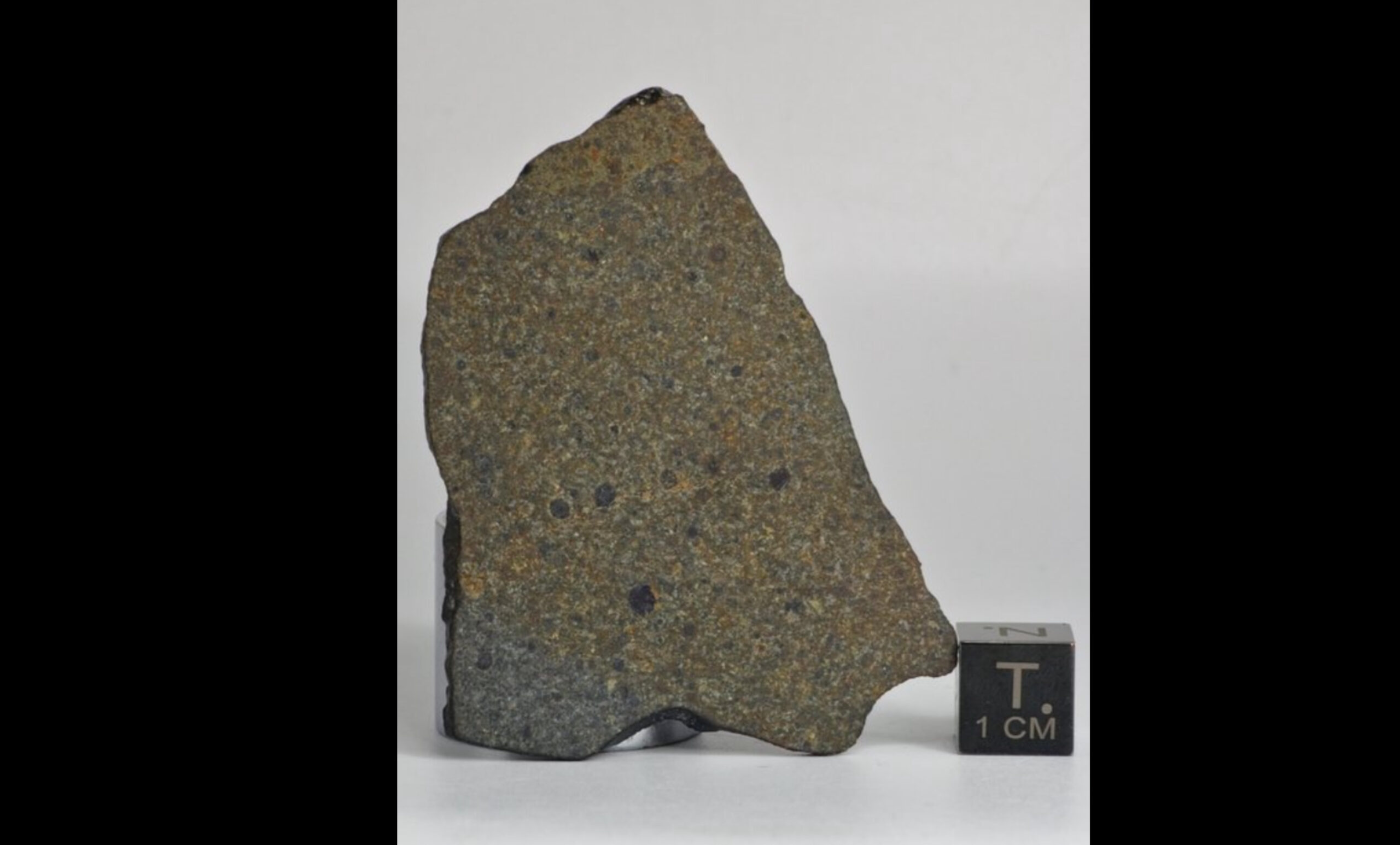
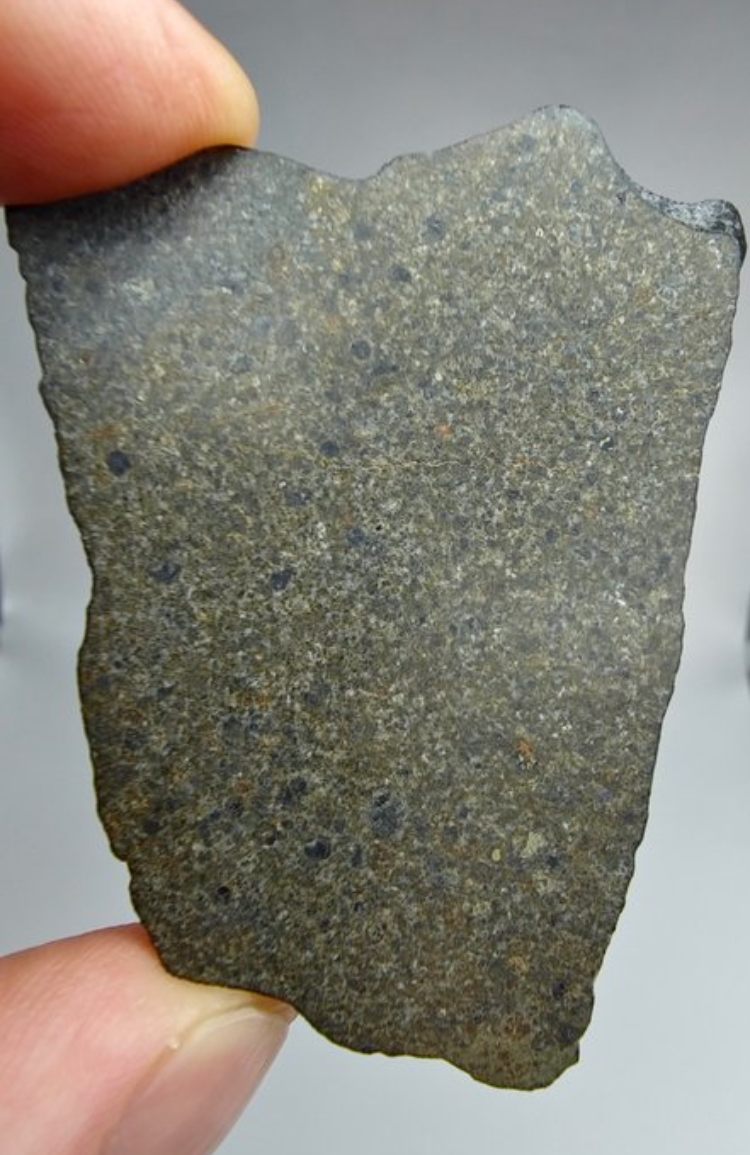
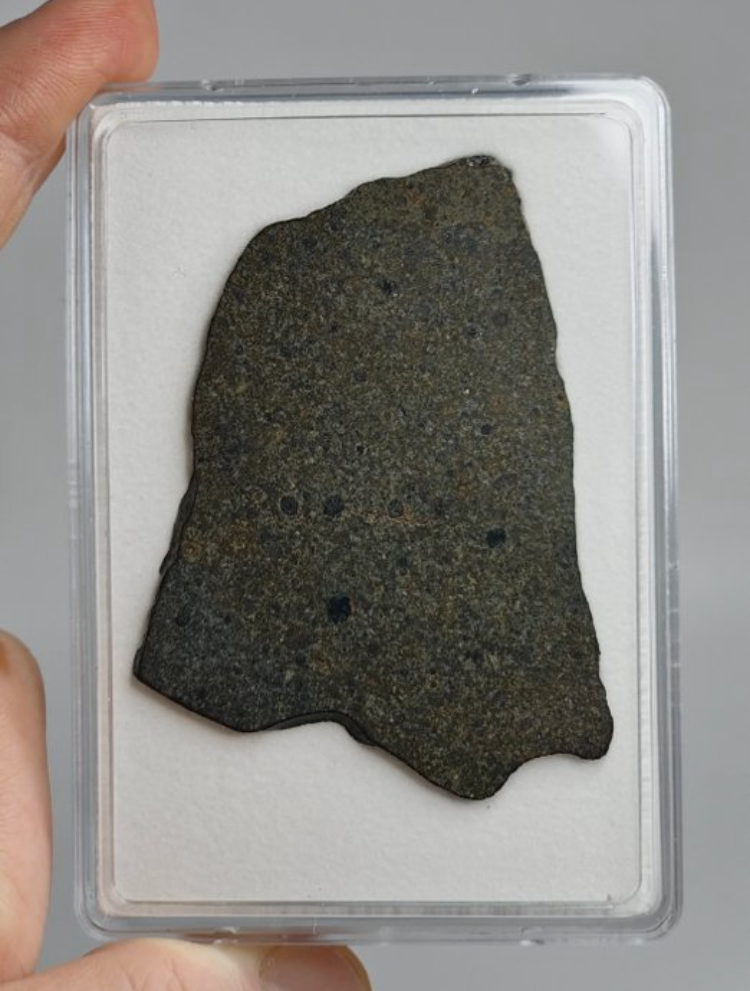
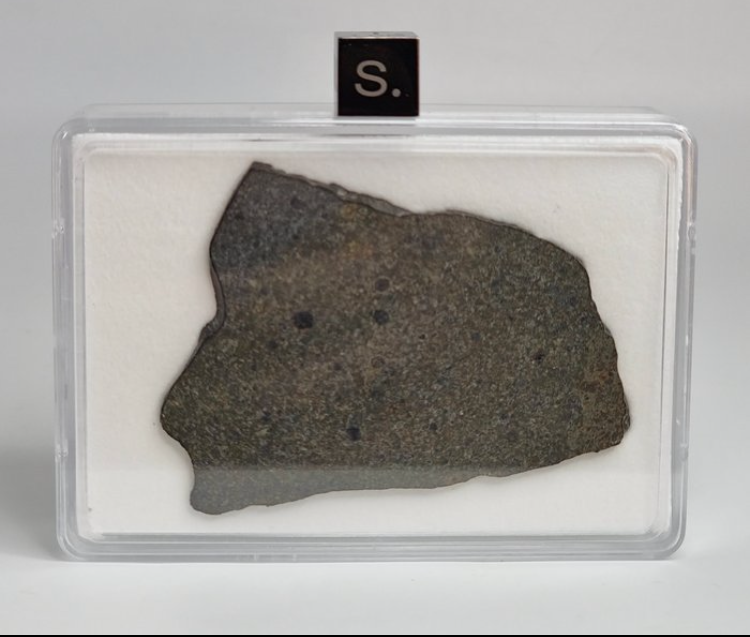
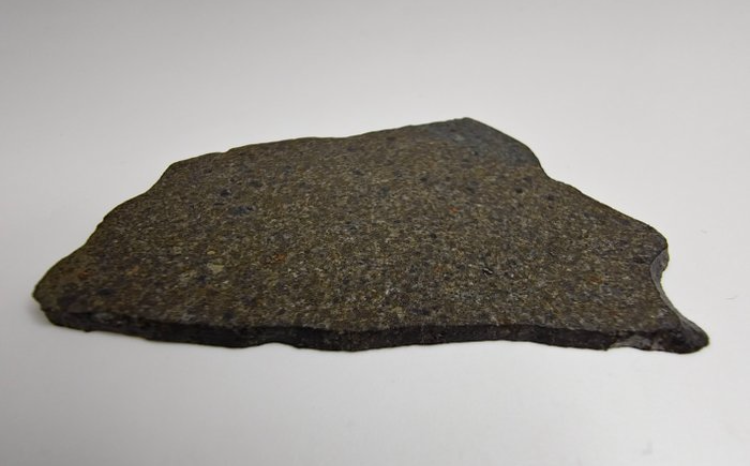
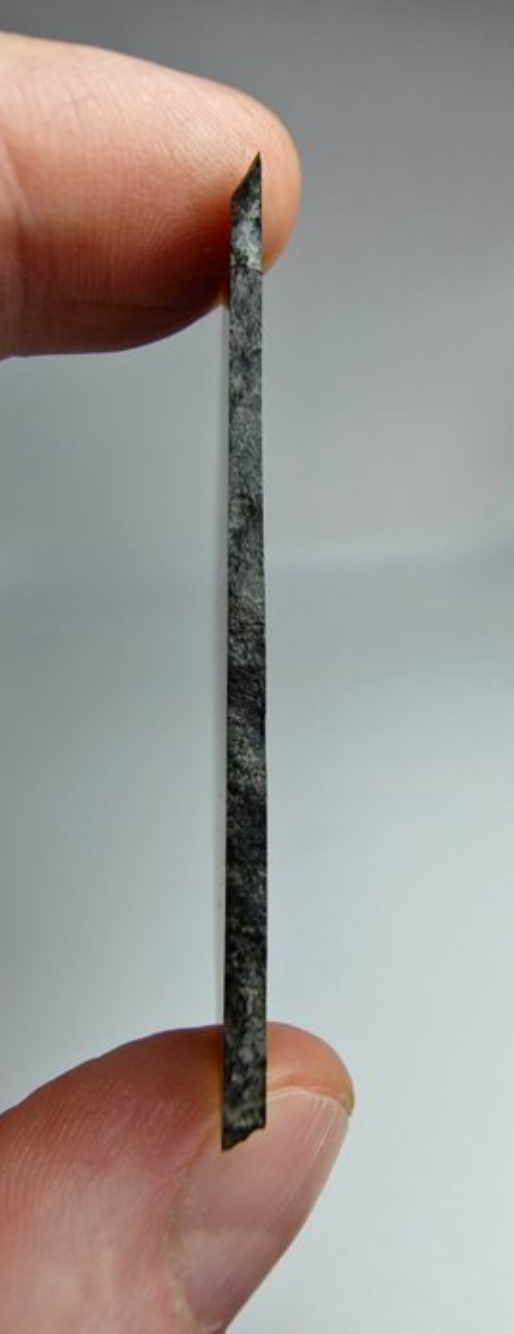
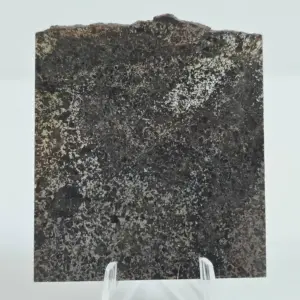
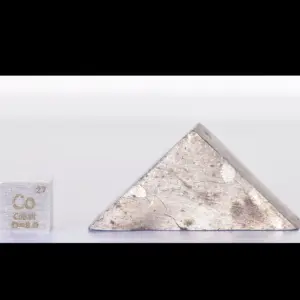
The NWA 17323 meteorite is a rare carbonaceous chondrite. Formed approximately 4.56 billion years ago, it shows the characteristic chondritic breccia structure with chondrules, chondrule fragments, and CAIs embedded in a fine-grained, recrystallized matrix. Chromium-bearing magnetite grains, typical of CK6 chondrites, are also present. The offered polished slice weighs 13.12 g.
A well-preserved specimen suitable for collectors, scientific display, or study of early solar system materials.
Features
• Name: NWA 17323
• Type: CK6
• Classification: Carbonaceous chondrite
• Dimensions: approx. 62 × 44 × 3 mm
• Weight: 13.12 g
• Origin: Parent body unknown
• Found: Northwest Africa
• Form: Slice (cut)
• Discovery Date: 2024
• Certification: Included, issued by an ICMA member
NWA 17323 belongs to the CK carbonaceous chondrite group, a rare and oxidized type of meteorite that underwent significant thermal metamorphism on its parent asteroid. CK6 specimens display equilibrated olivine and pyroxene, a dark recrystallized matrix, and trace-element-rich magnetite. These characteristics make them scientifically valuable and highly interesting for collectors, providing insight into the metamorphic history and early formation processes of carbonaceous chondrite parent bodies.
Mineral compositions and geochemistry:
Average olivine composition: Fa32.7 ± 0.4 (Fa32.0–33.3); n = 12; NiO: 0.54 wt%.
Average low-Ca pyroxene composition: Fs27.8 ± 0.5 Wo0.6 ± 0.2 (Fs27.2–28.9 Wo0.4–1.0); n = 10.
Average Ca-rich pyroxene composition: Fs9.4 ± 0.4 Wo46.6 ± 0.5 (Fs8.9–9.8 Wo45.8–47.6); n = 12.
Magnetite shows significant concentrations of elements other than Fe (average, wt%): MgO 0.4; Al₂O₃ 1.8; TiO₂ 0.5; Cr₂O₃ 5.5; NiO 0.3 (n = 5).
Reviews
There are no reviews yet.