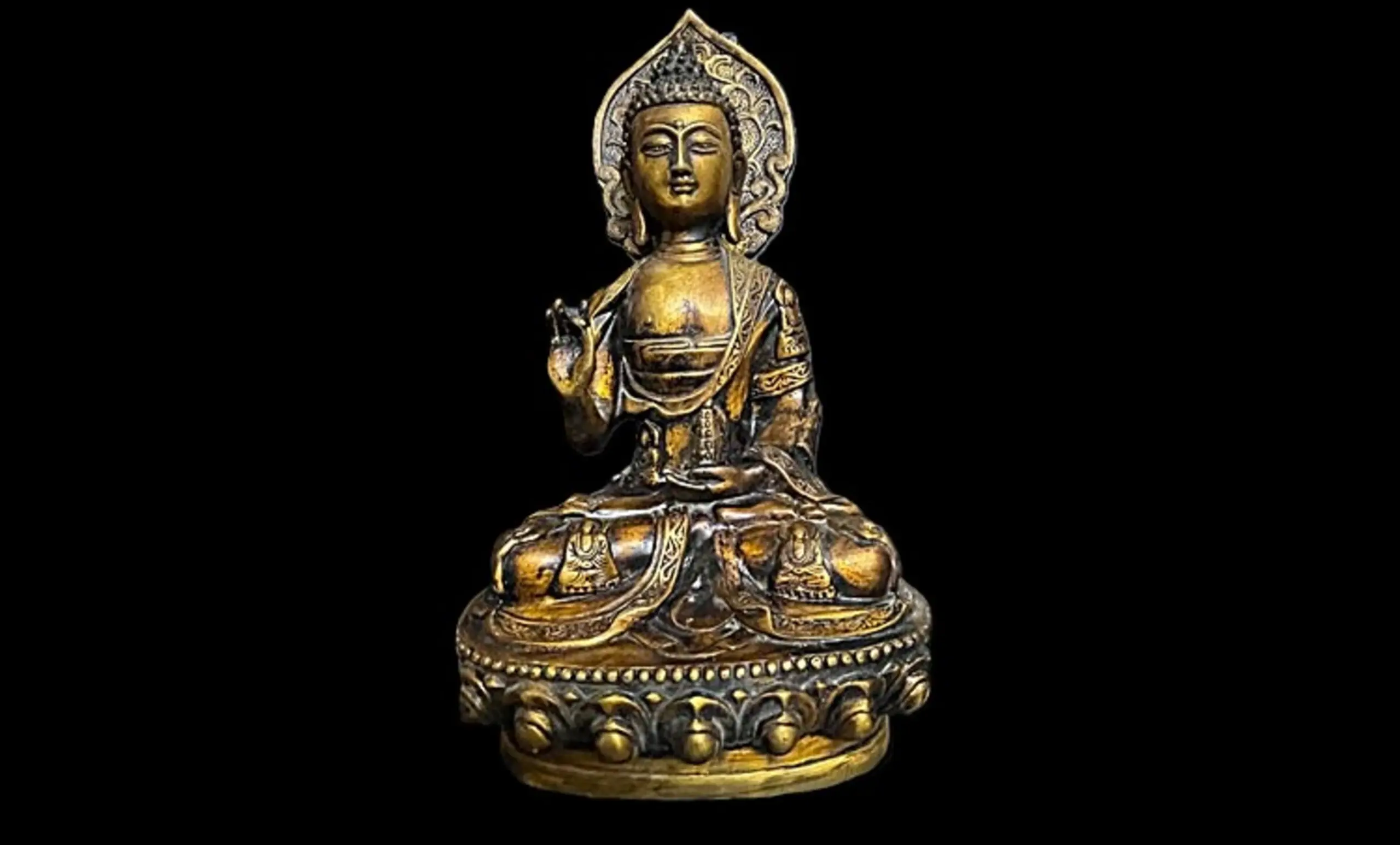
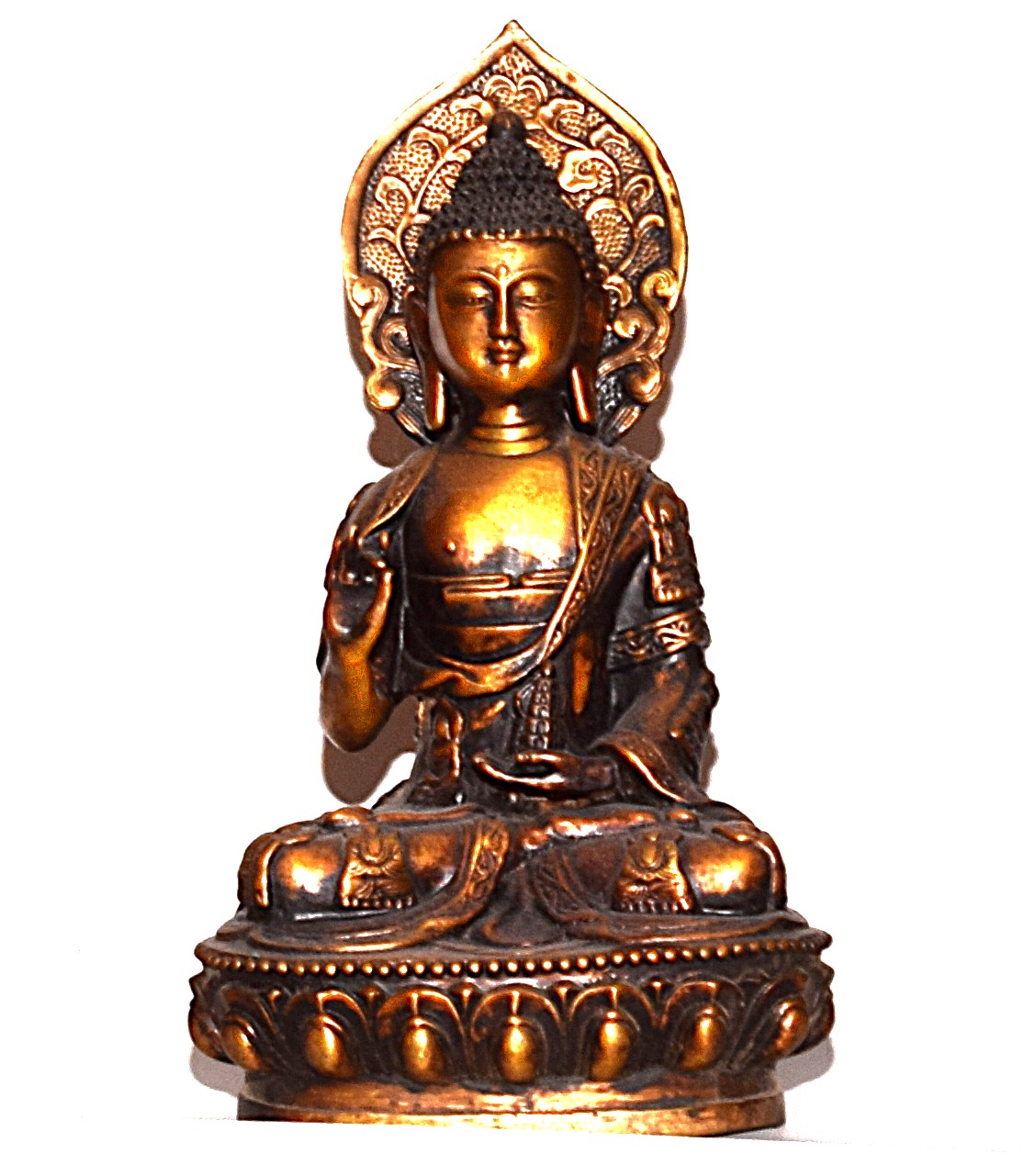
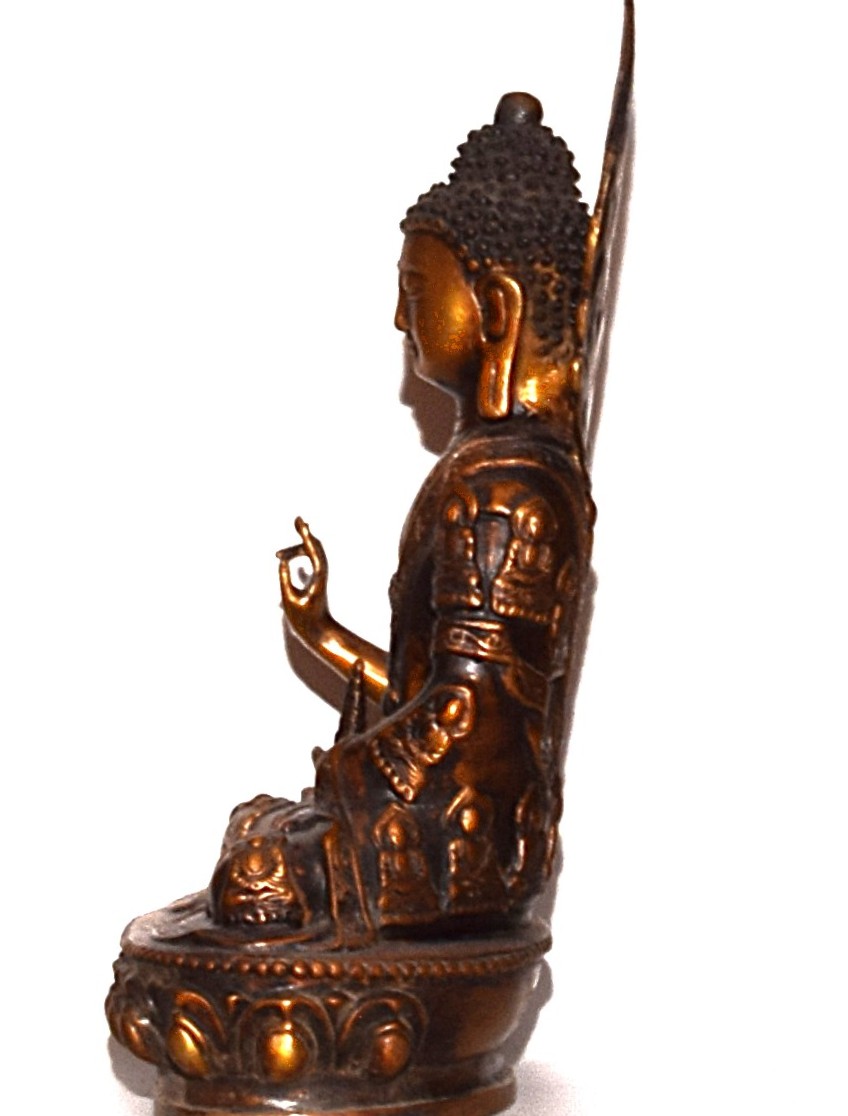
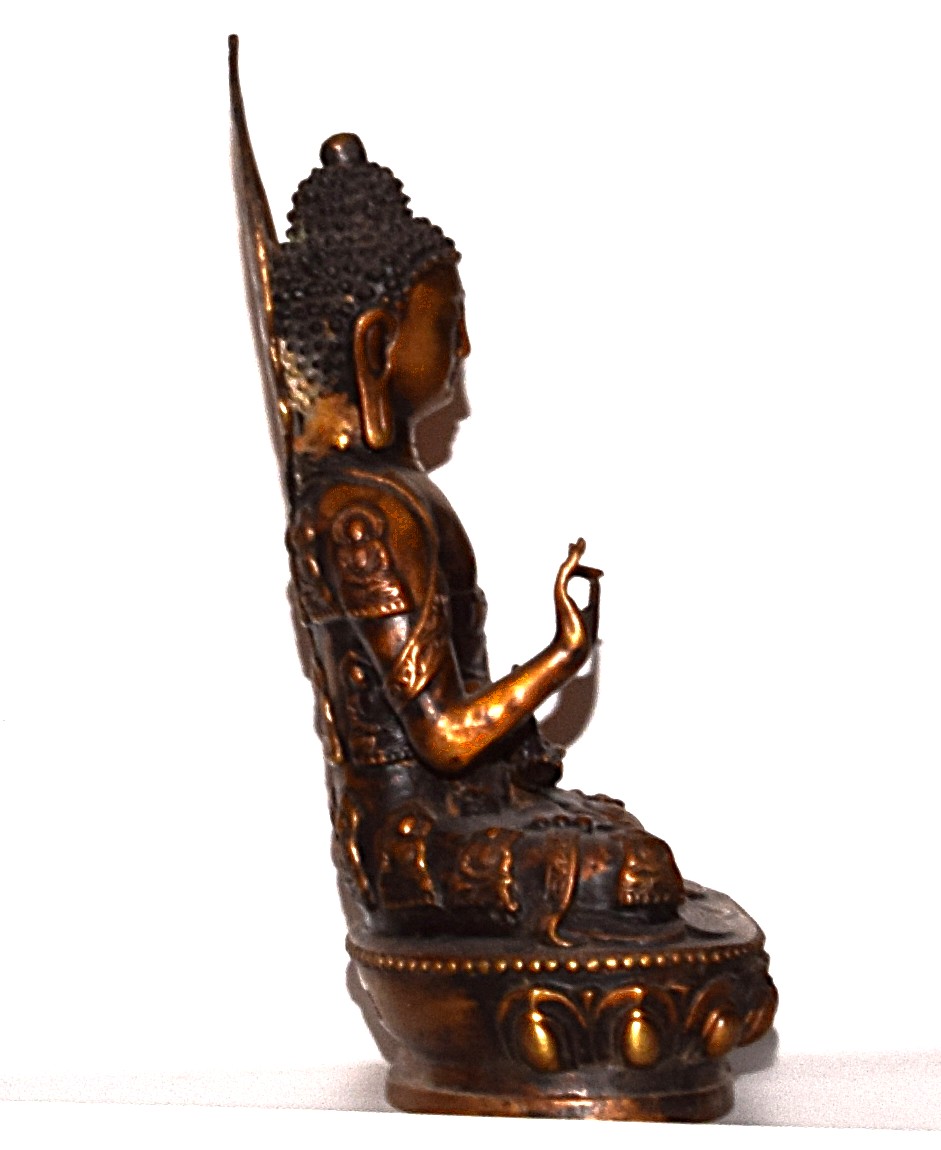
This 20th-century Chinese bronze Buddha is exquisitely cast, its intricate detailing and serene presence exemplifying traditional Chinese Buddhist craftsmanship. Seated in dhyāna posture upon a double lotus base and backed by an ornamental aureole, the figure conveys both devotional intent and refined artistry. The right hand is raised in Vitarka mudra (gesture of teaching or discussion), symbolizing the transmission of wisdom.
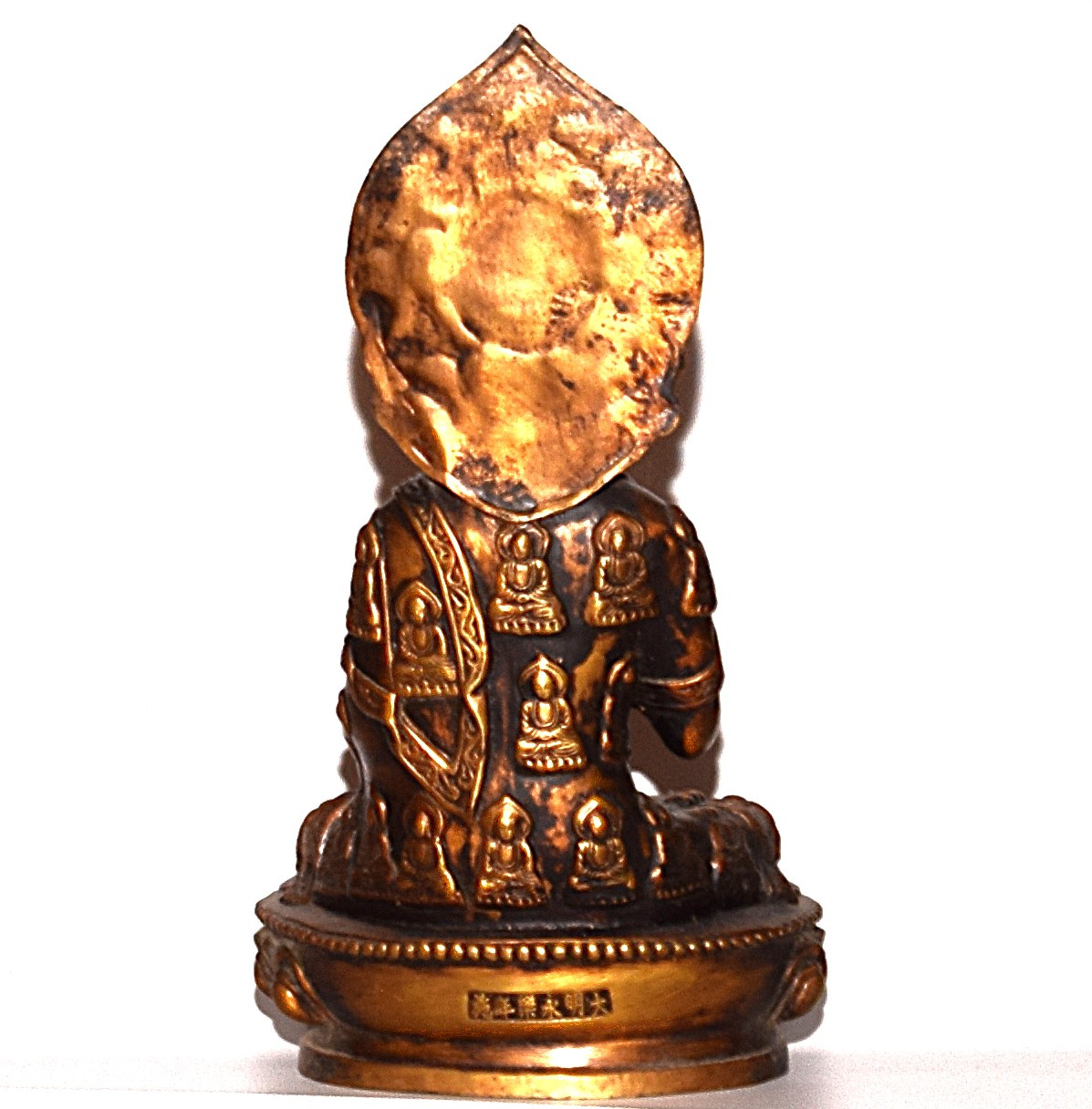
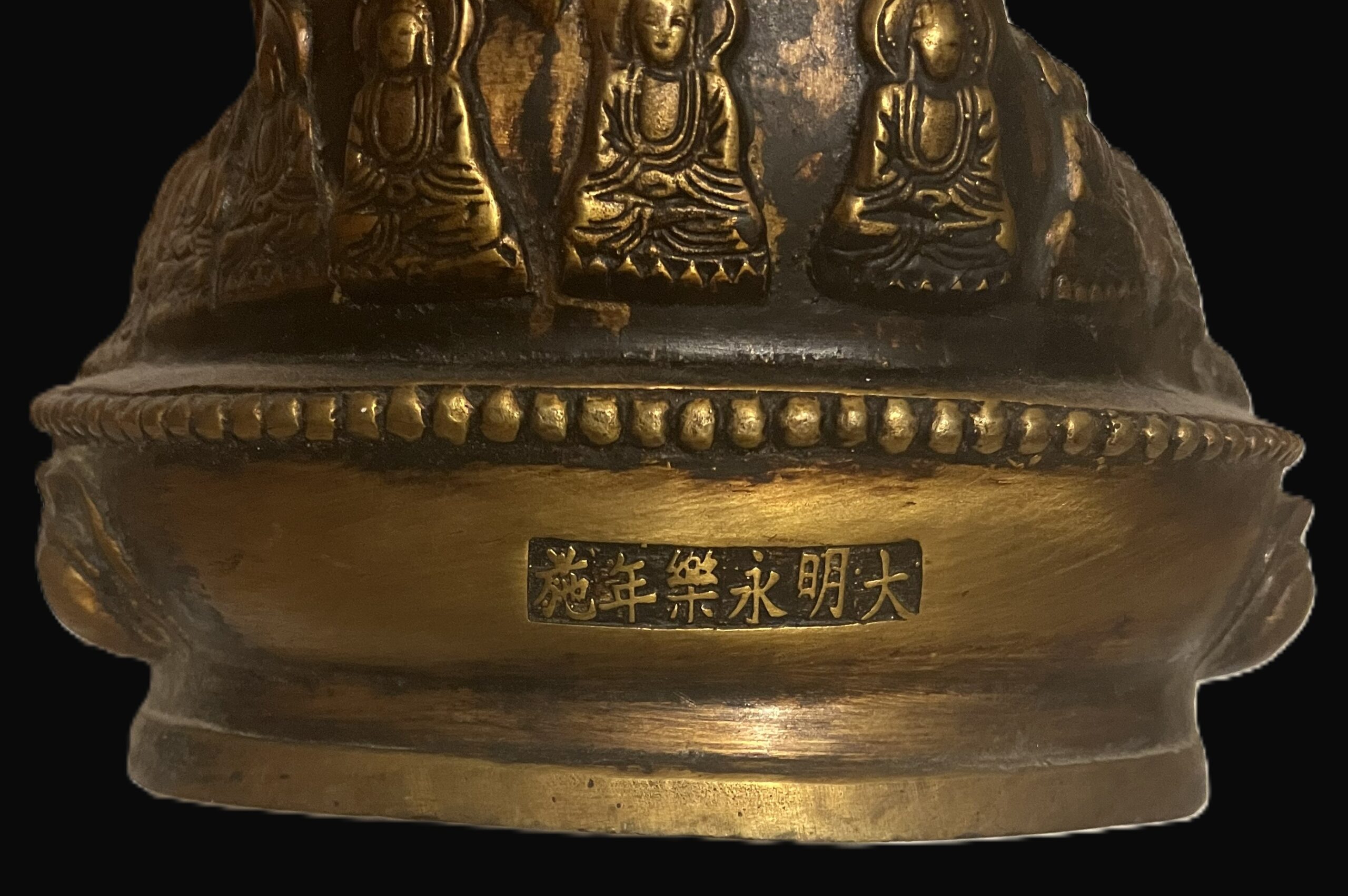
The sculpture is very well preserved, measuring approximately 31 cm in height, 18 cm in width, and 10 cm in depth at the base, and weighing approximately 2.85 kg. The bronze surface shows a warm patina with subtle traces of gilding, consistent with 20th-century Chinese devotional bronzes. An inscription on the reverse further enhances its authenticity and decorative appeal.
Features
• Culture: Buddhist
• Period: 20th century
• Material: Bronze (partially gilt)
• Type: Seated Buddha figure (Vitarka mudra)
• Dimensions: H 31 cm × W 18 cm × D 10 cm
• Weight: approx. 2.85 kg
• Condition: Very good, intact
• Provenance: Crafted in China
• Patina: Warm natural bronze patina with light gilding
Cultural and Symbolic Context
Buddha figures of this type hold an important place within Chinese Buddhist devotional practice. The lotus base symbolizes purity and spiritual awakening, rising unstained from the earthly realm, while the aureole behind the head emphasizes the enlightened nature of the Buddha. The Vitarka mudra represents intellectual discourse and the teaching of the Dharma, reinforcing the figure’s spiritual significance.
The detailed casting—from the stylized lotus petals to the finely articulated robes and serene facial expression—demonstrates solid technical execution and a sensitivity to traditional iconographic conventions. Though created in the 20th century, the sculpture consciously follows established historical models, embodying enduring spiritual and artistic values.
Reviews
There are no reviews yet.