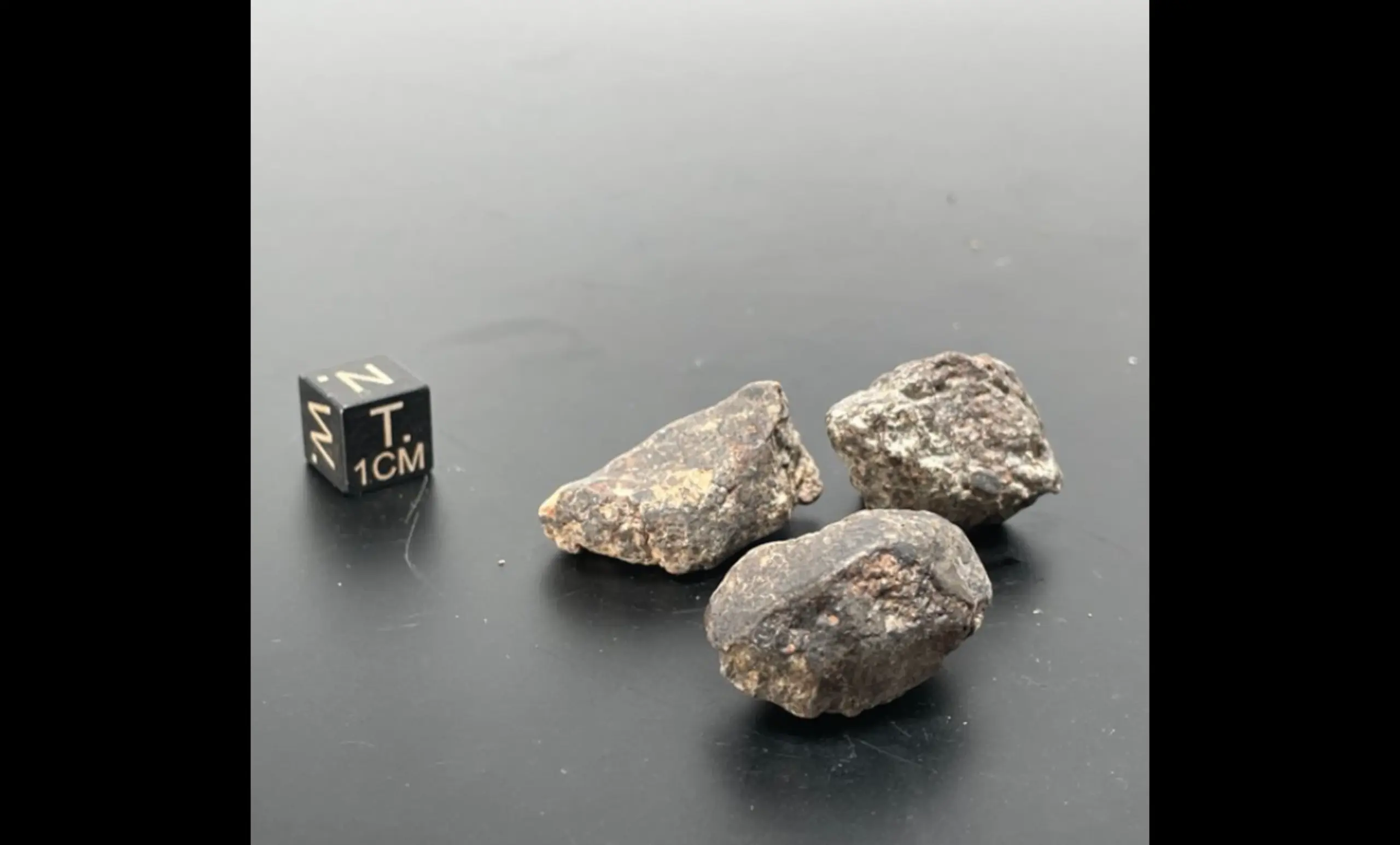
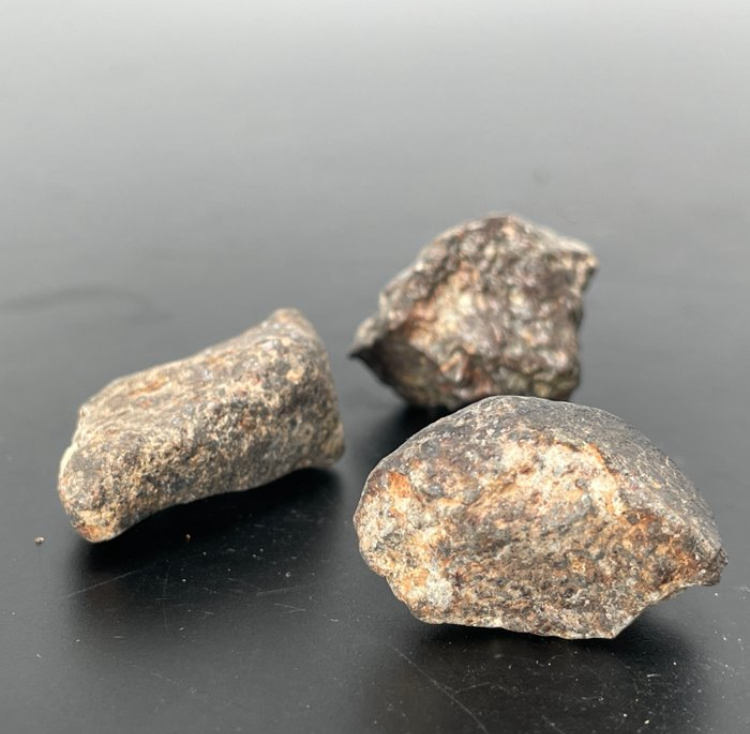
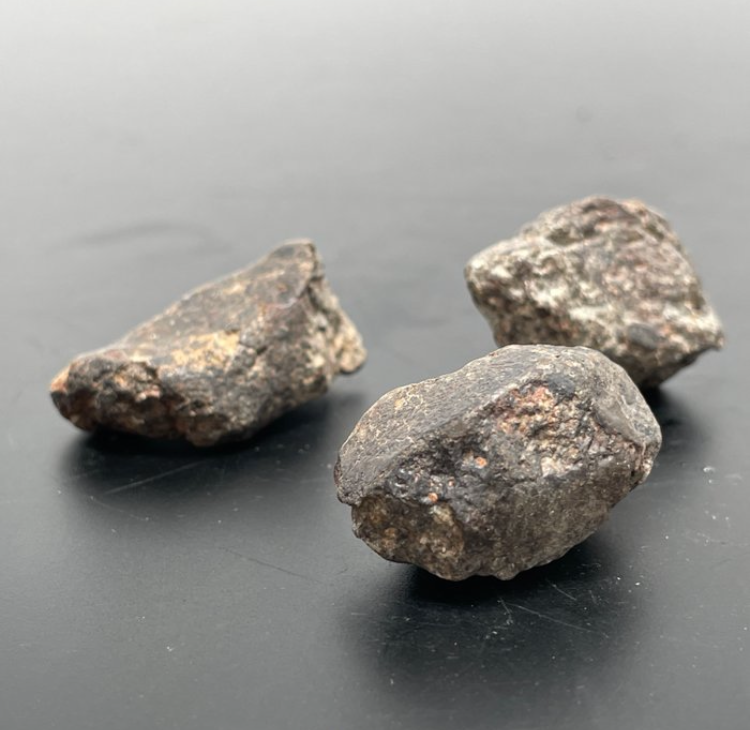
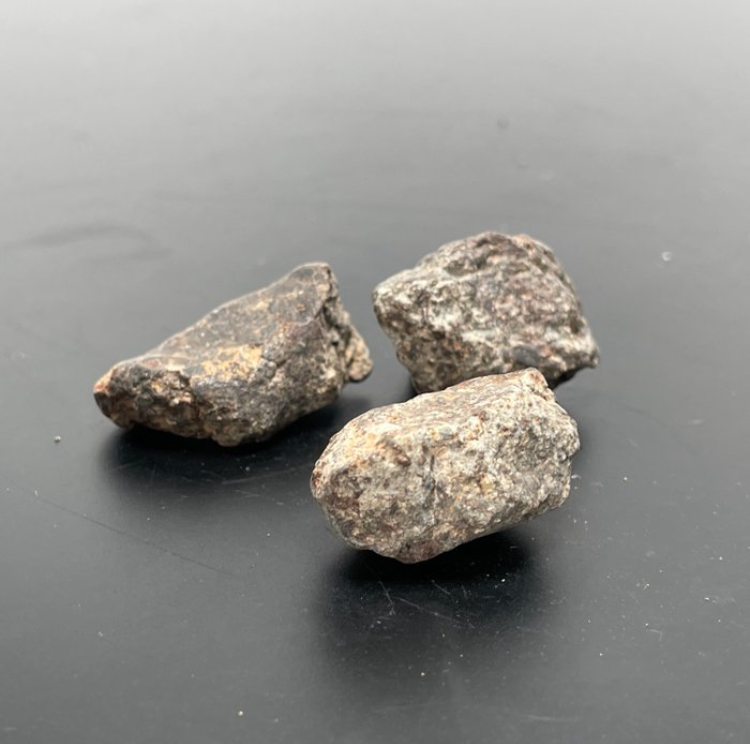
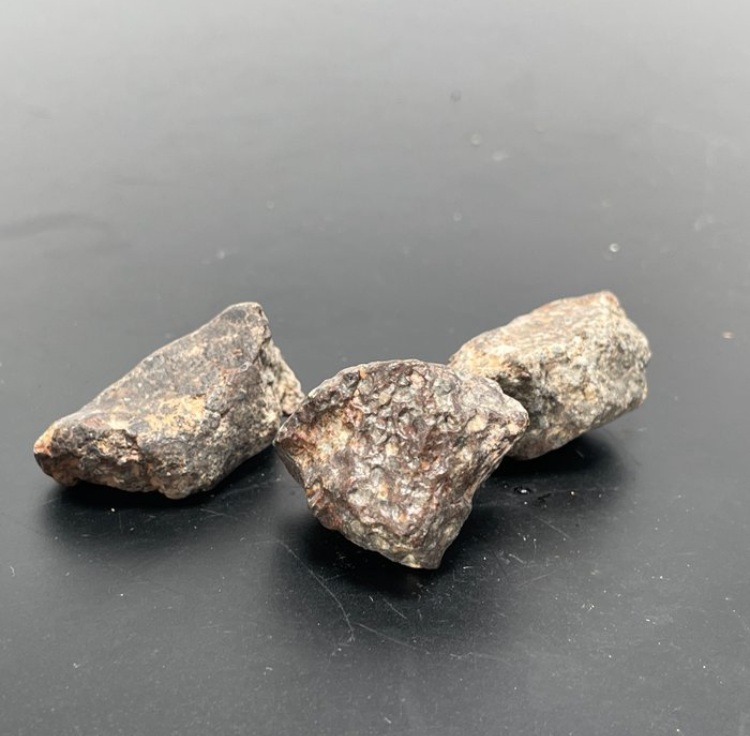
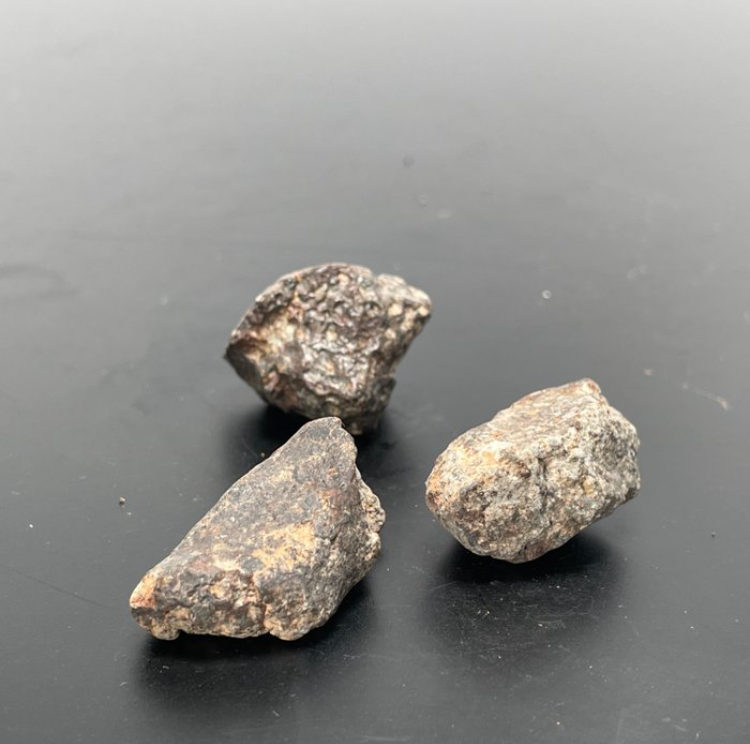
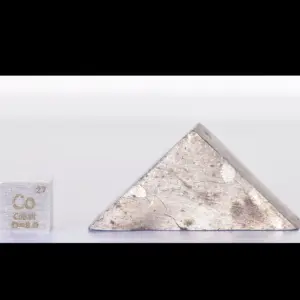
NWA 869 ordinary chondrite, type L3–6, consisting of three fragments with a total weight of 25 g. Visible fusion crust and fresh fracture surfaces.
Features
• Name: NWA 869
• Number of pieces: 3
• Type: Ordinary Chondrite
• Classification: L3–6, Brecciated
• Dimensions: 12 × 23 × 15 mm (average)
• Weight (Total): 25 g
• Origin: Undifferentiated asteroid (parent body unknown)
• Found: Tindouf
• Condition: Natural
• Discovery Date: 2000
• Certification: Authenticated by a member of the Meteoritical Society, the American Meteor Society, and the IMCA
Scientific and Physical Characteristics
NWA 869 is one of the most well-known ordinary chondrites and represents primitive, undifferentiated material from the early Solar System, with an estimated age of approximately 4.55 billion years. As an L-type chondrite, it contains a relatively low amount of metallic iron compared to other ordinary chondrites. The classification L3–6 indicates a brecciated meteorite composed of clasts that experienced different degrees of thermal metamorphism.
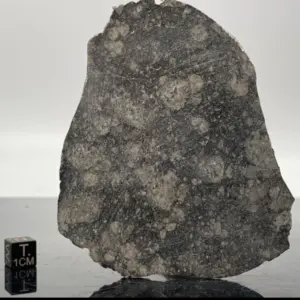
Characteristic chondrules—millimeter-sized silicate spheres formed in the solar nebula—are commonly visible and make this meteorite an important reference specimen for studying early planetary formation processes.
Reviews
There are no reviews yet.